
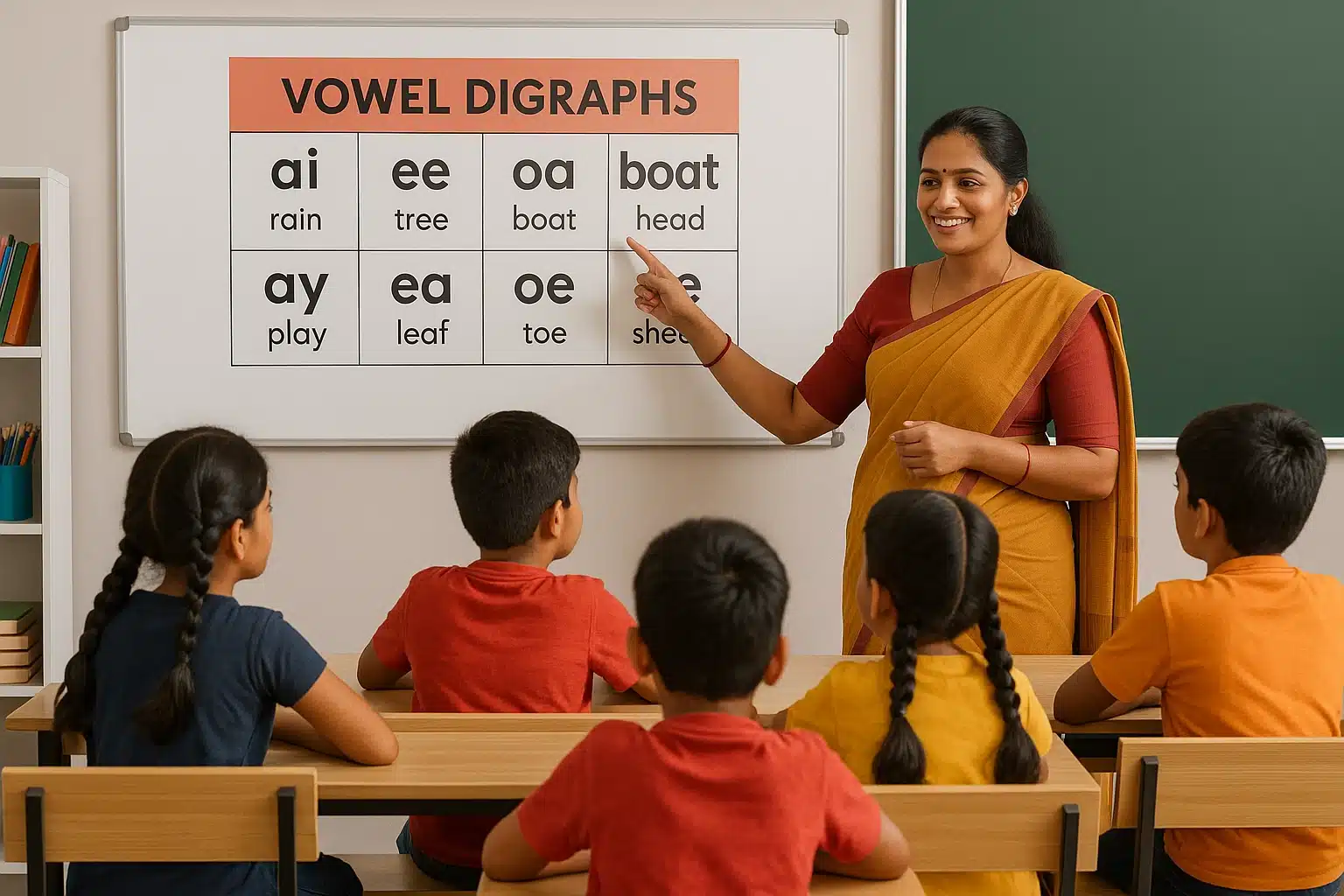
Teaching young kids to read starts with clear sound awareness and steady practice. Many teachers and parents often ask, How Do You Teach Phonics in a way that feels easy and effective for young learners. A lot of teachers and parents want to know, “How do you teach phonics in a way that kids can understand and use?” The goal of phonics lessons is to help kids make connections between letters and sounds and mix them so they can read words with confidence.
Kids start to see trends that help them get better at reading through short tasks, repetition, and everyday examples. Knowing How Do You Teach Phonics also means knowing when to go slowly, when to go over sounds again, and how to keep learning fun without putting too much stress on yourself.
What is Phonics?
Phonics is an organized way to teach reading and writing by making the link between sounds and letters very clear. It helps students understand that spoken words are made up of separate sounds, and that these sounds can be shown in writing. Phonics helps people learn to read by letting them find and combine sounds one at a time, instead of having to memorize whole words.\
Phonemic awareness is the ability to hear, understand, and deal with sounds in spoken language. This is the most important part of phonics. When students become aware of this, they start to connect sounds (phonemes) to letters or sets of letters (graphemes). This link helps people read and spell correctly from a young age.
Phonics lessons normally start with easy patterns and go on to harder ones, which helps students gain confidence over time. It helps improve decoding abilities, which are important for reading words you don’t know on your own.
Key elements of phonics include:
- Recognition of letter sounds rather than letter names alone
- Blending sounds to form words
- Segmenting words into individual sounds for spelling
- Identifying common letter patterns and sound families
Phonics is especially effective for early learners because it creates a strong foundation for literacy. It also helps students who have trouble reading by giving them a straightforward and logical way to interpret words. Practicing Phonics is an important aspect of Early Education because it helps students read more fluently, spell more accurately and enhance their language skills in general.
To download brochure, about Phonics Teacher Course, Click Here!
For more details of Phonics Teacher Course Call / Whatsapp +919869866277 / +919869546913
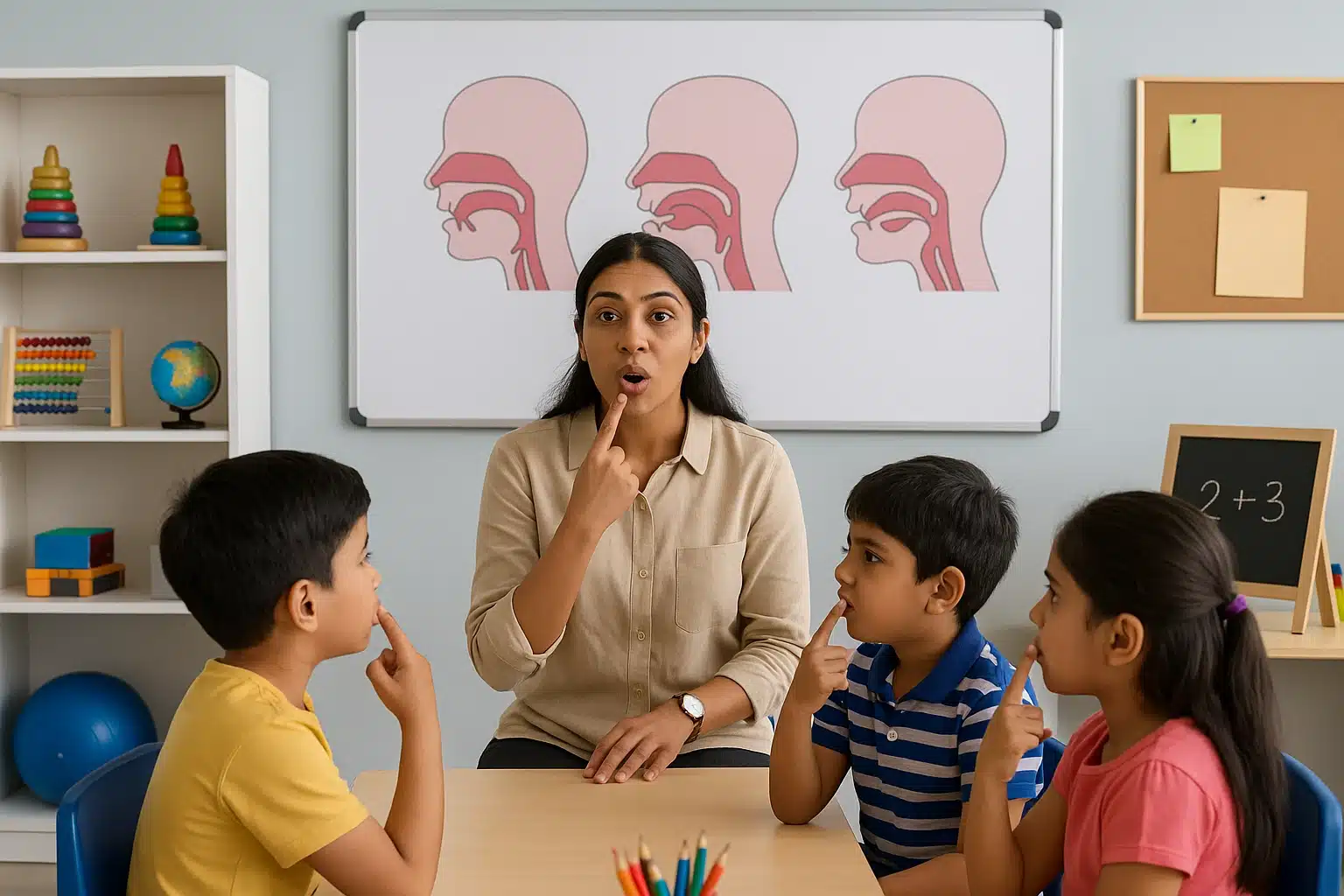
Start with Phonemic Awareness?
Phonemic Awareness is the most important thing for a child to learn before they can read. This means being able to hear, understand, and use the sounds that make up spoken words. When kids know that words are made up of different sounds, it is easier for them to read and spell.
For example, the word FISH has three sounds: /f/, /i/, and /sh/. This awareness develops through listening and speaking activities rather than written text.
Phonemic awareness helps kids get ready for phonics by making it easier for them to recognize and change sounds.
Some important phonemic awareness skills are:
- Isolation: finding the first, middle, or last sound in a word, like /a/ in CAT
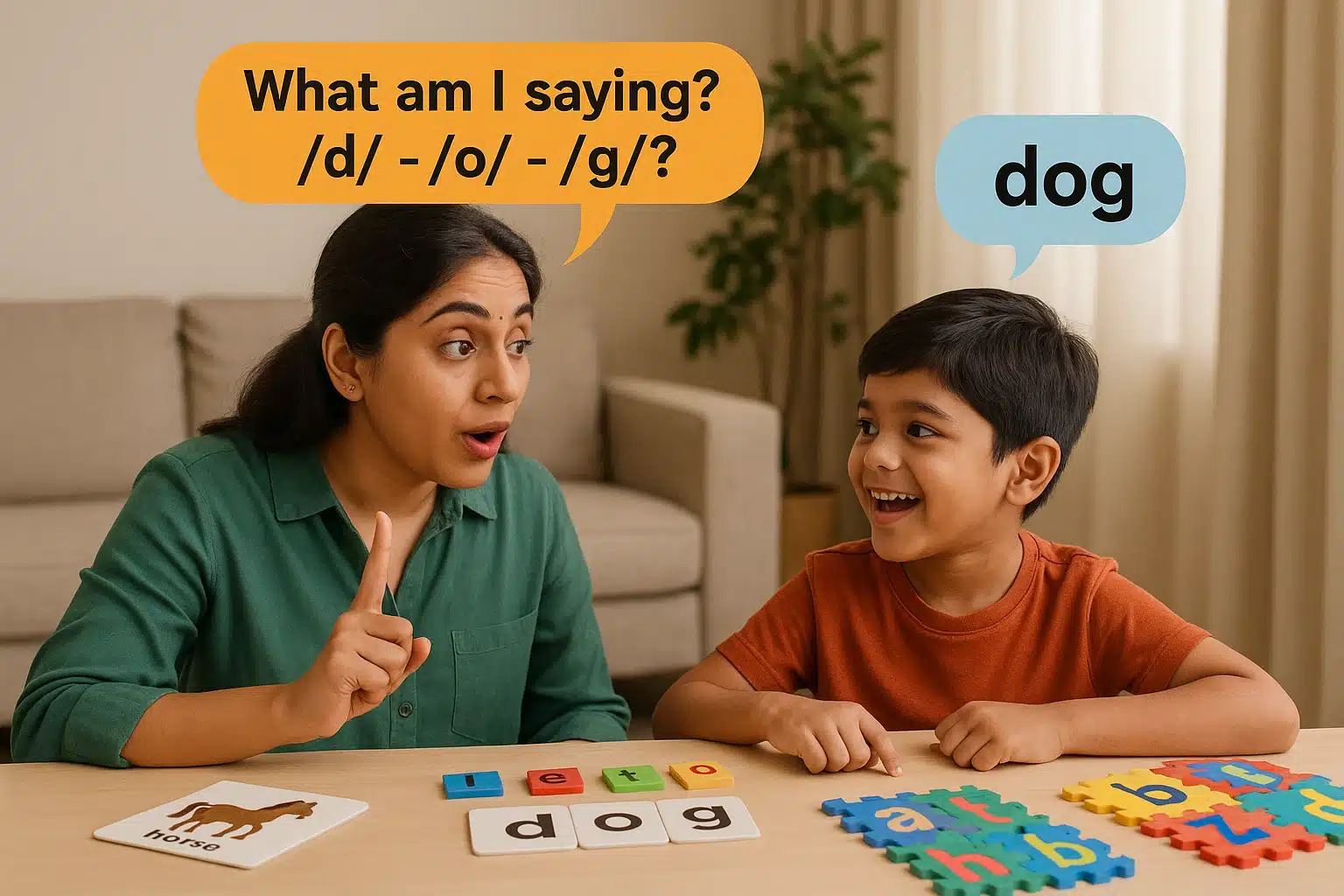
- Blending—putting sounds together to make CAT, like /c/, /a/, and /t/.
- Segmenting means breaking words down into their sounds. For example, CAT has /c/, /a/, and /t/.
- Addition: adding a sound to make a new word, like CATS
- Deletion: taking away a sound, like changing CAT to AT
- Substitution: changing a sound to make a new word, like changing CAT to BAT.
These skills are the building blocks for good reading growth.
To download brochure, about Phonics Teacher Course, Click Here!
For more details of Phonics Teacher Course Call / Whatsapp +919869866277 / +919869546913
How to teach Phonics?
Teaching Phonics works best when instruction follows a clear, step-by-step sequence that grows in difficulty as learners gain confidence. Kids can get better at reading without losing interest if they start with simple sounds and work their way up.
The following steps are part of a systematic approach to teaching phonics:
Start with simple sounds.
Begin with short vowel sounds and hard consonants that are easy to say. A small group of letters can make a lot of words, which helps students understand how sounds work together.
Practice blending with three-letter words
Introduce simple words like nap, sit, and pat. Learners practice sounding out each letter and blending them to read the full word.
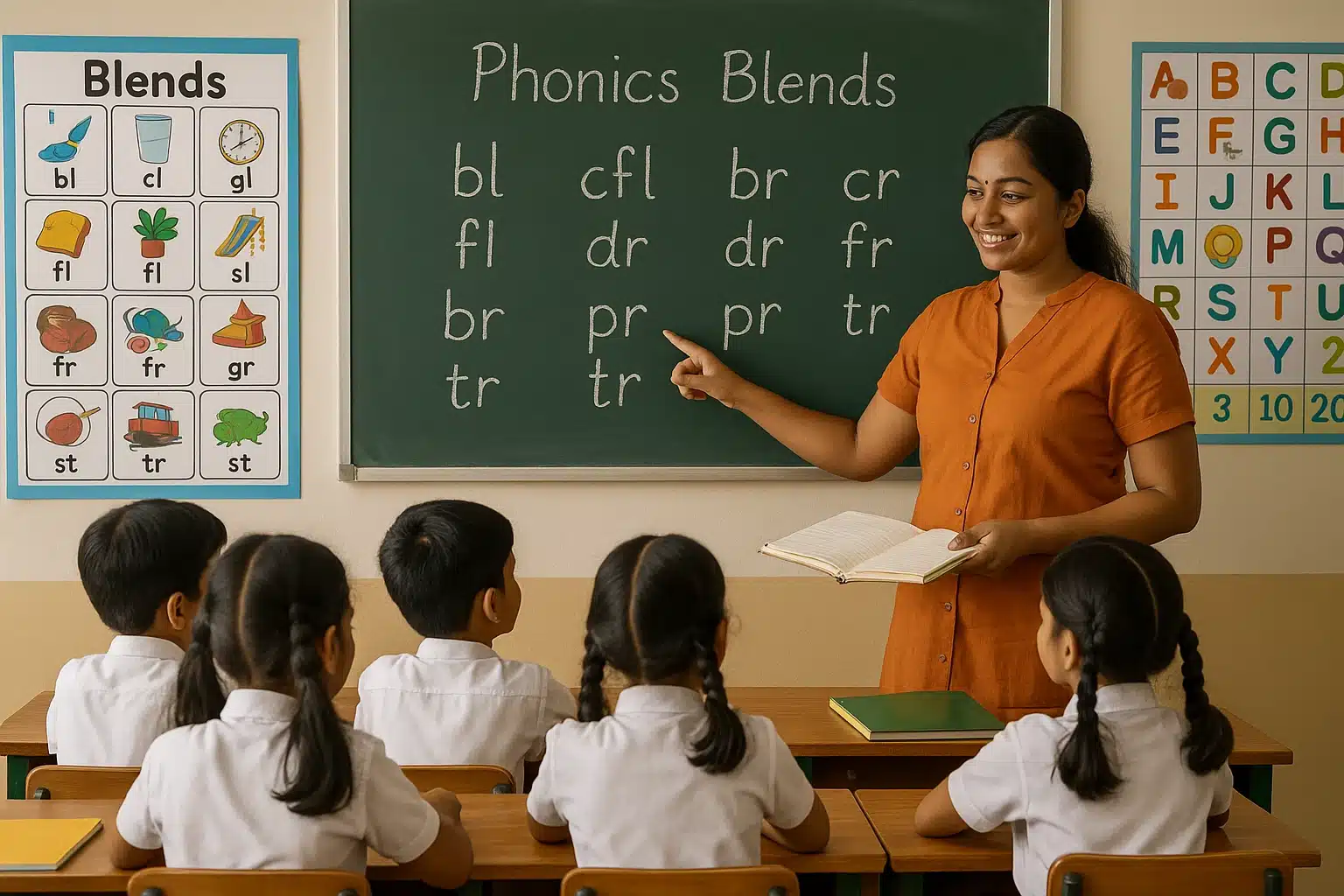
Move to consonant combinations and longer words
Once letter sounds are familiar, introduce blends such as st, gr, sh, and ng. Use real words so learners can apply these patterns while reading.
Teach vowel combinations
Introduce vowel pairs like ea, oo, and ai. Matching similar vowel sounds across words helps strengthen understanding.
Encouraging children to write along with reading reinforces sound-letter connections and supports steady literacy growth.
To download brochure, about Phonics Teacher Course, Click Here!
For more details of Phonics Teacher Course Call / Whatsapp +919869866277 / +919869546913
How to make learning Phonics Fun?
When Phonics is Fun for Kids, they learn sounds naturally. When lessons are fun and relaxed, kids learn better and get more involved. Doing simple things and talking to people every day can make phonics practice more fun.
Here are effective ways to make phonics fun:
Use games and songs
Sound-based games, Rhymes, and action songs help children remember letter sounds through repetition.
Add visuals and hands-on tools
Flashcards, letter tiles, and picture charts make sound recognition clearer and more interactive.
Play word-building activities
Let children form simple words using letter cards to see how sounds combine.
Read phonics-based storybooks
Short stories with repeated sound patterns build confidence and fluency.
Encourage movement and voice play
Clapping sounds, jumping for letters, or using funny voices keeps energy high.
When phonics feels enjoyable, children develop reading skills with curiosity and confidence.
To download brochure, about Phonics Teacher Course, Click Here!
For more details of Phonics Teacher Course Call / Whatsapp +919869866277 / +919869546913
Learn Phonics with Ves Method
Learning Phonics becomes more structured and effective when guided by a clear teaching method. Vidhyanidhi Education Society (Govt. Regd.) offers Phonics Teacher Training Course designed to build strong sound–letter understanding and classroom-ready skills. The method focuses on clarity, practice and learner engagement at every stage.
The training approach includes:
- Step-by-step sound instruction taught through the Phonics Teacher Training Course, helping trainees understand how children recognize and blend sounds
- Activity-based learning techniques that support sound isolation, blending, and word formation
- Practical teaching strategies shared during the Phonics Teacher Training Course to handle diverse learning needs
- Skill-based assessments to ensure confident phonics instruction in real classrooms
This method helps both new and experienced teachers build strong phonics skills. Teachers who finish the Phonics Teacher Training Course feel sure that they can make reading lessons clear, interesting, and useful for young learners.
Master phonics skills—join How Do You Teach Phonics at Vidhyanidhi Education Society.
To download brochure, about Phonics Teacher Course, Click Here!
For more details of Phonics Teacher Course Call / Whatsapp +919869866277 / +919869546913
How Do You Teach Phonics?
FAQs
Why Is My Child Struggling With Phonics?
Children may struggle due to weak phonemic awareness, limited practice, or confusion between sounds. Regular, simple practice and patience usually improve phonics skills.
At What Age Should A Child Know Phonics?
Most kids start learning phonics between the ages of 3 and 6, starting with simple sounds and getting better as they get ready to read.
What Is The Most Effective Way To Teach Phonics?
A systematic, step-by-step approach with practice in blending, reading, and writing is most effective. Vidhyanidhi Education Society follows structured phonics methods.
What Is The Most Effective Phonics Instruction?
To build strong and long-lasting reading skills, good phonics instruction includes sound awareness, letter recognition, word reading, and writing practice.