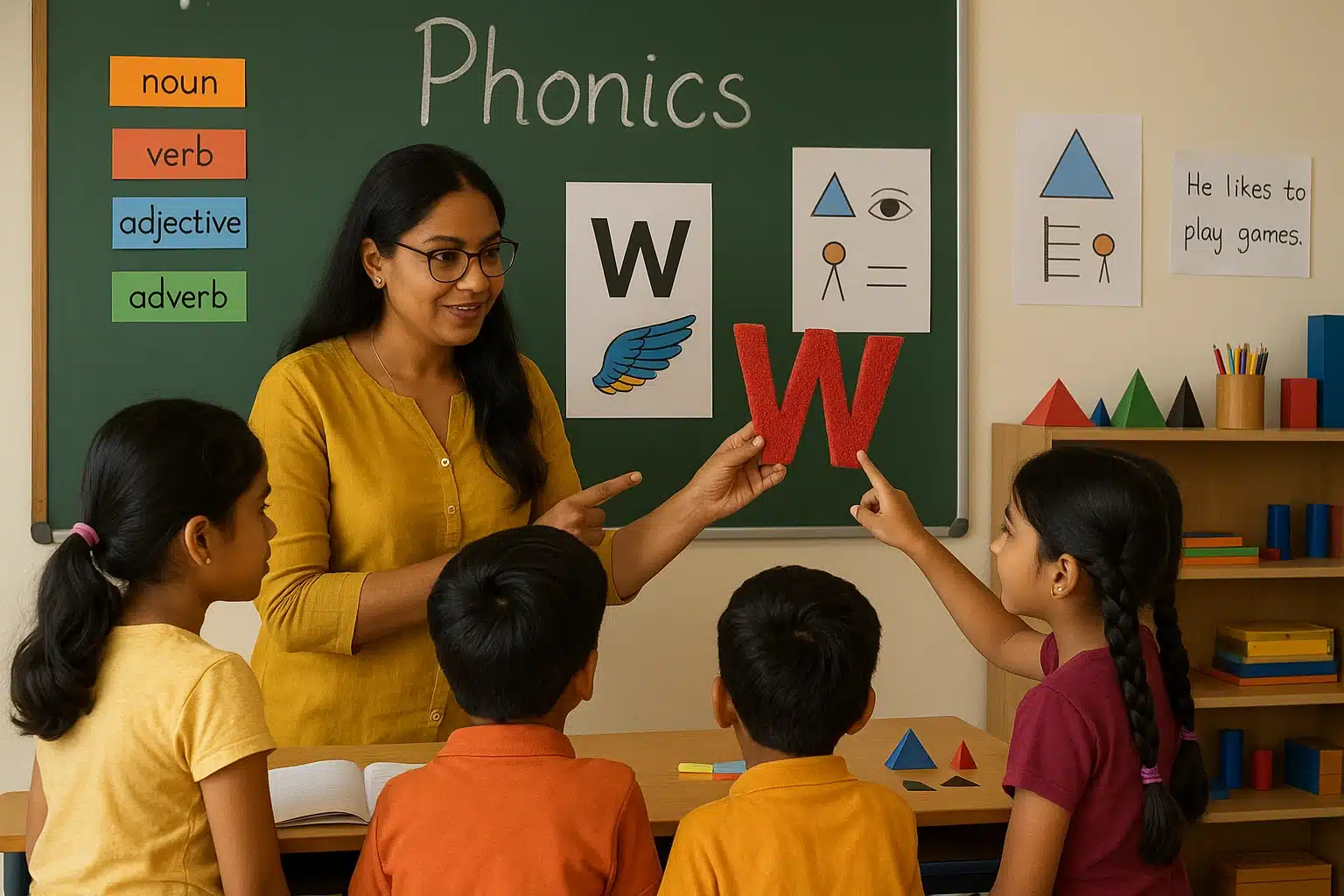
What is Phonics? is a simple way of teaching children how to read by connecting letters with their sounds. When kids learn these sounds, they can blend them to form words, which makes reading and spelling much easier. What is Phonics? also helps children recognize patterns in words, build confidence while reading aloud, and improve pronunciation step by step.
How to Teach Phonics?
Teaching Phonics works best when it is simple, playful, and repeated daily. Start with the most common letter sounds and help children hear, say, and spot them in words they already know.
Start with sound awareness
Play games like “find the first sound” in cat, sun or ball.
Teach one sound at a time
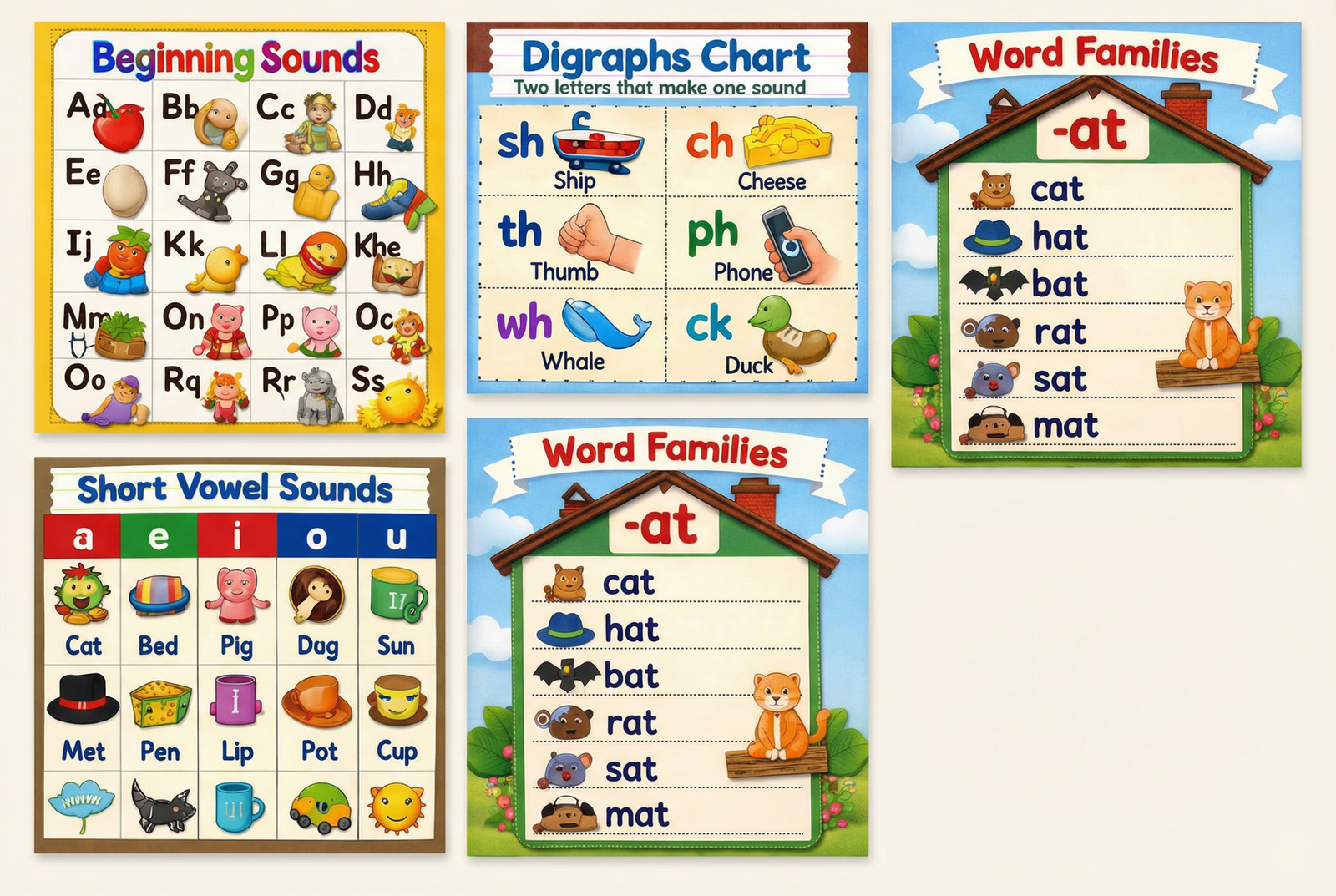
Introduce a letter and its sound using picture cards and clear pronunciation.
Blend sounds to read
Practice blending sounds: /c/ /a/ /t/ → cat. Use short words first.
Segment sounds to spell
Ask kids to break words into sounds: ship → /sh/ /i/ /p/.
Use multi-sensory practice
Trace letters in sand, use magnetic letters, clap syllables and read aloud together.
Repeat with short sessions
Practicing daily for 10–15 minutes is better than long lessons once a week.
Add tricky words slowly
Teach common words like the, was, said with quick recall activities.
Regularity is the important to Phonics success. When kids practice regularly, learn sounds clearly, and follow fun reading routines, they build decoding skills that improve both reading fluency and spelling confidence.
To Download Brochure of Phonics Course, Click Here!
For more details of Phonics Course Call / Whatsapp +919869866277/+919869546913
Types of Phonics
Phonics has various teaching methods and each one help kids in learning Letter–Sound interactions in a clear way. Accepting the types of phonics helps parents and teachers choose methods that match a child’s learning style and reading level.
Synthetic Phonics
Kids learn the sounds of letters one at a time and then put them together to read words, like /s/ /a/ /t/ → sat. This strategy helps you become very good at decoding.
Analytic Phonics
Kids learn the “ca” sound family by starting with whole words and then seeing patterns that are the same, such “cat,” “cap,” and “can.”
Linguistic Phonics
Concentrates on spelling patterns and word families, such as light, night, and right. It helps students easily find common portions.
Embedded Phonics
Reading tales is a natural way to educate. During collaborative reading, teachers point out the sounds and patterns of letters.
Onset and Rime Phonics
Kids learn the initial sound (onset) and the remainder of the word (rime), like “c” and “at” or “m” and “op.”
No single type suits every learner. A balanced mix—especially strong blending practice with pattern awareness—often helps children read with accuracy, speed and confidence.
To Download Brochure of Phonics Course, Click Here!
For more details of Phonics Course Call / Whatsapp +919869866277/+919869546913
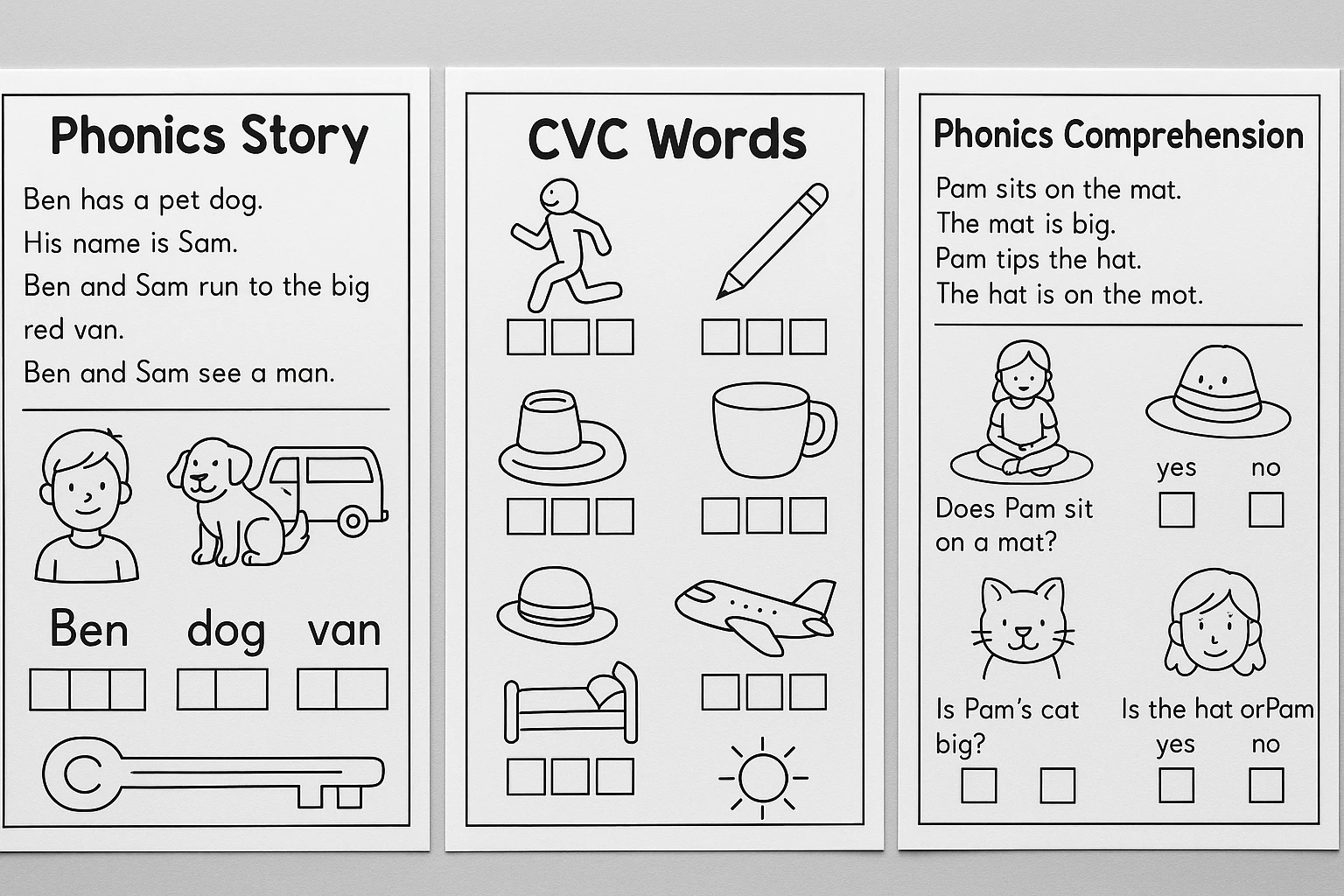
Understanding Phonics at Home
If kids learn Phonics at Home, it might make reading simpler and more fun for them. Phonics connects letters to sounds, and doing simple things every day will help you develop good reading habits without putting too much pressure on you. A calm routine, correct pronunciation and brief practice sessions frequently work best.
Create a 10-minute routine
Pick a fixed time for sound practice, reading, and quick review.
Start with simple sounds
Use simple letter sounds and short words like cat, pin, sun.
Play sound games
Ask, “What sound does this word begins with?” or “Can you find something that begins with /m/?”
Blend and read together
Say sounds slowly and let your kids join them to make a word.
Every day print use
To spot letters and sounds practice reading labels, signboards, grocery lists and storybook titles.
Praise effort, not speed
Encourage tries, correct gently and repeat the word together.
Learning phonics at home is best done often and with enjoyment. When kids engage in simple activities and read under supervision, they gain confidence, improve their decoding skills and develop a steady love of reading.
To Download Brochure of Phonics Course, Click Here!
For more details of Phonics Course Call / Whatsapp +919869866277/+919869546913
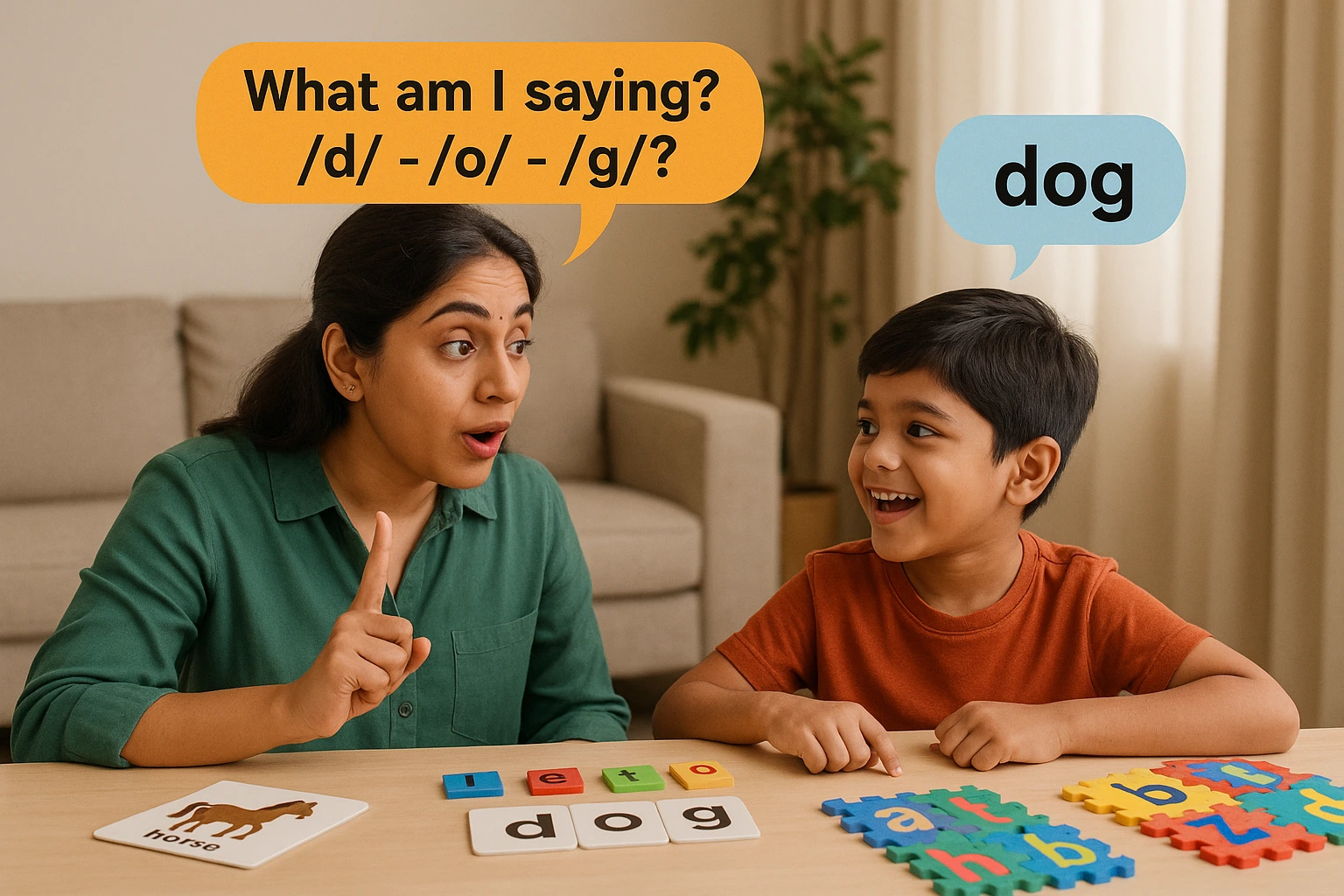
How Does Vidhyanidhi Education Society Teach Phonics Skills?
Vidhyanidhi Education Society (Govt. Regd.) teaches phonics skills through step-by-step teaching that helps learners understand sounds, blending and reading fluency in a practical way. The focus stays on clarity, practice and classroom-ready methods so trainees can teach kids confidently. Vidhyanidhi Education Society offers flexible learning options, with courses online and offline lectures, making it easier for students to learn at their own pace or in a guided setting.
Sound-to-letter connection
Learners practice how to introduce letter sounds with correct mouth formation and clear speech.
Blending and segmenting
Training includes methods to help kids merge sounds when reading and break words to spell.
Tricky words strategy
Simple methods are shared to teach high-frequency words through recall and repetition.
Patterns and Word families
Sessions cover simple phonics patterns and how to build reading speed using them.
Activity-based teaching
To make phonics fun and effective, teachers use flashcards, stories, songs and games.
Practice and feedback
Regular exercises, teaching demos and guidance help improve delivery and confidence.
With planned practice and flexible online and offline lectures, Vidhyanidhi Education Society (Govt. Regd.) offers trainees master phonics skills and apply them in real classrooms with ease.
To Download Brochure of Phonics Course, Click Here!
For more details of Phonics Course Call / Whatsapp +919869866277/+919869546913
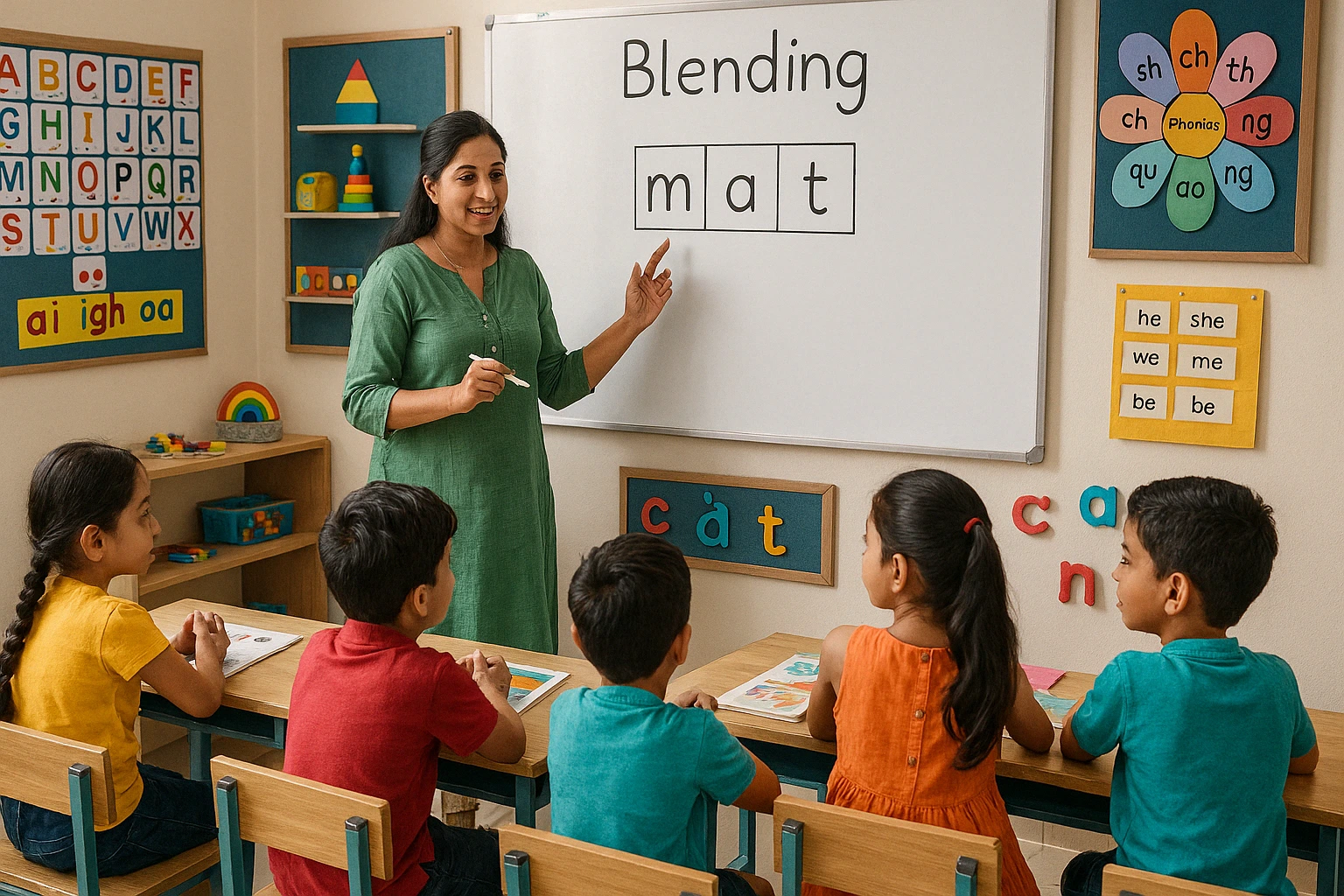
How Your Child Will Benefit from Vidhyanidhi Education Society Phonics Approach?
Your kid benefits when phonics is taught in a clear, repeatable way and Vidhyanidhi Education Society (Govt. Regd.) builds this through the Phonics Teacher Training Course. The methods used in the Phonics Teacher Training Course focus on sounds, blending and daily practice that supports early reading success.
- Stronger letter–sound link, so children read unfamiliar words with confidence
- Better blending skills for smoother reading and fewer pauses
- Clear spelling habits by breaking words into sounds before writing
- Improved vocabulary because reading becomes easier and more frequent
- Sharper listening and pronunciation through sound games and read-aloud practice
- Higher motivation, since lessons feel like short, achievable steps
Vidhyanidhi Education Society offers a Phonics teacher training course designed especially for teachers and parents.
Parents can also benefit from this course, as it provides home-based activities and practical progress tips offered in the Phonics Teacher Training Course. It also builds reading stamina, encourages self-correction, and helps children enjoy storybooks, poems, and school texts without fear or guessing from the start.
By combining structured practice and child-friendly routines, Vidhyanidhi Education Society (Govt. Regd.) helps teacher become confident in using effective and independent Phonics teaching methods.
Join Vidhyanidhi Education Society’s Phonics Course and make learning fun for kids!
To Download Brochure of Phonics Course, Click Here!
For more details of Phonics Course Call / Whatsapp +919869866277/+919869546913
What is Phonics?
FAQs
What Age Should Kids Start Phonics?
Most kids can start around 3–5 years with sound games, rhymes, and letter sounds, then move to blending simple words.
Can A Child Learn To Read Without Phonics?
Yes, some do by memorizing words, but phonics usually makes reading easier, faster, and supports spelling and new word decoding.
What Is The Most Effective Phonics Instruction?
Daily short practice: teach one sound, blend to read, segment to spell, then revise. Vidhyanidhi Education Society also trains this method.
At What Age Should I Stop Reading To My Child?
Don’t stop by age—continue as long as they enjoy it. Reading aloud builds vocabulary and comprehension even for older kids.