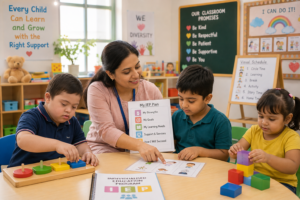

Do you know What is a Shadow Teacher? It is a trained support professional who works closely with a child in a classroom to help them learn, follow routines, and build confidence. A shadow teacher offers one-to-one guidance, especially for children who need extra academic, social, or behavioural support.
By working alongside the main teacher, this role helps the child stay focused, understand instructions, and take part in class activities smoothly. Understanding What is a Shadow Teacher? Also explains how inclusive classrooms support every learner effectively.
Who is a Shadow Teacher?
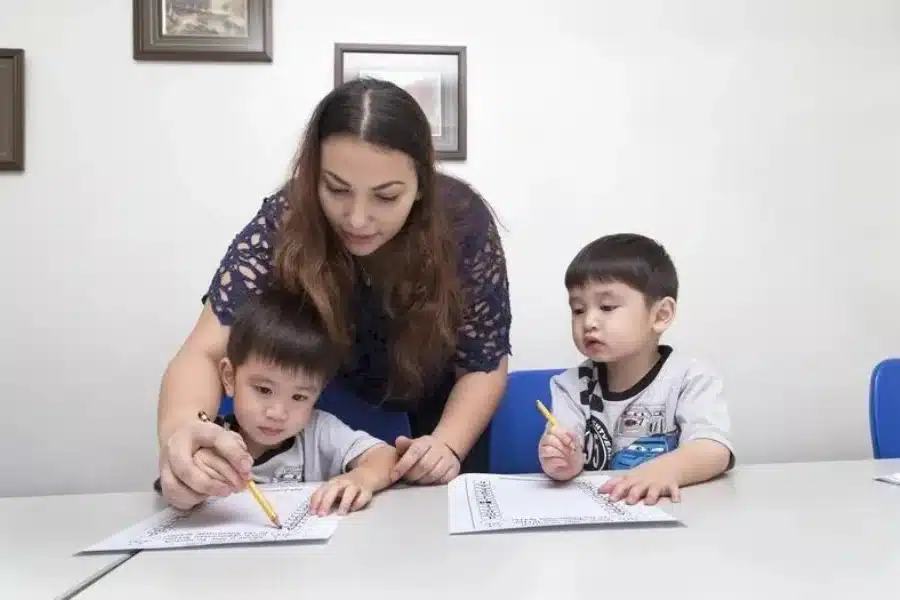
A Shadow Teacher is a certified professional who accompanies a child with special needs in a mainstream classroom, ensuring that the learning process is in a manner aligned with their learning preferences. This helps the child to be completely engaged in all the classroom activities along with their classmates.
- Studies the challenges of every child and accordingly devises intervention approaches.
- Works closely with the lead teacher to support classroom learning
- Helps the kid understand lessons and complete educational tasks
- Supports social interaction with classmates
- Assists in managing behaviour and improving focus
- Encourages communication and independence over time
By providing consistent guidance, a shadow teacher helps create a supportive and inclusive learning environment for the child.
To download the brochure of the STT Course, Click Here!
For more details on the STT Course, Call/WhatsApp at +919321024137 / +919869866277
Source: alamy
What does a Shadow Teacher do?
A Shadow Teacher plays an active role in supporting students with special needs within a regular classroom. The focus is on helping the kid learn effectively, interact positively and gain confidence while keeping step with classroom activities.
Key responsibilities include:
Academic support:
- Explaining instructions in simple terms
- Supporting with note-taking and completing assignments
- Modifying learning materials to suit the kids’ learning style
Behavioural support:
- Using positive behaviour approaches
- Helping the student stay attentive and organised
- Encouraging appropriate classroom conduct
Social skill development:
- Supporting interaction with classmates
- Teaching social cues and classroom etiquette
- Promoting inclusion during group activities
Individualized planning:
- Implementing goals outlined in the Individualized Education Plan (IEP)
- Coordinating with teachers and special educators
Communication:
- Sharing regular updates with parents and teachers
- Aligning strategies for consistent support
Fostering independence:
- Gradually reducing assistance
- Encouraging self-confidence and independent learning
Through these responsibilities, a shadow teacher acts as a strong support link between the student, teacher and classroom environment.
To download the brochure of the STT Course, Click Here!
For more details on the STT Course, Call/WhatsApp at +919321024137 / +919869866277

Who needs a Shadow Teacher?
A Shadow Teacher is helpful for students who need extra guidance to learn and function effectively in a regular classroom. This personalized support boosts the child’s confidence by helping them participate in all classroom activities with efficiency.
The sections that gain the most from a shadow teacher are listed below:
Autism Spectrum Disorder in Children:
- Help foster the child’s social interaction skills and communication skills.
- Helping children manage their sensory issues.
- Assisting the child in getting accustomed to schedules and routines.
Children with ADHD issues:
- Fostering the attention span of the child.
- Developing the child’s time management skills and task completion.
- Helping the child display acceptable behaviours
Students with learning disabilities:
- Disorder-based teaching methods for Specific Learning Disorder
- Tailoring the lessons and assignments.
- Help the child learn in a manner that
Children with emotional or behavioural challenges:
- Help with emotional control and coping skills
- Support in building peer relationships
- Encouragement for appropriate classroom conduct
Children with developmental delays:
- Assistance with academic learning
- Support in developing functional and classroom skills
With the right support, these students can participate more confidently and successfully in mainstream education.
Benefits of having a Shadow Teacher
The benefits of having a Shadow Teacher are best understood from a child’s point of view. In daily school life, this support often becomes the difference between feeling anxious and feeling secure in the classroom.
A sense of safety in school:
A shadow teacher acts like a trusted guardian in class, helping the child feel protected during lessons, breaks, and transitions.
Prevention from bullying:
When a child struggles to speak up, the shadow teacher steps in, discourages teasing, and helps the child handle difficult peer situations calmly.
Clear understanding:
When the child fails to grasp or understand any instructions, the shadow teacher immediately clears their doubt to prevent further confusion.
Constant emotional Support:
The shadow teacher constantly accompanies the child, educating them on how to behave in a social setting.
Behaviour control:
The shadow teacher supports the child during difficult emotional moments, supporting them during meltdowns.
Developing self-dependence:
The Shadow teacher gradually directs the students towards self-dependence, helping them function independently.
Smooth daily routine:
The child learns classroom rules, schedules, and expectations in a calm, reassuring way.
A shadow teacher helps a child feel understood, supported, and confident throughout everyday school experiences.
To download the brochure of the STT Course, Click Here!
For more details on the STT Course, Call/WhatsApp at +919321024137 / +919869866277
Source: henryford
Skills required to be a Shadow Teacher
The skills required to be a Shadow Teacher focus on understanding children, offering steady support, and encouraging independence in a classroom setting. Undergoing precise training and the right skills equip a shadow teacher to handle the diverse challenges of a mainstream that accommodates children with varying learning needs. Enrolling in a Shadow Teacher Training Course builds these essential skills in a structured manner.
Resilient scrutinization
The teacher should be highly alert and should note if there is any kind of delay in achieving the age-related milestones.
Calm and perseverance
Important to study the child’s weaknesses and strengths so that they can be fostered at a pace convenient for them.
Clear communication:
Explaining instructions simply and coordinating effectively with teachers and parents.
Regulating behaviour patterns
Developing the child’s social interaction skills helps them build strong bonds and better relationships.
Deep understanding of needs
A Shadow teacher training course provides teachers of various conditions, such as ASD, ADHD and other specific learning disorders, with correct ways and techniques of dealing with them.
Flexibility
Being open to last-minute changes if the current teaching method is not yielding the desired learning outcomes.
Foster the child’s emotional progress:
Helping the emotional development of the child by teaching them ways to manage their stress, meltdowns and making them feel comfortable in their classroom.
Vidhyanidhi Education Society (Govt. Regd.) offers Shadow Teacher Training Course programs that help aspiring educators develop these skills and perform effectively in inclusive classrooms.
The Power of Tailored Support! Join Vidhyanidhi Education Society’s STT Course Today!
To download the brochure of the STT Course, Click Here!
For more details on the STT Course, Call/WhatsApp at +919321024137 / +919869866277
FAQs
What is the qualification of a shadow teacher?
Undergoing specialised training under a shadow teacher training course is mandatory to be a shadow teacher.
What skills does a shadow teacher need?
Patience, observation, communication, behaviour support, adaptability, and child-centred thinking are essential.
Which child needs a shadow teacher?
Children with autism, ADHD, learning disabilities, or emotional challenges benefit from one-on-one support.
How do you become a successful shadow teacher?
Training, practice, empathy, teamwork, and clarity on What is a Shadow Teacher. help. Vidhyanidhi Education Society offers relevant courses.