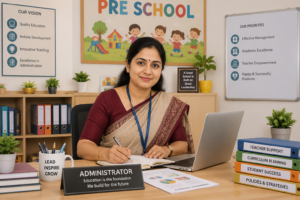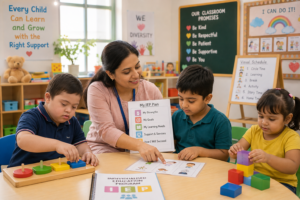
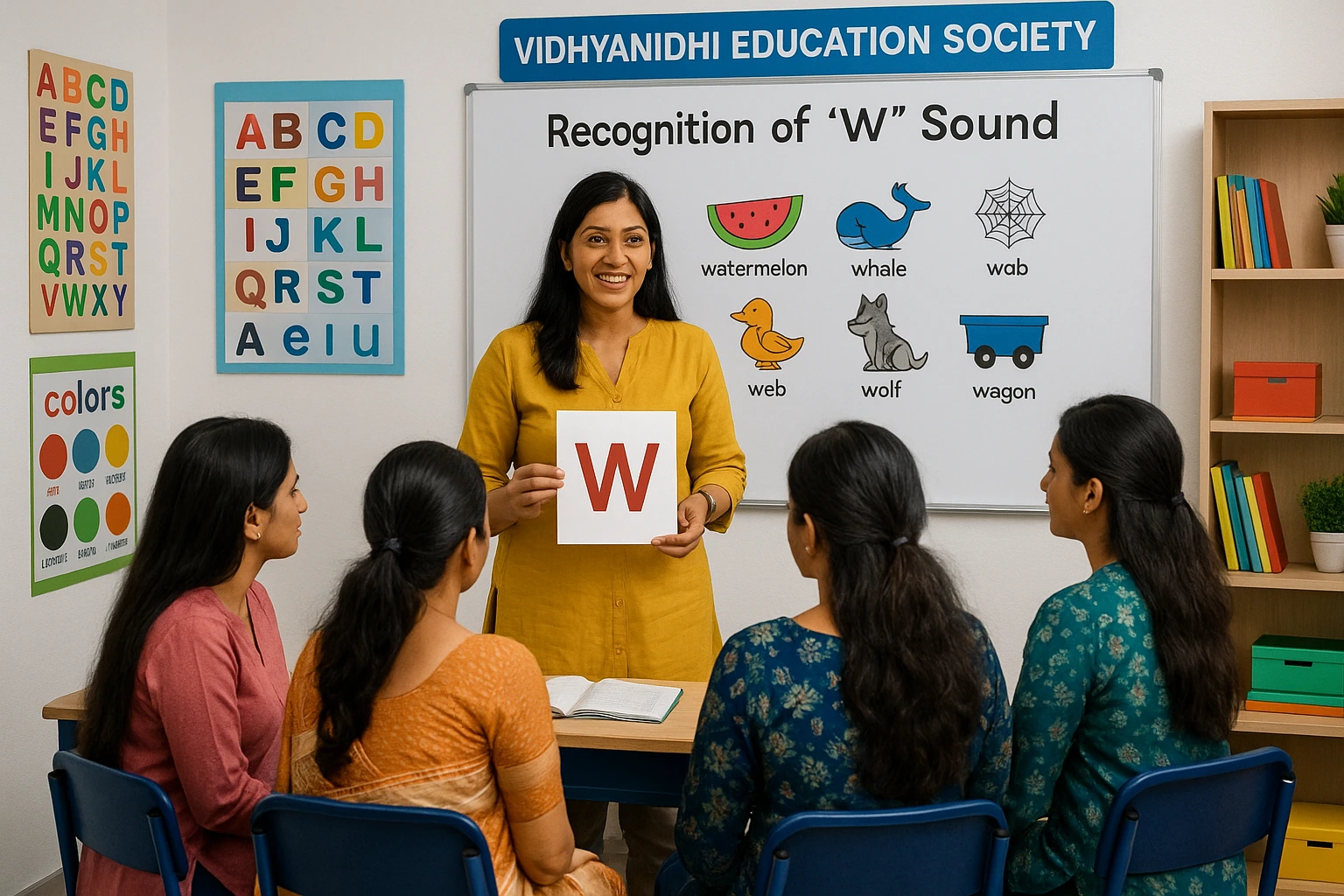
Phonics Sounds for Beginners is the first step that helps kids connect letters to the sounds they make. Understanding this link makes reading feel simpler and more enjoyable. By using Phonics Sounds for Beginners taught to kids, they slowly build confidence as they start recognizing patterns, Blending Sounds and reading new words with ease. This foundation sets the stage for stronger reading skills and smoother learning progress.
Phonics Sound: Vidhyanidhi Education Society Phonics
Vidhyanidhi Education Society’s (Govt. Regd.) Phonics is a clear, step-by-step way to help children connect letters with the sounds they make and turn those sounds into meaningful words. The method builds confidence from the first lesson and steadily grows reading, writing, spelling, and vocabulary skills. It also help adults—teachers, parents, homemakers, and beginners in education—with simple tools that work in real classrooms and at home.
Key Aspects of VES Phonics:
Systematic approach
Links graphemes (letters) to phonemes (sounds) in a planned sequence.
Skill development
Teaches you to improve your spelling, vocabulary, reading and writing all at once.Phonics Sounds for Beginners
Teacher training
This course provides teachers real-life tips, ready-to-use lesson plans and fun projects for the classroom that are meant to help students become better readers and writers.
Target audience
Teachers, parents, homemakers, and aspiring professionals who want a reliable method.
Benefits
It inspires kids to read on their own, say words correctly, and stay interested in language for a long time.
What VES Teaches?
- Phonemic mastery: Knowing how to hear and say the sounds in words.
- Putting things together and pulling them apart:
- Putting sounds together to read words, such /c/ /a/ /t/ → cat.
- To spell words correctly, you need to break them down into sounds.
- Writing letters: making sure each letter is clear and simple to read.
Why it works?
Structured progression
Starts with simple connections between letters and sounds then moves on to bigger words and patterns.
Practice on a regular basis
Means providing kids brief, targeted tasks that they can complete well over and over again.
In real life, use
Instructions and materials for tasks that can be used in class or at home for practice.
The Phonics Teacher Training Course from the Vidhyanidhi Education Society (Govt. Regd.) is a simple way to teach English. This makes it easier and better for kids to learn to read and write.
Call / Whatsapp on +919869866277 / +919869546913, for more details of Phonics Teacher Course.
To download Phonics Teacher Course brochure, Click Here!
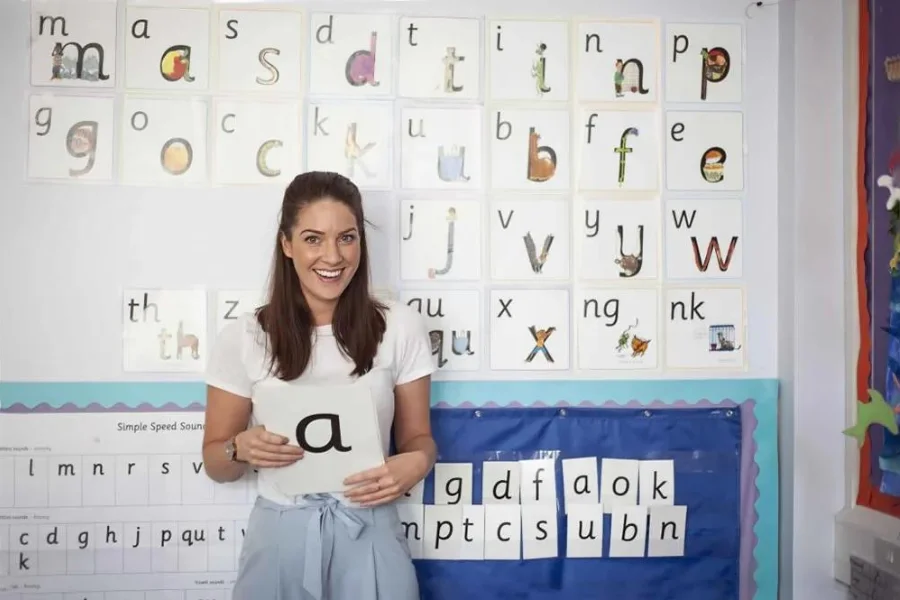
Source: ruthmiskin
The Five Skills that Kids Learn in Vidhyanidhi Education Society’s Phonics Teacher Course
The Phonics Teacher Training course from Vidhyanidhi Education Society (Govt. Regd.) helps kids learn to read and write effectively by using organized procedures and fun ways to learn. This lesson will teach kids how to read proficiently, connect sounds, and understand words. Kids become better at a number of things.
These are the five most important for their phonological development.
Letter-Sound Recognition
Children learn to match each letter with its correct sound, building a strong base for reading.
Blending Skills
Kids combine individual sounds to read complete words smoothly and accurately.
Segmenting Words
Learners break words into separate sounds, helping them improve spelling and Phonemic Awareness.
Sight Word Identification
Children quickly recognize common words without sounding them out, improving reading speed.
Reading with Expression
Students read with proper tone and pauses, which supports better understanding of the text. The Vidhyanidhi Education Society (Govt. Regd.) Phonics Teacher Course ensures that children build strong literacy foundations through systematic phonics training.
Call / Whatsapp on +919869866277 / +919869546913, for more details of Phonics Teacher Course.
To download Phonics Teacher Course brochure, Click Here!
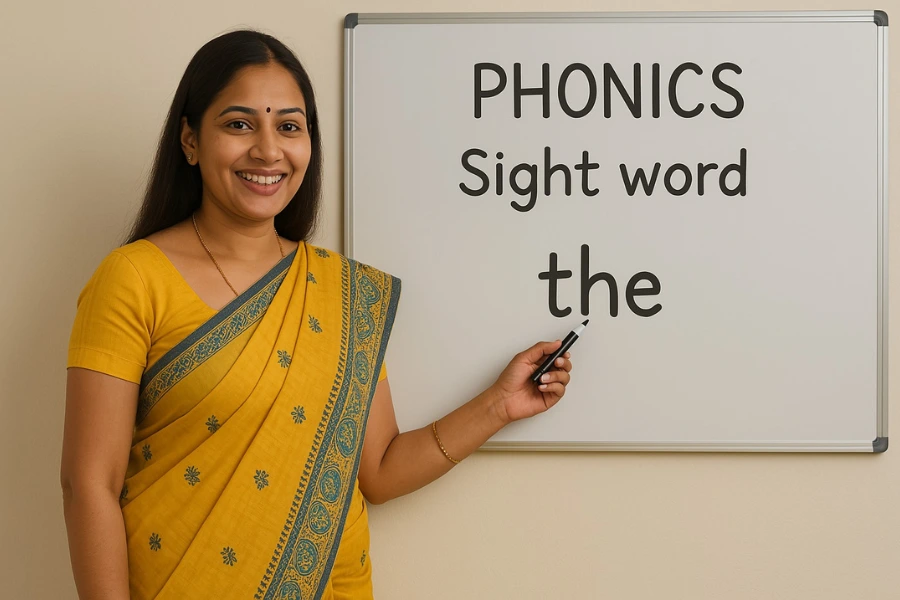
Phonics Words
Kids start by learning how to put together sounds to make words that signify something. This ability helps kids understand how sounds and symbols relate to each other and utilize that knowledge when they read and write.
What Kids Learn:
- Getting the letter sounds right
- Putting sounds with printed letters
- Knowing how sounds come together to make words
- Reading word lists that are based on phonics
- Using phonics principles to spell words properly
This basic ability makes reading easier and helps kids learn new words.
Call / Whatsapp on +919869866277 / +919869546913, for more details of Phonics Teacher Course.
To download Phonics Teacher Course brochure, Click Here!
Vowel Pattern Phonetic Word Lists
Depending on the patterns, vowels may sound different. Word lists that have been carefully designed help kids learn how to read words quickly and simply.
Focus Areas:
- Words with short vowels
- Words with long vowels
- Patterns with “e” that are magical
- Teams of vowels, such ai, ea, oa, ee, and ie
- Knowing how vowel patterns change how words are pronounced
These lists assist kids figure out why the same vowel might sound different in different words.
Digraphs Lists
A Digraph is two letters that make one sound. Vidhyanidhi Education Society (Govt. Regd.) makes them easy to understand and follow.
Examples that were Covered:
- sh, ch, th, ph, wh
Students Practice:
- Reading words that have these digraphs in them
- Finding digraph sounds in sentences
- Sound recognition to help with spelling
This ability helps kids become more fluent and helps them graduate from basic to advanced reading.
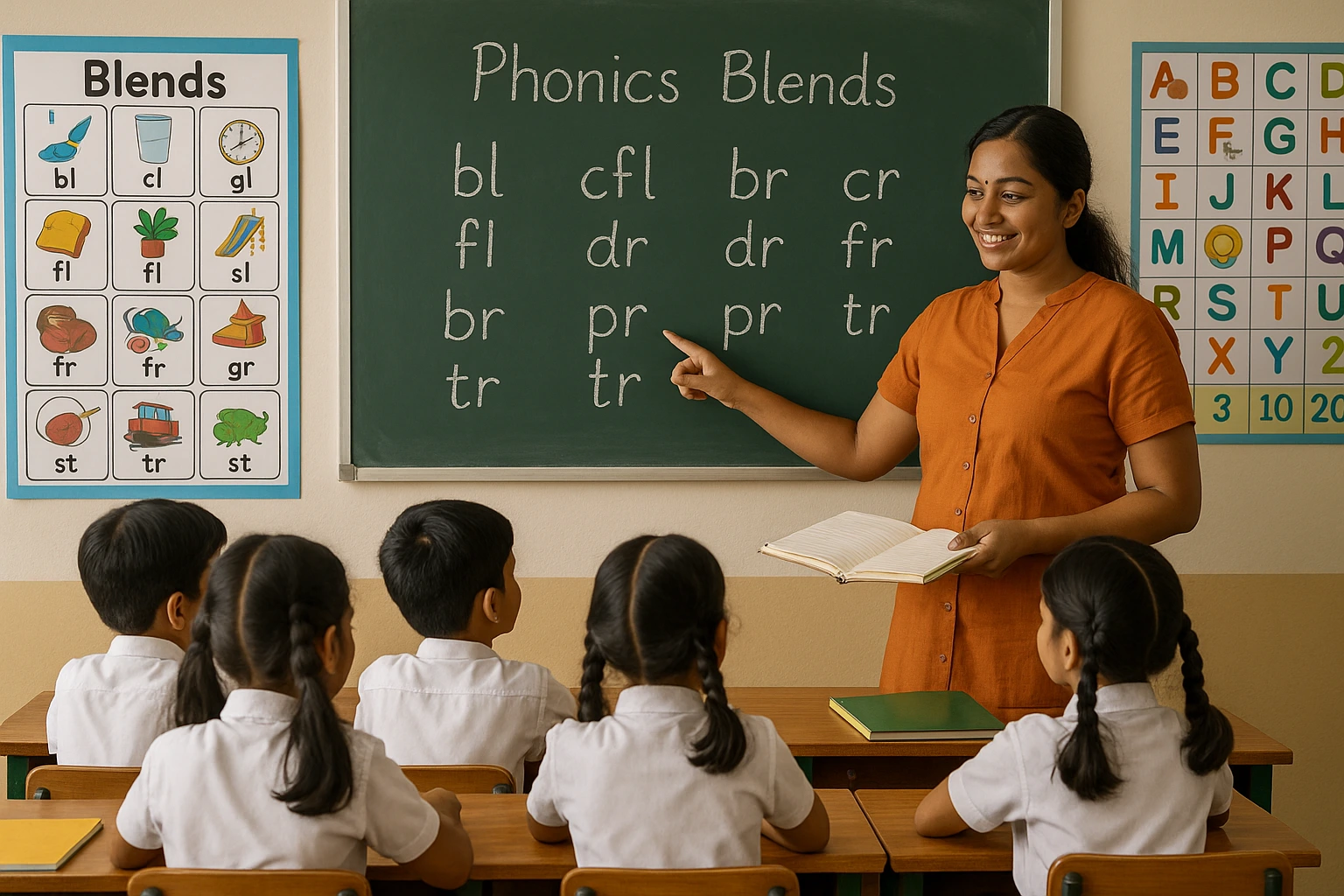
Consonant Blends Lists
When two or more consonants are pronounced together but keep their own sounds, they make a consonant blend. Children who learn how to mix sounds together may read longer and more difficult words.
Common Blends Taught:
- bl, cl, fl, gl, pl, and sl
- br, cr, dr, fr, gr, pr, tr
- sk, sl, sm, sn, sp, st, sw
Kids learn to:
- Quickly mix sounds
- Break down longer words into smaller sounds
- Make spelling and pronunciation more accurate
Diphthongs Lists
Diphthongs are unusual sounds that happen when two vowel sounds glide together. The Vidhyanidhi Education Society (Govt. Regd.) provides a Phonics Teacher Course for kids to practice these skills via organized lists and reading activities.
Diphthongs Included:
- oi, oy: foil, soil, boy, toy
- ou, ow: cloud, house, cow, town
- au, aw: cause, aunt, saw, draw.
Kids learn by seeing the same thing again and over:
- The sound of diphthongs in various words
- To figure out what diphthongs mean in terms you don’t know
- To read smoothly and without stopping
The Phonics Teacher Course from Vidhyanidhi Education Society (Govt. Regd.) teaches these five abilities step by step, making sure that kids learn to read clearly, with confidence, and with good habits from a young age. Each ability builds on the one before it, creating a strong platform for learning to read and write well.
Call / Whatsapp on +919869866277 / +919869546913, for more details of Phonics Teacher Course.
To download Phonics Teacher Course brochure, Click Here!
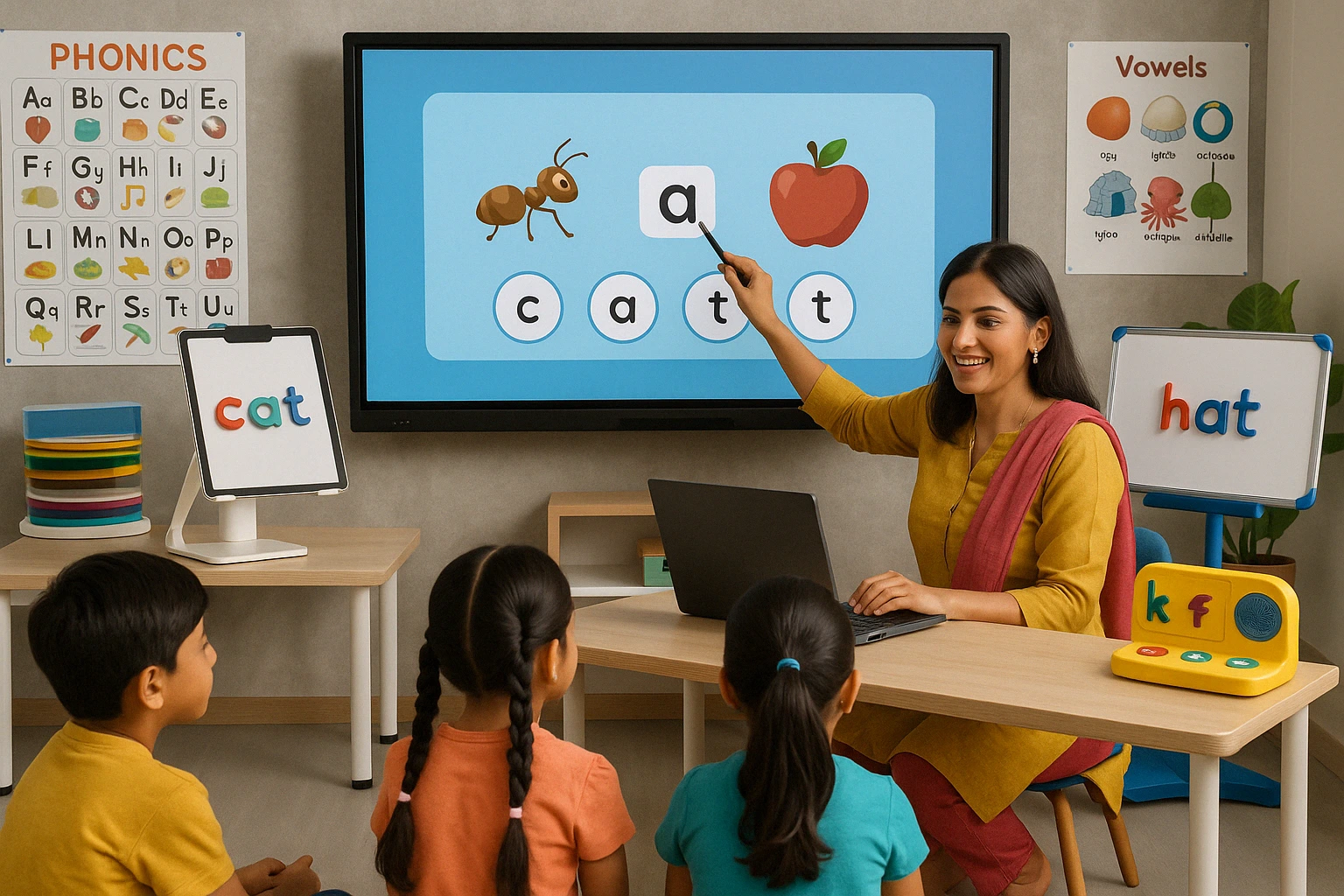
Example of Tricky Word Lists
Words that are hard to spell are those that don’t follow the usual phonetic principles. Kids need to learn to recognize them by sight since the way they sound and spell doesn’t always match. You need to become used to these terms since you see them a lot while you read. This will help you read more quickly and with more confidence.
Here are some clear examples of Tricky Word Lists that might help kids improve their reading abilities.
Early-Level Tricky Words
You learn these terms when you first start out. They show up a lot in short phrases, but they don’t obey the rules for how sounds work.
- the
- to
- go
- no
- I
- he
- she
- We
- me
- my
These words provide the basis for understanding what you read early on.
Middle-Level Tricky Words
As kids become older, they come across lengthier words with strange spellings or sounds that don’t follow a pattern.
- said
- come
- some
- here
- there
- where
- were
- want
- once
- does
Mastering these helps children read storybooks with more ease.
Advanced Tricky Words
These terms are harder and are found in more advanced books. You can’t sound them out straight; you have to learn them by using them and repeating them.
- through
- thought
- tough
- enough
- cousin
- people
- bought
- brought
- island
- answer
These kinds of words help you learn new words and read with confidence at higher levels.
Tricky Words with Silent Letters
A lot of hard words are hard because they include silent letters that modify the way they are spelled but not the way they sound.
Examples include:
- understand
- knee
- write
- not right
- truthful
- hour
- quiet
- speak
- half
- might
Learning these improves both spelling and pronunciation accuracy.
Homophone-Based Tricky Words
These words sound the same but have different meanings and spellings, making them confusing for learners.
Examples:
- there / their / they’re
- to / too / two
- here / hear
- write / right
- one / won
- sea / see
Children benefit from practice sentences and visual cues to understand these better.
Tricky Word Lists are very important for helping kids learn to read more than just phonetic sounds. Young learners can identify these words right away and read more smoothly if they see them often, practice reading, and use enjoyable memory tricks.
Master phonics skills—Join Vidhyanidhi Education Society’s Phonics Teacher Course today!
Call / Whatsapp on +919869866277 / +919869546913, for more details of Phonics Teacher Course.
To download Phonics Teacher Course brochure, Click Here!
FAQs
What are the first sounds to teach phonics?
Start with single-letter sounds like s, a, t, p, i, n, as these help kids blend quickly and form simple words.
At what age should I introduce phonics?
Phonics can be introduced around the age of 3-4 years, when kids start recognising letters and can follow simple sound-based activities.
What is the salary of a phonics teacher in India?
Phonics teachers earn based on skills, location, and experience, with growth opportunities in schools, activity centres, and private tutoring.
How to become a certified phonics teacher?
Join a structured training programme like Vidhyanidhi Education Society’s Phonics Sounds for Beginners to gain skills and recognised certification.