

Source: gettyimages
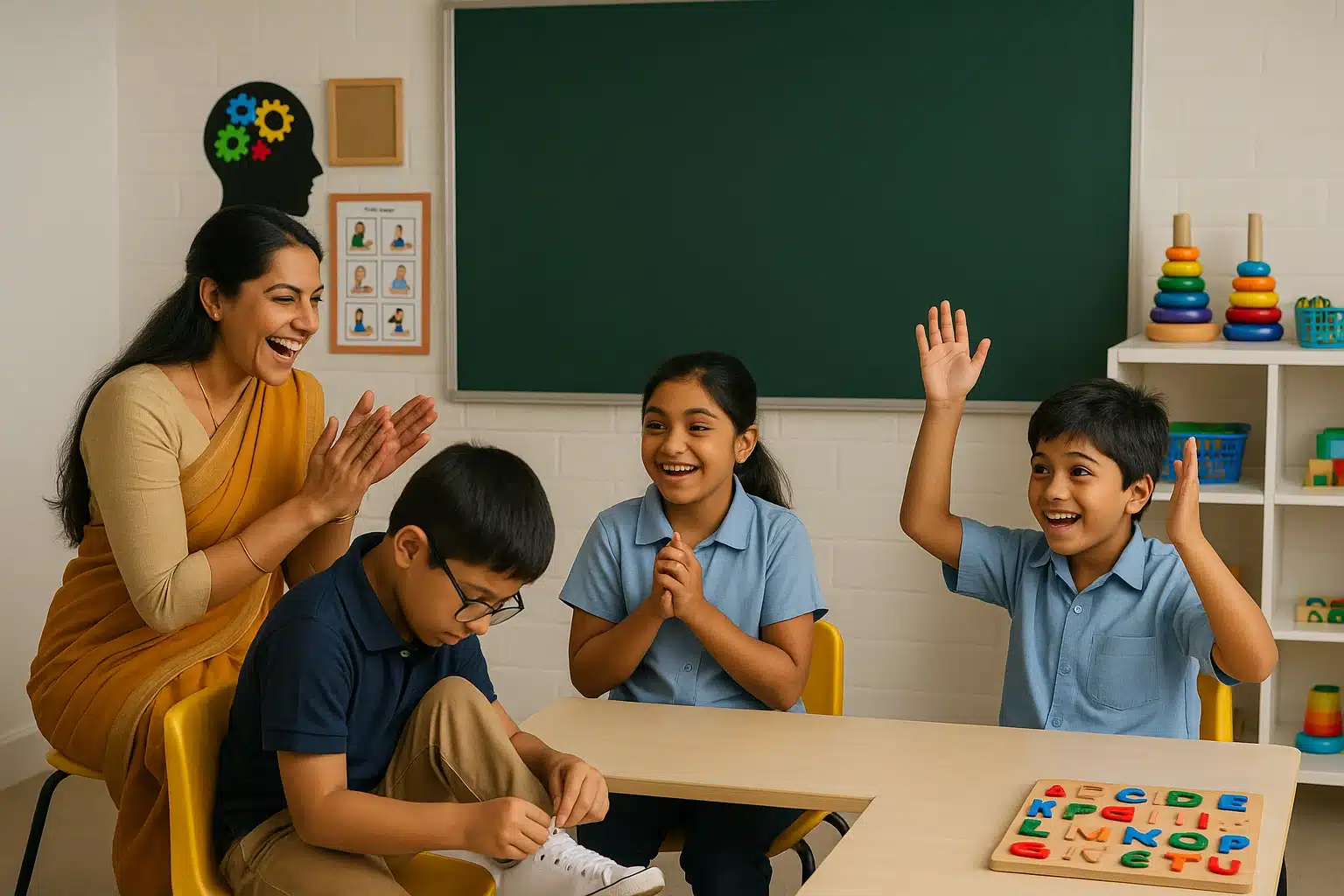
What is a Special Educator? It is a common question among parents, teachers and even students who want to understand the role of these qualified professionals in schools. What is a Special Educator? A Special Educator is a skilled educator who has undergone the desired training under a special education program to handle the challenges faced by children who possess learning disabilities, developmental delays, behavioural challenges and other special needs.
They are skilled professionals who are trained to create IEP’s based on the child’s learning needs, modify lessons and curriculum to suit the child’s requirements so that every child attains their learning goals. By offering educational guidance, emotional support and skill-based training, a Special Educator ensures that kids get equal learning opportunities and feel confident in the classroom environment.
What does a Special Educator Do?
A Special Educator has a crucial role to play in ensuring that inclusive education is implemented effectively in any educational setup that uplifts the overall learning experience of children with learning, physical, Emotional or Developmental Challenges. Their prime goal is to create a conducive learning space for every child where they can learn, grow and acquire quality education without being looked down on or being judged.
A Special Educator focuses on the child’s overall holistic progress, ensuring that all his domains of development receive adequate support that helps them thrive academically and socially.
Below are the key responsibilities of a Special Educator:
| Job roles | Duties |
| Reviewing and progress tracking | Scrutinise the child on a daily basis and track their progress periodically. |
| IEP Formulation | Devise IEPs after observing each child and carefully listing their strengths and weaknesses. |
| Adapting the syllabus | Depending on the child’s learning goals, modify the lessons, adapt to suit the child’s needs and use a variety of teaching methods, especially multi-sensorial methods. |
| Instruction and Support | Provide one-on-one or small-group instruction to build academic, social, and behavioural skills. |
| Collaboration | Work closely with parents, general teachers, counsellors, and therapists to maintain consistent support. |
| Emotional Guidance and Counselling | Support students by offering them counselling sessions to help them get rid of anxiety and emotional meltdowns.
|
A Special Educator is a very important link between different stakeholders such as teachers, therapists, parents and school administration that helps to provide the child with the best intervention approaches.
To download the brochure of the SEN Courses, Click Here!
For more details about SEN Courses, Call/WhatsApp at +919321024137 / +919869866277
What is the Difference between a Special Educator and a General Educator?
A Special Educator and a General Educator share a common goal of educating students, but the kinds of approaches the two use vary. A General Educator plans their lessons according to the majority of students and follows a general syllabus. A Special Educator plans the lessons based on the learning needs of a few students by providing them with differentiated instruction and using structured teaching methods.
Comparing the two below:
| Aspect | Special Educator | General Educator |
| Instructional Focus | Adapts and modifies curriculum based on IEP goals | Delivers grade-level curriculum aligned with educational standards |
| Student Population | Works with students with physical, cognitive or emotional disabilities | Teaches a general group of students, including those in inclusive classrooms |
| Teaching Methods | Methods differ based on the needs and learning preferences of the child. | Methods are largely based on larger group preferences and styles. |
| Administrative Duties | Writes, reviews, and manages IEPs; ensures legal compliance (IDEA) | Participates in IEP meetings; focuses on classroom teaching |
| Qualifications | Specialised training and need-based | More about the subject and classroom control. |
In inclusive settings, both teachers collaborate to support educational progress and skill development for all students.
What is the Qualification for a Special Educator?
To become a Special Educator, one must undergo a special education needs program to acquire the desired skills and knowledge that help them manage the complex challenges of a mainstream classroom effectively. A strong foundation of Learning Disabilities helps the teacher to provide the child with the much-needed academic support and guidance, enabling them to thrive academically and socially.
Basic Qualifications:
- A bachelor’s degree in any stream from a recognised university.
- Knowledge about child development, basics of child psychology and behaviour regulation.
- Thorough understanding of IEP’s and their implementation.
- Lucid communication skills.
Candidates, if possible, should work and gain experience in this field to help them understand the real classroom scenarios and apply what they have learnt in their workplace. Being practically involved in a classroom gives them the much-needed exposure to face the real challenges and to know which teaching approaches are suitable to apply.
To download the brochure of the SEN Courses, Click Here!
For more details about SEN Courses, Call/WhatsApp at +919321024137 / +919869866277
How to do a Special Educator Course?
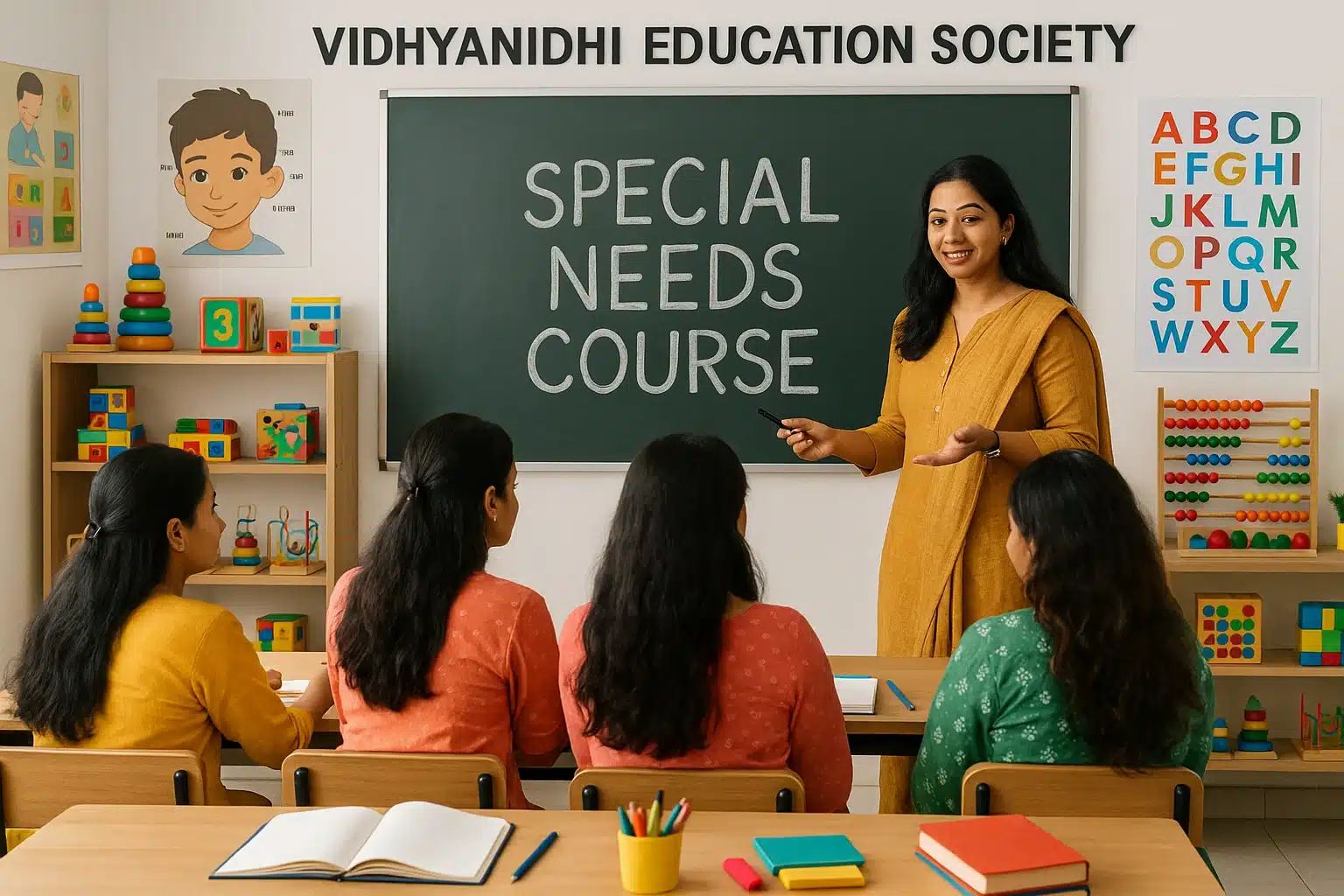
If working with children with special needs is your passion and you want to make a difference in the lives of children with special needs, then it is a must for you to pursue a Special Education Program from a reputable platform. This professional certification equips you to handle the diverse complexities of a mainstream classroom and enables you to create a conducive learning environment for your students.
Procedure to be followed:
Basic qualifications
Attain the basic educational qualification of a bachelor’s degree in any stream from a recognised university
Right choice of a bankable Institute
Make the right choice of an eminent teacher training. Select a reputed institution that provides a structured curriculum, internship opportunities, and certification. For example, Vidhyanidhi Education Society (Govt. Regd.) offers a Special Educator Course with practical training and placement guidance.
Understand the Course Structure
A well-designed Special Educator Course usually includes:
| Module | Focus Area |
| Module I –Basics of Inclusive Education: Importance, Modifications and Legal Policies. | Importance of Inclusive Education, its implications, its benefits and implementation of various legal policies for children with special needs. |
| Module II – Gaining insights into the world of Growing and Special Needs Children | Understanding the actual process of the development of children with special needs. How to detect any developmental delays and provide solutions for them. |
| Module III –All-round domain development. | Focusing on all-round development of children, including different domains such as emotional, social, cognitive, physical and intellectual. |
| Module IV – Developing life-skills | Adaptive skills training; Attention Deficit / Hyperactivity Disorder (ADHD); Autism; Learning Disability |
These modules ensure that trainees gain theoretical knowledge along with practical understanding to support kids with various learning needs effectively.
Do an Internship for practical training.
Getting hands-on training is the most important part of this program. Internships at a special school will help trainees understand how to plan their intervention approaches and how to apply them based on the child’s needs.
Get a credential
Once an internship is completed, you have to appear for an assessment post, after which you get a certificate of completion, enabling you to work in schools and therapy centres.
A structured Special Educator Course builds the skills needed to assess, plan and teach effectively. With proper training and dedication, you can create meaningful learning opportunities for kids who require specialised support.
What is a Special Educator?
Support Brighter Futures, Join the SEN Course by Vidhyanidhi Education Society!
To download the brochure of the SEN Courses, Click Here!
For more details about SEN Courses, Call/WhatsApp at +919321024137 / +919869866277
FAQs
What Is The Salary Of Special Educator In India?
Salary depends on city, school type, experience, and role; many start modestly and grow with expertise, certifications, and special needs teaching exposure.
How Many Years Is A Diploma In Special Education?
Duration varies by institute; many diplomas run from a few months to one year, and some advanced programs may take longer with internship components.
How To Get A Special Educator Certificate?
Enrol in a recognised course, complete modules and an internship, clear assessments, and receive certification; Vidhyanidhi Education Society explains what a Special Educator is.
What is the post of a special educator?
Common posts include Special Educator, Inclusion Teacher, Resource Room Teacher, Learning Support Teacher, Shadow Teacher, and SEN Coordinator, based on school needs.