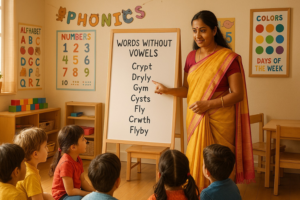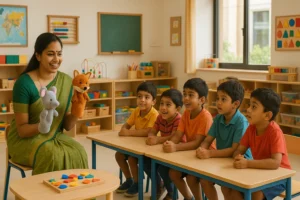
Special Needs Education helps children who have difficulty learning and face challenges to get the support they need. Teachers adapt teaching methods to each child, using help, tools, or activities that are appropriate to learn. The goal is to build skills, confidence, and independence, because every child is unique.
How Schools Can Help Children with Special Educational Needs?
By creating a planned and supportive environment, they can help these children succeed both academically and socially. Schools play an important role in supporting children with Special Needs Education(SEN).
For more details on the SEN Course, Call/WhatsApp at +919321024137 / +919869866277
To download the brochure of the SEN Course, Click Here!
Here are effective ways schools can support children with SEN:
- Individualised Education Plans (IEPs): Schools create personalised learning plans that match each child’s Specific Learning Challenges and goals.
- Specialised Teaching Methods: Using visual aids, hands-on activities, or simplified commands can help make learning more accessible.
- Trained Support Staff: Special educators, speech therapists, and counsellors should be available to offer targeted help when required.
- Regular Assessments and Feedback: Continuously observing helps adjust teaching plans to suit the child’s progress and needs.
- Collaboration with Parents: Collaborate positively with parents, educating them about how they can foster the child’s learning at home.
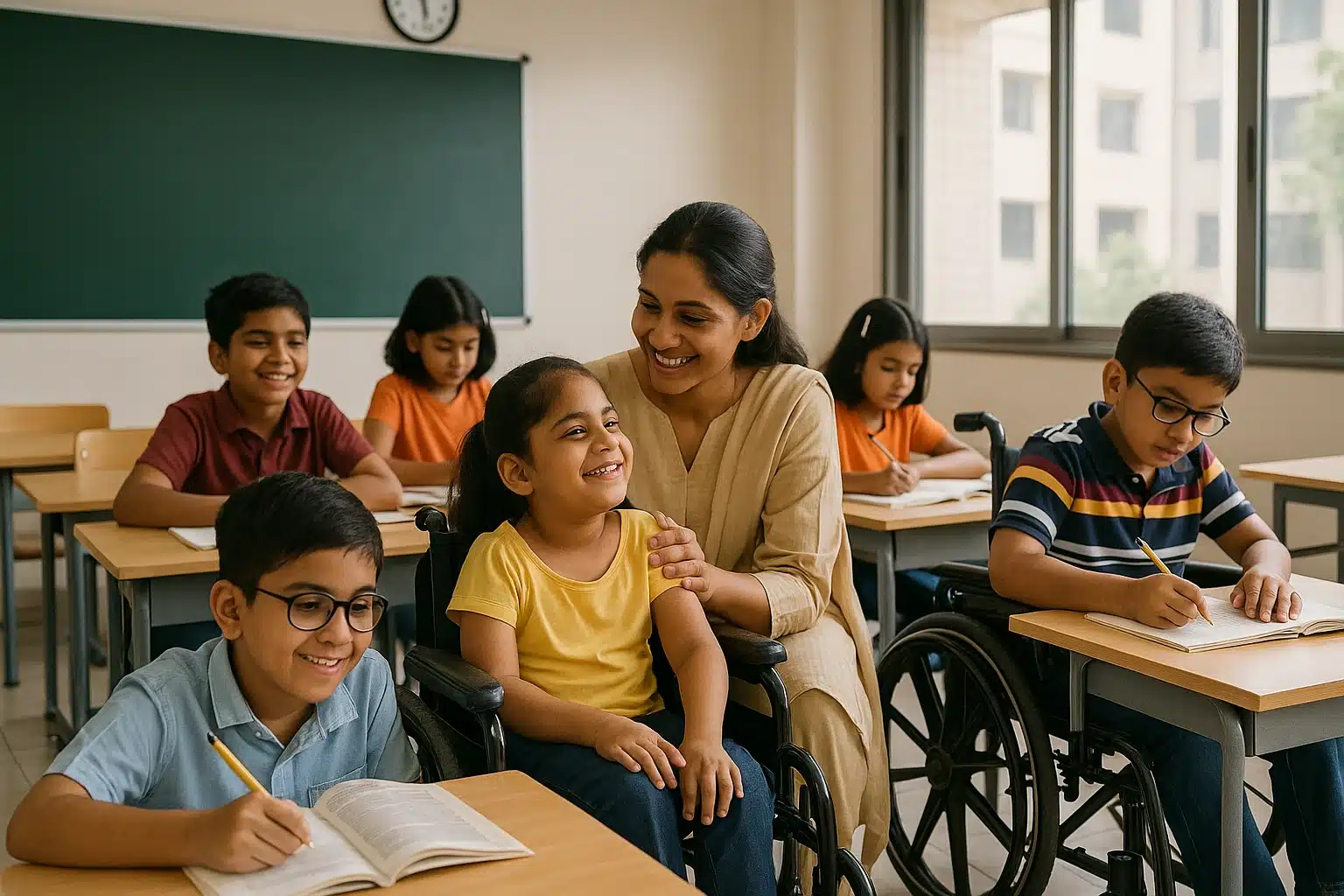
- Promote Peer partnerships: Conduct group activities in which special children work alongside their peers, which helps foster a strong bonding between them and helps them form meaningful relationships, celebrating inclusivity and diversity.
- Including AI-backed Assistive techniques: Including educational games powered by AI, apps, and software-like speech-to-text helps to make learning accessible for all students.
- Conducive environment: Creating a Safe and Supportive environment helps children remain focused, reducing any stress or anxiety.
When schools provide support, Children with Special Needs Education are upgraded, organised to reach their potential and feel valued in the learning community.
Role of the Parents of Children with Special Needs
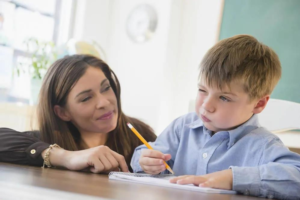
Parents play an important role in the growth and development of children with Special Needs Education. Their participation, indulgence, and patience can make a strong impact on the child’s overall development.
Listed below are ways in which the child’s learning can be supported at home:
Studying the child in-depth:
Understand the child thoroughly, learn about his challenges and notice his key strengths to provide him with suitable support that helps him attain his learning goals.
Cooperation with Professionals:
Encourage positive collaboration amongst teachers, educators, therapists, and parents to ensure that everyone is updated about the child’s progress.
Promote learning at home:
Create a comfortable and appropriate learning environment at home by maintaining a clear and consistent routine, incorporating valuable learning strategies that help to reinforce topics learnt at school.
Raising independent students:
Gradually push the child towards handling his activities independently, which will help him be self-reliant and make him confident.
Know about your child’s rights:
Be an advocate for your child by voicing for your child, raising awareness for them and ensuring that they receive all the benefits he is entitled to within the educational and healthcare systems.
Value their small wins:
Celebrate the child’s smallest progress. It helps to boost their morale and encourages them to strive harder for better results.
Join workshops:
Be a part of workshops conducted where parents share their success stories and gain insights into how to support your child effectively.
Parents are the biggest support system the child can have, and their encouragement, support and efforts can make a huge impact on the overall progress of the child, assisting them to embark on a path of success for a lifetime.
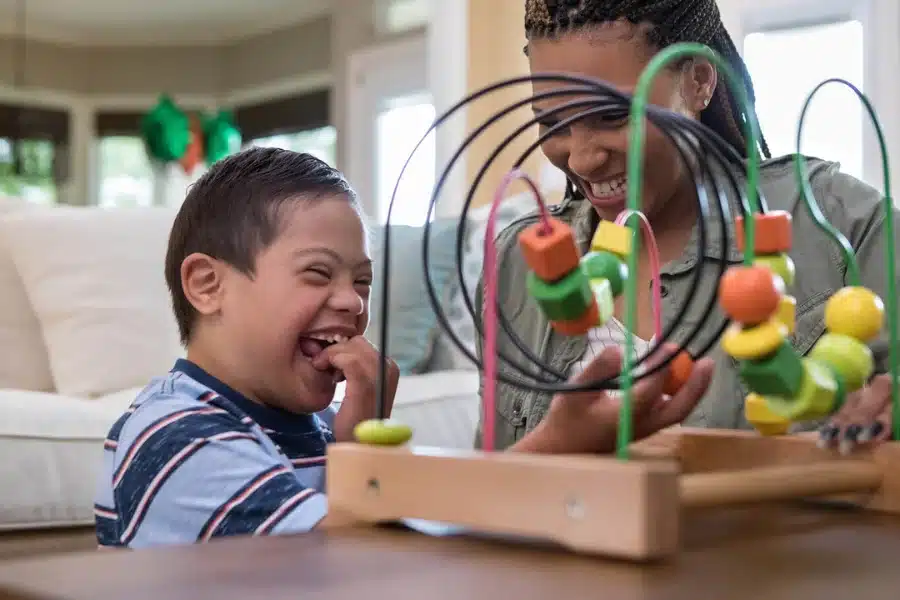
Source: istockphoto
Teaching Strategies for Children with Special Needs
Teaching kids with special needs requires patience, creativity, and the proper plans that match each kid’s learning method. Educators can help every child learn with confidence and purpose.
Mentioned below are some highly result-oriented Special Needs Education teaching techniques:
Here are some practical teaching strategies:
Using multiple forms of innovative teaching aids:
Use of unique Visual Aids and Demonstrations, such as charts, pictures, helps children relate to the topic well, helping them retain topics for a longer time.
Concise language
Using simple language without any complicated terms and explaining step-by-step helps children understand better.
Using Multisensory Learning
Incorporating multi-sensorial methods of teaching, such as sight, sound, touch, and movement, helps to capitalise the child’s strengths of learning, improving their memory and focus.
Convenient and multiple seating spaces
When the child is given the option to sit in a place of his choice, it helps them remain focused, helping them learn better and remain calm, promoting positive behaviour.
Routine and Structure
A regular classroom routine provides a sense of safety and predictability.
Rewarding and appreciation
Acknowledge the child’s smallest efforts by giving them simple rewards and appreciating their efforts amidst their friends helps build a positive self-image for the child.
Encourage group activities
Ensure that the peers and special children come together in some productive group activities that help build their social skills and foster an empathetic approach on the part of the peers.
Use of Latest tech tools
Assistive devices backed by the latest technology help children learn better and promote better attention span, as children tend to be keener on learning through innovative methods.
Realistic goals
Devise age-appropriate and competency-related realistic goals for the child that are aligned with the child’s progress.
Timely feedback
Conduct timely assessments that track the child’s progress and adapt the interventions if they are not yielding the desired learning outcomes.
By applying these approaches, teachers can make classrooms that meet every student’s needs and promote meaningful participation for every child.
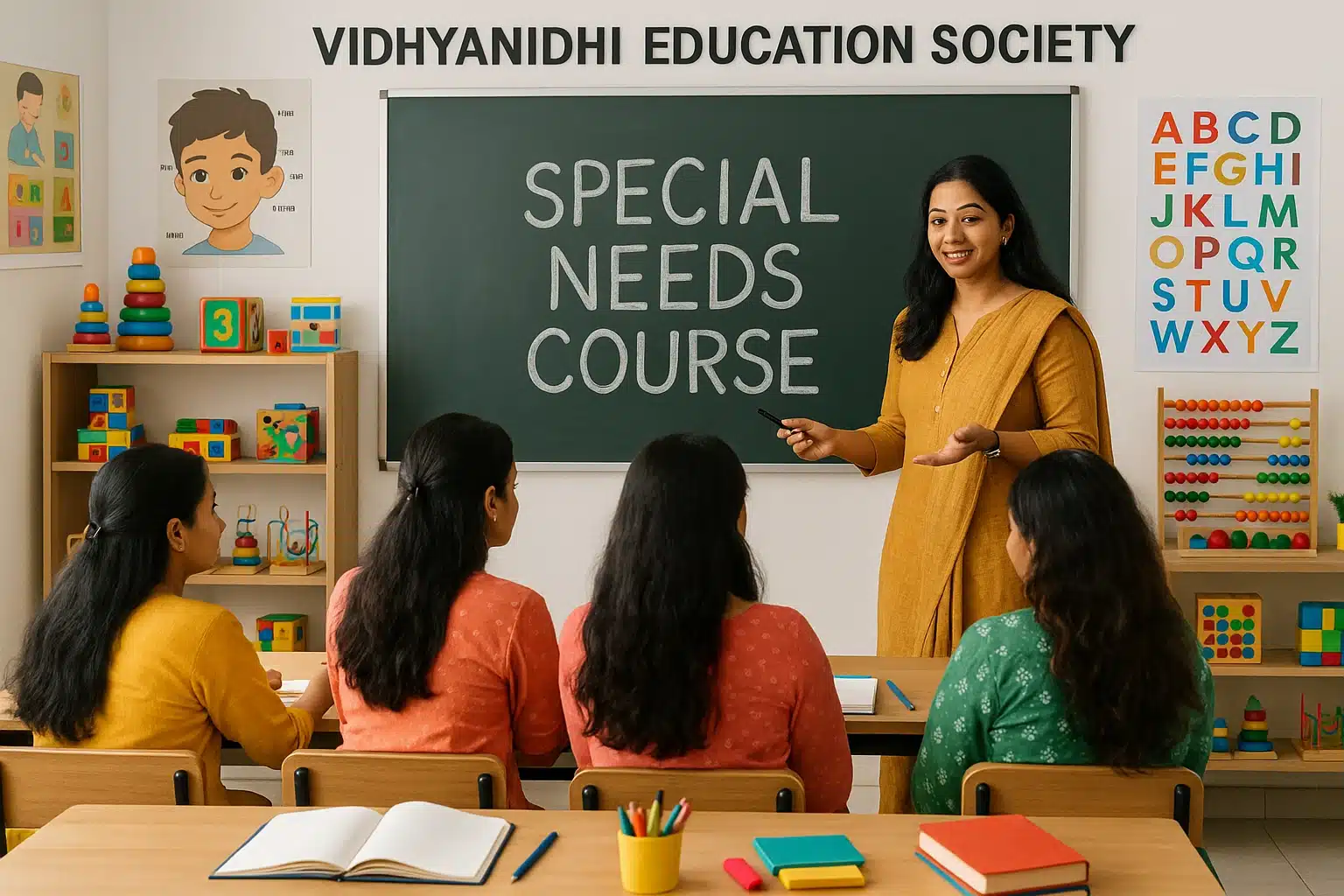
How to Become a Special Educator?
To become a Special Educator, you need the right training, qualifications, skills and mindset to support kids with different learning needs. Undergoing this training equips you with effective strategies, teaching pedagogies and classroom management skills that guide the child in the right direction, making a lasting impact on their learning skills.
Here’s how to become a special educator:
Acquire a 12th-grade certificate.
To become a special educator, one must complete their 12th grade from a recognised college.
Attain a professional credential.
Enrol in a professional Special Needs Education that certifies you to work as a special educator from a bankable teaching platform, such as Vidhyanidhi Education Society (Govt. Regd.), an eminent teacher training Institute, to bag lucrative job offers at prestigious schools.
Master practical skills as well as theoretical knowledge
Be thorough with your theoretical knowledge about different learning disabilities, behavioural disorders and also be well-versed with the practical classroom management skills that make a big impact on handling the diverse needs of a mainstream classroom.
Be a part of school internships.
Do internships in schools to understand the real classroom scenario and apply your knowledge effectively to gain excellent classroom management skills.
Stay updated
One must understand that learning never stops, so even teachers must take efforts to update themselves about the newest strategies and techniques that can help children effectively improve their academic progress.
The Special Educator Course offered by Vidhyanidhi Education Society (Govt. Regd.) provides various learning modes, including online and offline, making it accessible to aspiring teachers across locations.
You become eligible to work in schools, therapy centres, and inclusive education programs by completing a course from Vidhyanidhi Education Society (Govt. Regd.).
Join Vidhyanidhi Education Society’s SEN Course Today! Support Growth, Spark Potential, Transform Lives!
For more details on the SEN Course, Call/WhatsApp at +919321024137 / +919869866277
To download the brochure of the SEN Course, Click Here!
Special Needs Education
FAQs
How can Schools Support Children with Special Needs?
Schools support children with special educational needs through modified plans and trained teachers. Teachers from places like Vidhyanidhi Education Society use special tools to help each child learn well.
What is Inclusive Education?
Inclusive education means all students learn together, and teachers make changes so everyone can join in and feel valued, no matter their abilities.