
Source: youtube
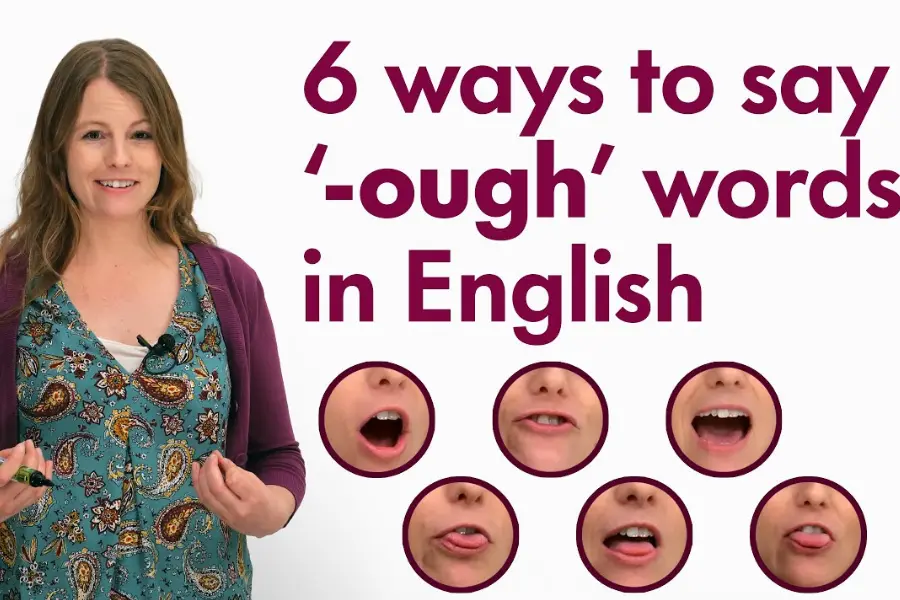
Learning Phonics helps kids understand how letters and sounds work together, makes reading simple and more confident. It keeps young learners engaged and motivated when they study in a fun and interesting way, rather feeling pressured. Using songs, games, stories, and everyday activities can turn lessons into enjoyable moments of discovery. With the correct approach, Phonics Learning becomes a positive experience that builds strong reading skills while kids have fun.
Why Phonics Matters?
Phonics Matters because it teaches kids how written letters are connected to spoken sounds. Instead of memorising whole words by sight, kids learn to crack the code of language. This makes reading more reasonable and less stressful, helping them move from guessing words to truly understanding them.
Core Benefits of Phonics:
Stronger Decoding Skills
Children learn to break words into sounds and blend them, so they can read new words on their own instead of guessing.
Better Spelling and Writing
Kids learn how to spell words by linking sounds to letters. This helps people write better and with greater confidence.
proved Reading Fluency
When phonics made is easy kids can read faster, which lets them focus on understanding the story or text.
Richer Vocabulary
As they read more words successfully, they meet new vocabulary and naturally build stronger language skills.
Confidence and Independence
Each word they read correctly adds to their self-belief, turning reading into something they enjoy rather than avoid.
Stronger Base for All Subjects
Good reading skills help in all subject—whether it is solving word problems in math, understanding science facts, or reading history lessons.
How Phonics Works
- Kids first learn the basic sounds (Phonemes) that letters or letter groups (graphemes) represent.
- They then practice blending these sounds to form words—for example, c–a–t becomes “cat.”
- Lessons are taught in a planned order, starting with simple patterns and moving to more complex ones, which research shows is the most effective way to build strong reading skills.
Phonics gives kids a tools they need to become confident readers. If kids know how sounds and letters work together, they can read anywhere. These things help kids learn, stay interested, and do well in school.
Call / Whatsapp on +919869866277 / +919869546913, for more details of Phonics Teacher Course.
To download Phonics Teacher Course brochure, Click Here!
Making Phonics Fun
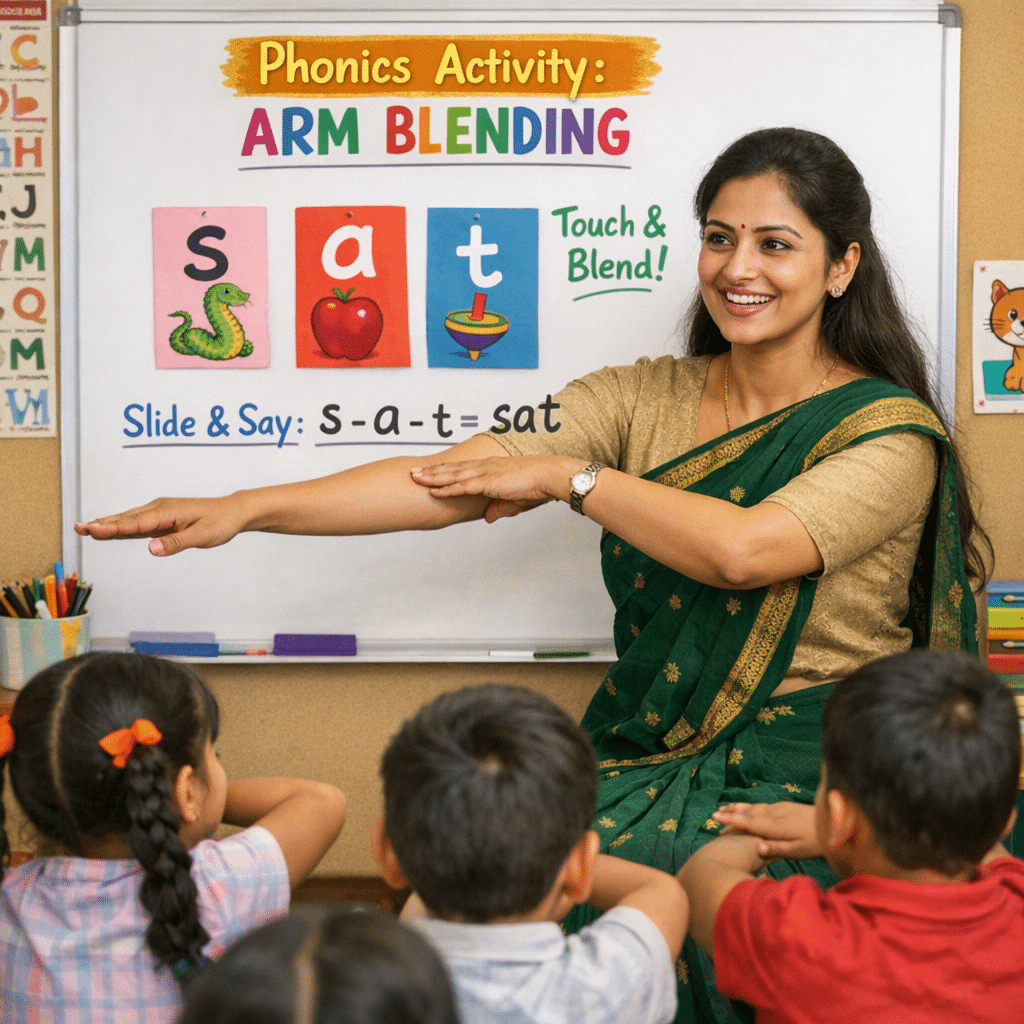
Sounds are fun for kids, so they want to learn them. Kids can read anywhere they want as long as they know how letters and sounds work together. These things help kids learn, stay interested, and do well in school.
Ways to Make Phonics Fun:
Use Songs and Rhymes
Kids can remember letter sounds and get better at listening with the help of catchy songs and chants.
Play Sound-Based Games
It’s fun to learn when you play games like sound hunts, matching Letters to Sounds, or making words with cards.
Include Storytelling
For kids, reading short stories with sounds that repeat helps them hear spelling patterns in real words and sentences.
Hands-On Activities
Kids can make connections between sounds and touch and movement by using flashcards, puzzles, or letter blocks.
Daily Practice in Small Doses
Short and regular sessions keep children focused without feeling tired or bored.
Positive Encouragement
Praising effort and progress builds confidence and motivates children to keep trying.
Kids learn phonics better when they do interesting and useful things that help them learn.
Call / Whatsapp on +919869866277 / +919869546913, for more details of Phonics Teacher Course.
To download Phonics Teacher Course brochure, Click Here!
Fun Ways to Help Children Learn Phonics
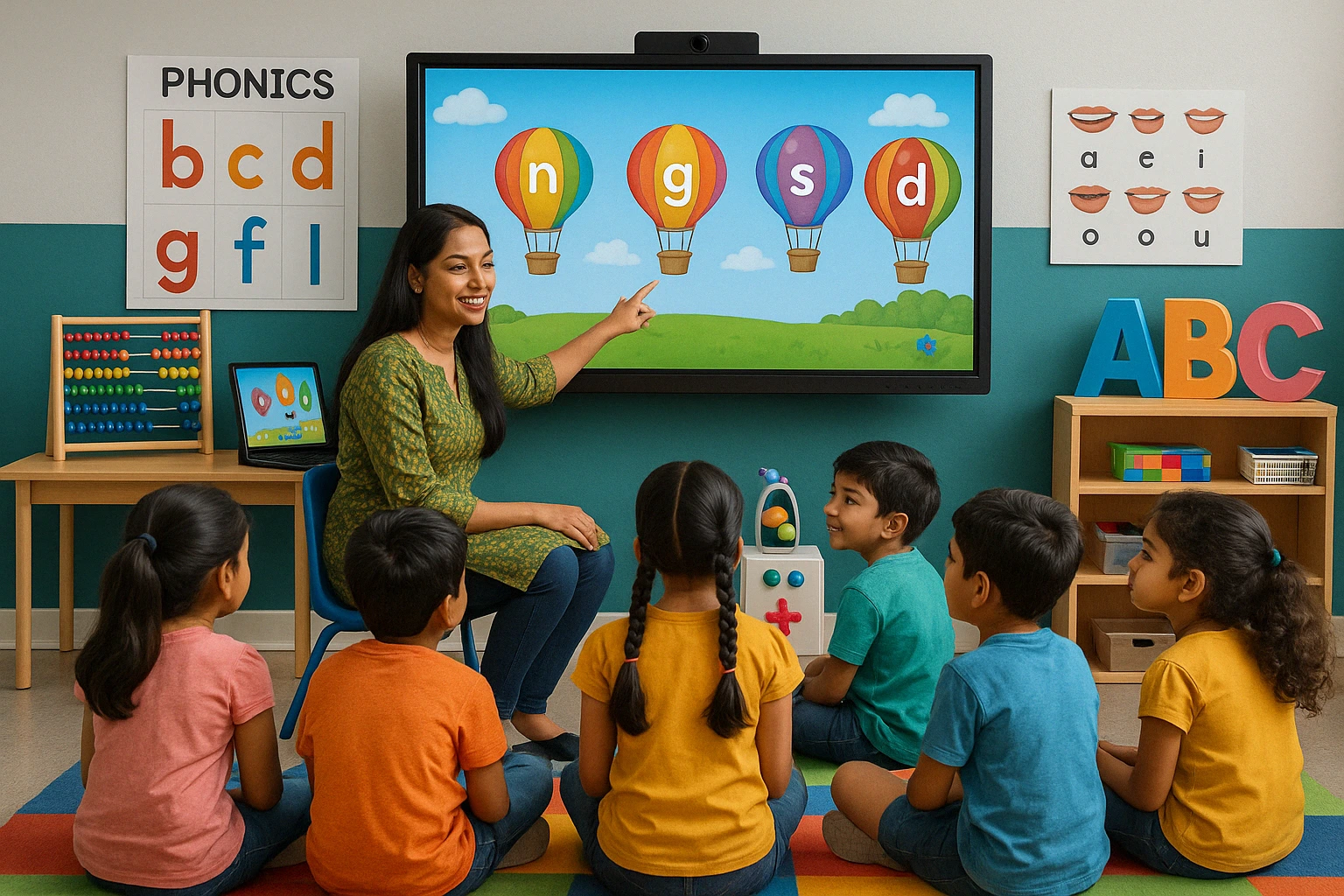
Children learn best when Phonics Lessons are fun. They learn letter sounds naturally through enjoyable activities that keep them interested. By practising the same basic rules again and again, children learn to read and spell with confidence.
Fun and Effective Phonics Activities:
Action Songs and Sound Rhymes
Singing songs with actions helps children connect sounds with movement, making learning easier to remember.
Phonics Games
Board games, matching cards, and simple word-building games turn sound practice into an enjoyable activity.
Picture and Sound Matching
Matching pictures to beginning sounds helps children recognize letter–sound connections quickly.
Story Reading with Sound Focus
Reading stories that repeat certain sounds helps children hear phonics patterns in meaningful contexts.
Letter Crafts
Creating letters using clay, paper, or everyday materials adds a creative element to phonics practice.
Everyday Sound Talk
Children may use phonics outside of school by pointing out sounds they hear in everyday life, such signs and labels.
When phonics is taught through fun and interactive methods, children stay motivated and develop strong early reading skills with confidence.
Call / Whatsapp on +919869866277 / +919869546913, for more details of Phonics Teacher Course.
To download Phonics Teacher Course brochure, Click Here!
10 fun Phonics Activities and Games for Early Readers
Fun phonics activities help early readers connect letters and sounds in an enjoyable way. When learning feels playful, children stay focused, practise more often, and gain confidence in reading. Below are ten effective activities that make phonics learning engaging and meaningful for young learners.
Teachers and future teachers need the right guidance to use these activities well. The Phonics Teacher Training Course by Vidhyanidhi Education Society (Govt. Regd.) gives teachers easy, practical ways to teach phonics with confidence.
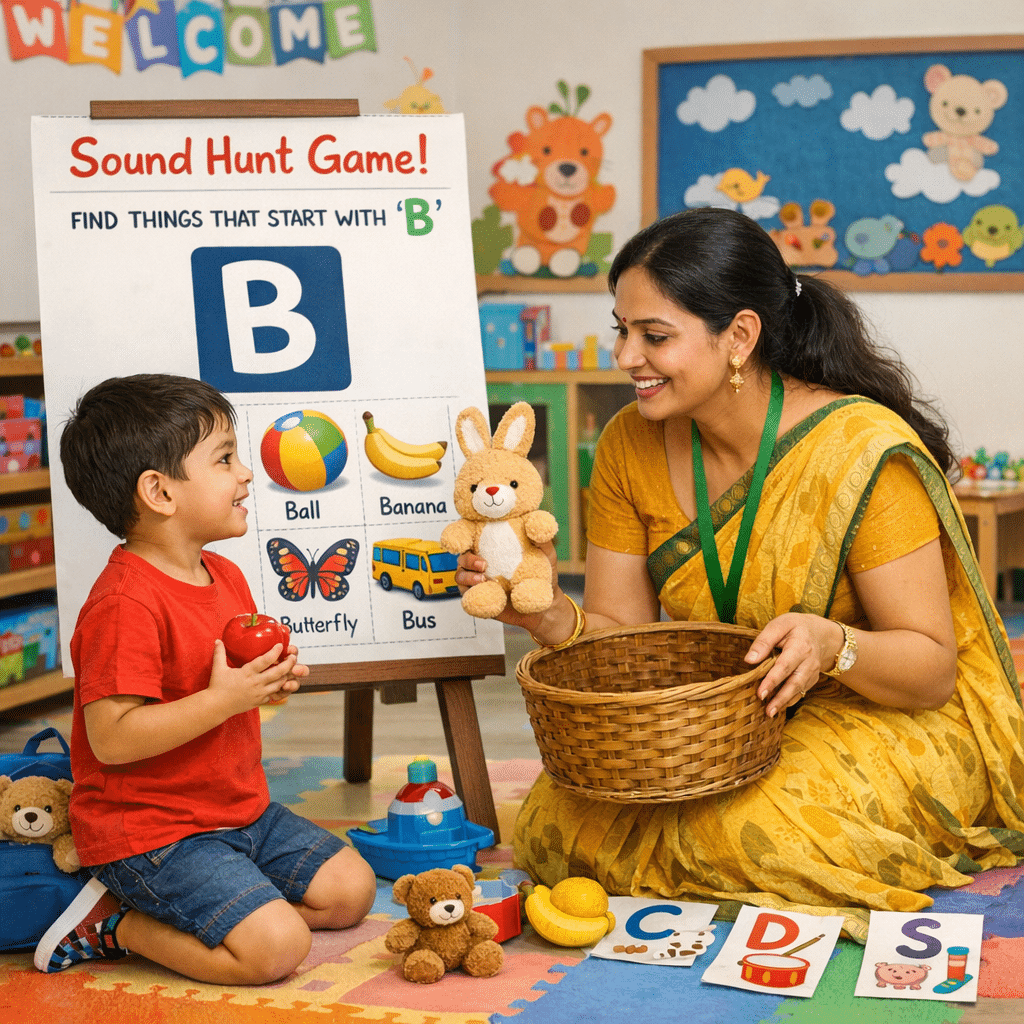
Sound Hunt Game
Ask children to find objects around the room that start with a given sound, such as /b/ for ball or /c/ for cup.
Letter–Sound Hop
Place letter cards on the floor and let children jump to the letter that matches the sound you say.
Phonics Bingo
Create bingo cards with letters or simple words and call out sounds instead of letter names.
Build-a-Word Cards
Use individual letter cards so children can arrange them to form simple words like cat, pin, or sun.
Rhyming Pair Match
Matching rhyming words help kids hear sound patterns and strengthens reading readiness.
Action Sound Songs
Singing songs with actions for each letter sound keeps learning lively and memorable.
Picture Sorting Activity
Kids sort picture cards based on beginning or ending sounds to reinforce sound recognition.
Word Reading Path
Create a path of simple words on paper or the floor and let children read each word as they move ahead.
Story Time Sound Spotting
While reading a short story, ask children to clap or point whenever they hear a target sound.
Flashcard Speed Play
Quick sets of flashcards help you remember sounds faster and read more quickly.
Our main goal is for teachers to fully understand phonics so they can use it with confidence in their own schools. Teachers who take the Phonics Teacher Training Course from Vidhyanidhi Education Society (Govt. Regd.) learn how to use games and make class fun for all students, even those who learn in different ways.
Join our Certified Phonics Teacher Course at Vidhyanidhi Education Society (Govt. Regd.)—start reading better today!
Call / Whatsapp on +919869866277 / +919869546913, for more details of Phonics Teacher Course.
To download Phonics Teacher Course brochure, Click Here!
FAQs
How Can I Help My Child Who Is Struggling With Phonics?
Use short daily practice, sound games, reading aloud, and patience. Repeating sounds in a calm way helps children gain confidence over time.
How Do You Teach Phonics In A Fun Way?
Phonics becomes fun with songs, action games, flashcards, stories, and hands-on activities that keep children active and interested while learning sounds.
What Is The Most Effective Way To Teach Phonics?
Kids can read correctly and fluently when they practice and study often, starting with simple sounds and working their way up to more difficult words.
Why Is My Child Struggling With Phonics?
Every child learns in a unique manner. Phonics Learning outcomes are better when trained teachers, like those at Vidhyanidhi Education Society, help.