

Educational institutions today need skilled professionals who can plan, organize, and improve academic operations effectively. This is where the scope of an Educational Management Certification becomes important. It prepares individuals to handle leadership roles in schools, colleges, training centers, and educational organizations with confidence and clarity.
Through Management Certification, learners gain practical knowledge of administration, policy planning, staff coordination, and quality management. The growing demand for trained education managers shows how Management-Certification can support long-term career growth and professional stability in the education sector.
Scope of Educational Management
The Scope of Educational Management is expanding steadily due to the growing need for structured leadership and efficient administration in the education sector. Professional managers focus on academic planning, staff coordination, and institutional development with clarity and purpose.
The scope of Educational Management includes:
Improving Academics
Management constantly works to offer the best learning experience by planning curriculum, evaluating teaching methods, and integrating innovative learning tools.
Maintaining Financial Stability
It plans a budget, structures fee payments, administers staff salaries, allocates resources accurately, and reduces excessive expenditure.
Recruiting
Primary scope of management is hiring competent staff, providing training, distributing workload, motivating the team, and performance appraisal.
Strategic Planning
This includes setting goals, policy formulation, developing institutional plans, expansion planning, innovation strategies, and risk management.
Schools, colleges, universities, and training institutes now require an effective educational management system to fulfil the scope of functions.
To Download Brochure of DEM course, Click Here!
For DEM Course information, call or whatsapp at +91 9869866277 / +91 9869546913.
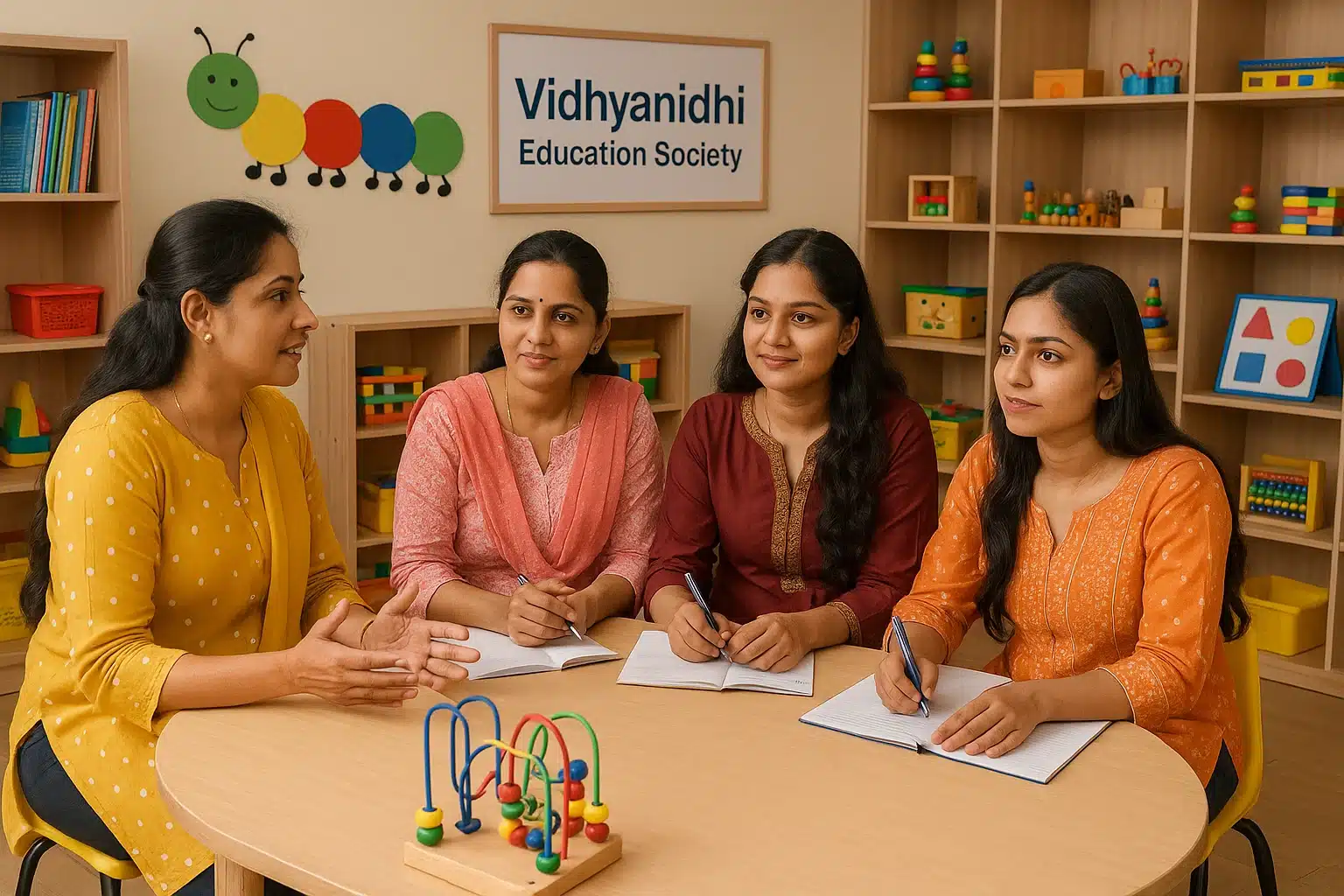
Role of Educational Managers in Institutions
Educational Managers are a significant part of an educational organization. They strategically plan, implement, and oversee operational activities. Managers maintain administrative stability, ensure structured workflows, and encourage institutional development.
Here are the significant roles and responsibilities performed by Educational Managers:
Develop & execute plans
Considering a long-term vision and educational goals, managers prepare a structured plan and precisely lead the successful implementation.
Overseeing daily operations
Managers closely monitor day-to-day tasks and activities, and they analyze challenges and provide solutions for smooth operations.
Collaborating teams
Efficient flow of work requires collaborative team efforts, which is maintained by managers. They bring competent talents together, align tasks, resolve conflicts, and support team members with the latest tools.
Integrate advanced methods
Managers introduce technology, innovative teaching styles, modify curriculum, and integrate the latest operational methods to align with evolving educational needs.
Acts as mediators
They transparently coordinate with students and leadership to ensure clear communication, efficient processes, and high educational standards.
Educational Managers are an integral part of an organization to achieve successful outcomes and maintain the efficacy of work.
To Download Brochure of DEM course, Click Here!
For DEM Course information, call or whatsapp at +91 9869866277 / +91 9869546913.

Types of Educational Management Structures
An organization functions with effective educational management structures.
Administrative
This type focuses on covering crucial operational activities of the institute, like maintaining attendance, planning, organizing, hiring staff, coordinating tasks, and supporting the team.
Collaborative
Here, managers involve the suggestions, opinions, and ideas of team members. A combined effort of all employees builds a strong operational system.
Leadership type of Educational Management
Managers lead the crucial role, responsibilities, and actions of the institutes. It firmly makes decisions, draws conclusions, establishes policies, and trains staff members.
Organization structure
It involves working in an organized approach. From planning to evaluation, every activity is performed with precision and focus.
The Type of Management depends on the evolving needs of education and academic operations.
To Download Brochure of DEM course, Click Here!
For DEM Course information, call or whatsapp at +91 9869866277 / +91 9869546913.

Core Principles of Educational Management
The strategic approach implemented by management fosters uniformity of operations, transparent communication, achieving goals, and upgrading educational standards.
The core principles of Educational Management focus on the following:
Smoothness of the educational process
Management strives to eliminate challenges and make daily tasks easy to increase productivity.
Maintaining records
It focuses on preserving the crucial data, information, facts, and figures to retrieve them whenever required.
Aligning with evolving needs
This principle involves researching, analyzing and integrating the latest curriculum, methods, teaching aids, and operative techniques to address evolving needs of education.
Increasing student performances
The core objective or Principle of Educational Management is to ensure constant improvement in students’ academic performances.
These principles are a strong foundation for effective operations of educational management.
To Download Brochure of DEM course, Click Here!
For DEM Course information, call or whatsapp at +91 9869866277 / +91 9869546913.

Source : liberty
Benefits of Effective Educational Management
Effective Educational Management ensures the betterment and upgradation of an organization. Continued efforts and strategic planning of management provide long-term benefits, some of which are mentioned below.
Efficiency of operations
With effective management, daily activities are performed smoothly. Every task follows a structured plan that reduces the chances of error.
Accomplishment of goals
It’s the role of management to ensure the achievement of targeted goals set by leaders. They motivate the team and integrate methods that pave the way for successful educational results.
Upgraded results
By observing the performances of teachers and students, modifying the curriculum, and analyzing loopholes. Managers focus on improving
Teachers’ support
Educational Management is beneficial to the organization because it recruits skilled professionals, offers training, provides teaching aids, and provides staff members with opportunities for career growth.
Maintains reputation
With eloquent stakeholder communication, high-end relations with parents, and transparency in operation, managers increase the reputation of an organization.
The effective and successful outcomes of an organization’s operations are ensured with the significant existence of educational management.
To Download Brochure of DEM course, Click Here!
For DEM Course information, call or whatsapp at +91 9869866277 / +91 9869546913.

Source: intheknow
Best Practices for Implementing Educational Management
Educational Management is a structured body that strategically performs several practices to increase administrative operations, student performances, and academic results.
Let’s understand the crucial practices or steps taken by management:
Following clear objectives
This practice involves planning, supporting, and executing objectives set by leaders.
Preserving data & maintaining records
Management maintains integrity by preserving the records of children, teachers, and other staff to foster accessibility of information.
Integrating advanced techniques
It includes introducing new and advanced methods of operative activities and teaching techniques.
Ensuring security & safety
This significant practice ensures maintaining high-end security, safety,
Providing training
Management provides thorough advanced training and workshops to faculty members in order to improve their professional capabilities, qualifications, and skills.
Such practices are primarily focused on enhancing the stability of management. Pursuing from Vidhyanidhi Education Society (govt. regd.) increases the knowledge and skills of implementing several practices for effective management.
Advance career with Diploma in Educational Administrational Course at Vidhyanidhi Education Society.
To Download Brochure of DEM course, Click Here!
For DEM Course information, call or whatsapp at +91 9869866277 / +91 9869546913.
Management Certification : Diploma in Educational Administrational Course
FAQs
What Is The Main Scope Of Education?
Teaching, learning support, administration, curriculum planning, assessment, and institutional development across schools and colleges are all important parts of education.
What Is The Use Of Educational Management?
Educational management helps schools run smoothly and get good results by organizing academics, staff coordination, student services, and policies.
Which Type Of Educational Management Is Best?
Most people want to work in academic and administrative management because it offers stable jobs in planning, coordination, and leadership in schools.
What Are The Functions Of Educational Management?
The functions of educational management involve planning, organizing, staffing, supervision, evaluation, and leadership as part of its programs.