Learn to Read by Phonics is a fun way to teach children how letters and sounds work together to form words. It teaches to recognize sounds, blends sounds and helps kids read new words step by step. Learn to Read by Phonics makes reading so much easier, because kids can begin reading and spelling words with confidence. Children who are helped, who practice, become independent readers, who know the words and understand the texts easily.
How to Teach a Child to Read with Phonics?
Teach a Child to Read with Phonics using clear, step by step method that build strong reading skills. Regular practice using simple phonics activities can make learning more fun and effective.
Let us see How to Teach a Child to Read with Phonics:
Start with sounds, not letter names
Children will be able to read words by sounding them out, rather than learning letter names. Concentrate on the sound that each letter makes (e.g. /s/ for s).
Focus on lowercase letters
Most reading material is in lower case, so start with these to make recognition easier and more practical.
Use synthetic phonics
Teach children to break words into their individual sounds, then combine them. For example, /d/ – /o/ – /g/ becomes “dog.”
Begin with simple letters and short vowels
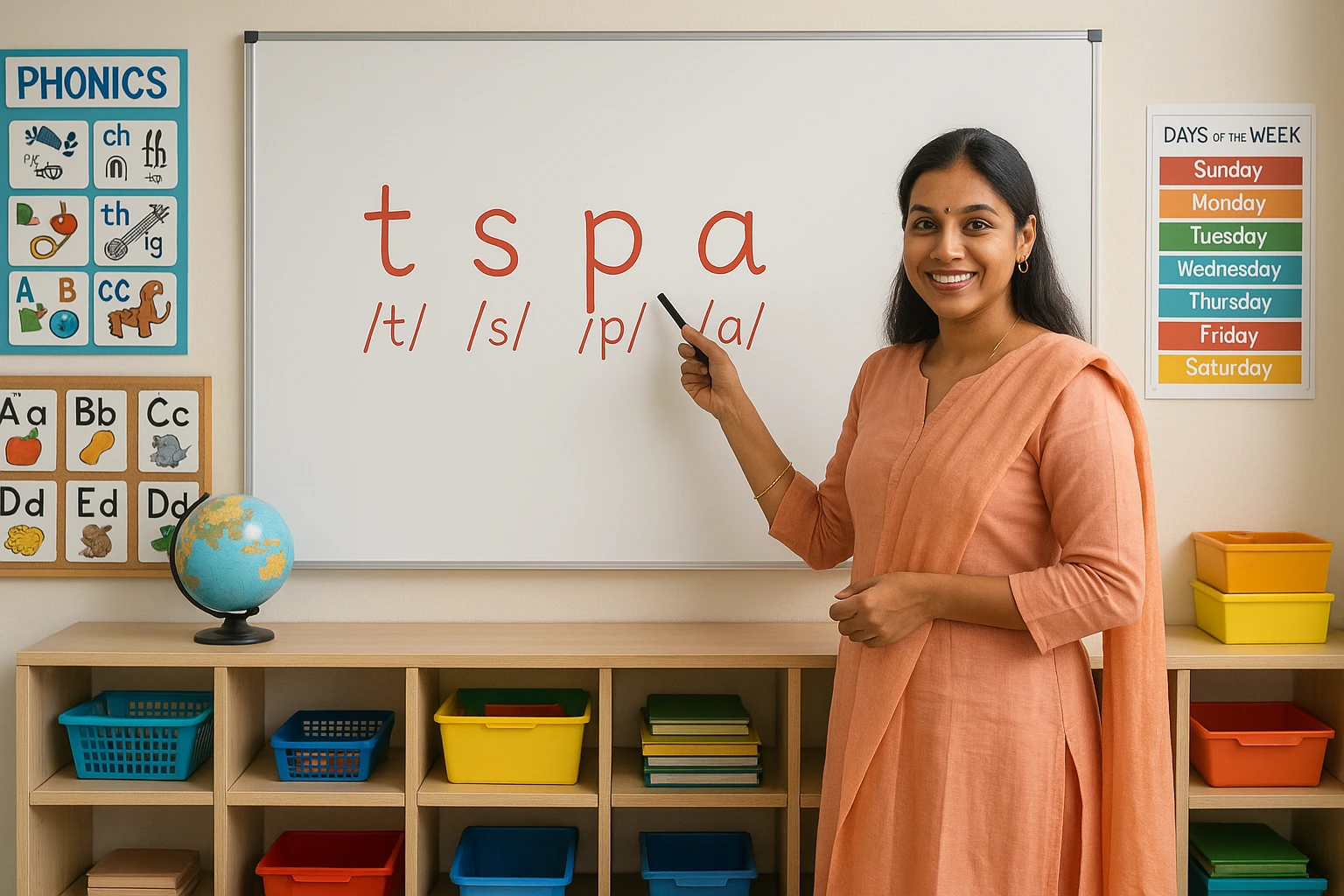
Start with simple consonants such as s, a, t, p, i, n and then add in short vowel combinations like ab, ad and at.
Practise Often
Support what you learn with brief, daily sessions of flashcards, word games, and reading exercises.
Read out loud
Encourage repetition. Sounds and words are repeated to help memory and build confidence.
Regular practice makes children develop good reading habits and be confident to identify and decode the new words.
To Download Brochure of Phonics Course, Click Here!
For more details of Phonics Course Call / Whatsapp +918369377157/ +919869546913
Introducing the Phonics Sounds
The first step to help kids Learn to Read by Phonics is to teach them Phonics Sounds. It helps them to learn to associate each letter with its sound so they can read and spell words more easily in time.
Introducing the Phonics Sounds:
Start with the easy sounds
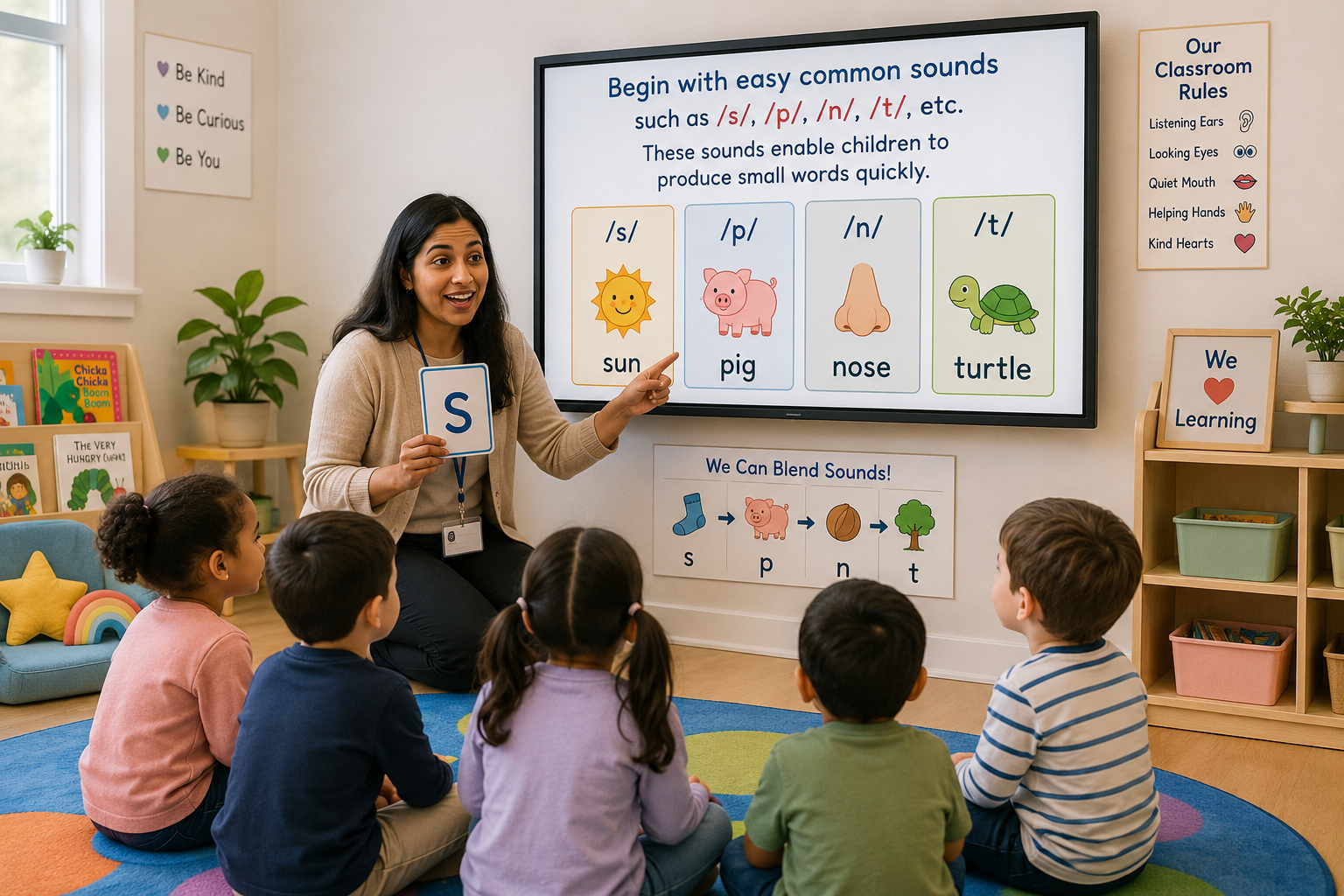
Begin with easy common sounds, such as /s/, /p/, /n/, /t/, etc. These sounds enable children to produce small words quickly.
One sound at a time
Do not overburden the child. Introduce 1 sound. Practice it well. Then on to the next.
Clear pronunciation
Say clearly, without extra vowels (e.g. /b/ not “buh”) so children learn to blend correctly.
Link sounds to objects or actions
Matching sounds with pictures, objects or actions can help to improve memory and understanding.
Encourage to listen and repeat
Saying the same things out loud and noticing them in words makes you better at picking them out.
Learning should be fun
Involve the children in using jingles, picture cards and creative activities to entertain.
Kids are learning to recognize sounds and gain the confidence to read simple words on their own while they are practicing.
To Download Brochure of Phonics Course, Click Here!
For more details of Phonics Course Call / Whatsapp +918369377157/ +919869546913
Oral Blending
A crucial element of Learn to Read by Phonics is the introduction of Oral Blending to help children learn that sounds make words. Kids have to be able to hear sounds in their heads and blend them before they can deal with print.
Begin with simple sounds
Say the sounds slowly, using simple Consonant-Vowel-Consonant words such as /c/ – /a/ – /t/ for the child to blend into “cat.”
Emphasize Listening Skills
Have children listen closely to each sound and guess the word. This leads to better auditory processing.
Use everyday words
Make it count. Practice with words like “ dog , ” “ sun , ” and “ pen . ”
First oral
Don’t show any written words at first. Only the hearing and speaking of children are allowed to be used to improve sound recognition.
Make it fun
Turn blending into a game by asking questions like, “What word am I saying?
Repeat Often
Through short, frequent sessions, children learn to blend sounds quickly and confidently.
Assist the child to develop good Oral Blending skills so that he can read words smoothly and become an independent reader.
To Download Brochure of Phonics Course, Click Here!
For more details of Phonics Course Call / Whatsapp +918369377157/ +919869546913
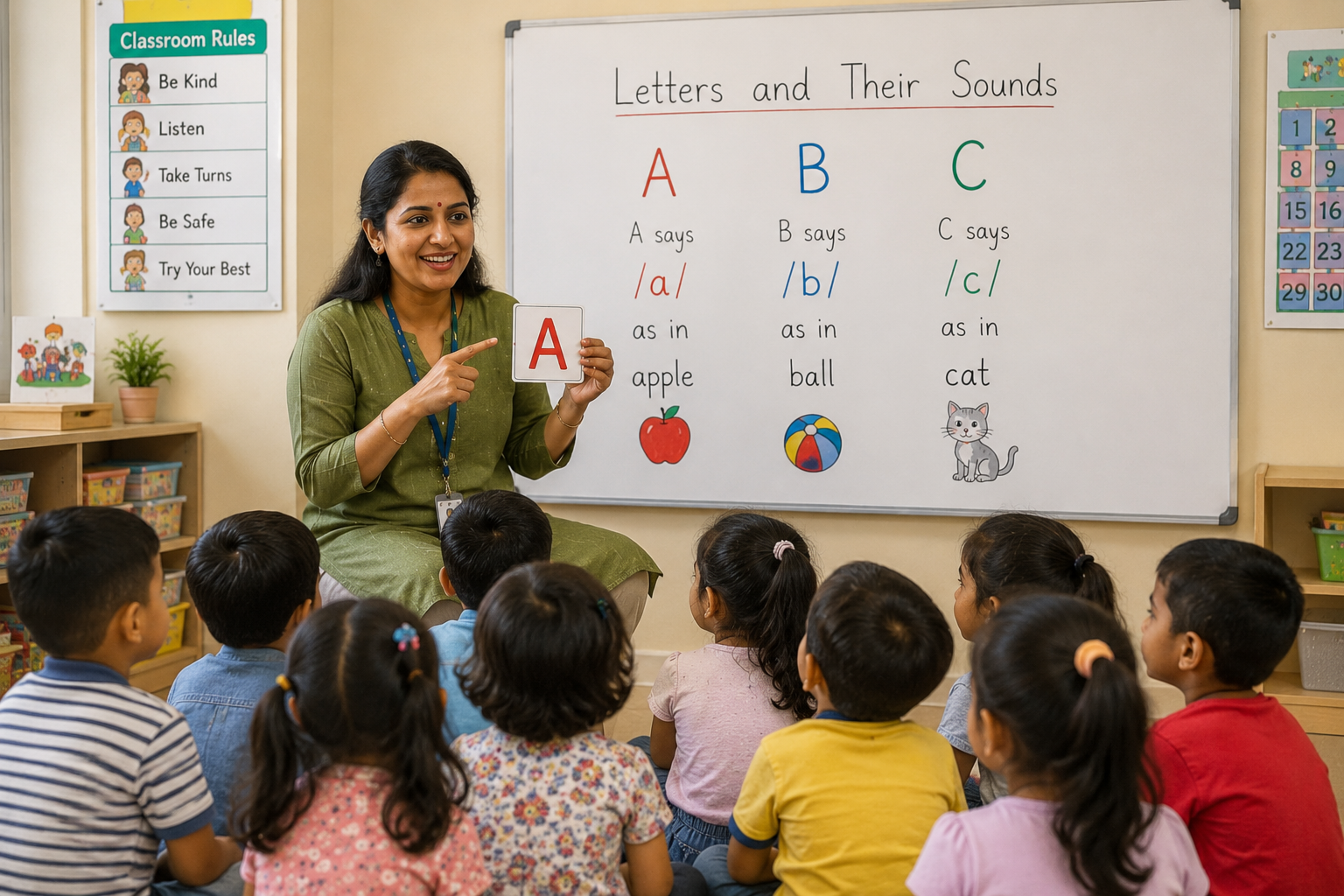
Introduce the Letters and Their Sounds
It is important that children learn the letters and the sounds they make at an early age so they can Learn to Read by Phonics. This helps them to make links between the written symbols and the sounds they hear so that reading has meaning and order.
How to Introduce the Letters and Their Sounds:
Learn sounds to pronounce letters
The sound of the letter, not the name. It helps kids read words aloud.
Lower case letters
Most of the reading material is lower case to make recognition easier. Start with lowercase.
Introduce a few letters at a time
Avoid giving too many at once. Teach small groups of letters and revise them regularly.
Sound and graphics interaction
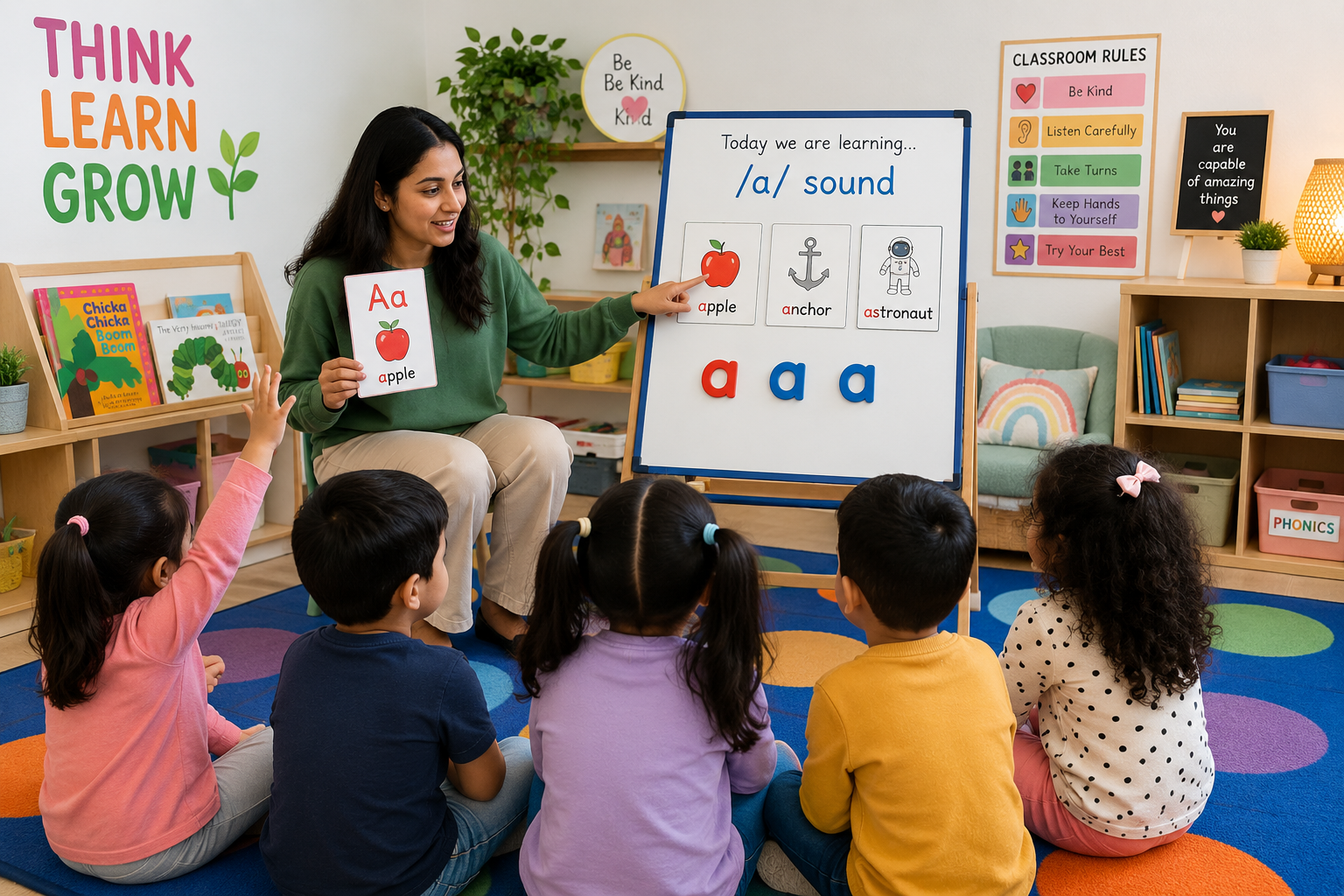
Help with learning memory – linking letters to pictures or objects e.g. “a” = apple.
Promote drawing and writing
Have the children trace the letter and say the sound. This is for action to improve memory.
Recognising consistent practice
Flash the letters randomly and have kids say their sounds to develop instant recall.
Children practice over and over to relate sounds to their written symbols. This gives them a good basis for learning to read and to spell.
To Download Brochure of Phonics Course, Click Here!
For more details of Phonics Course Call / Whatsapp +918369377157/ +919869546913
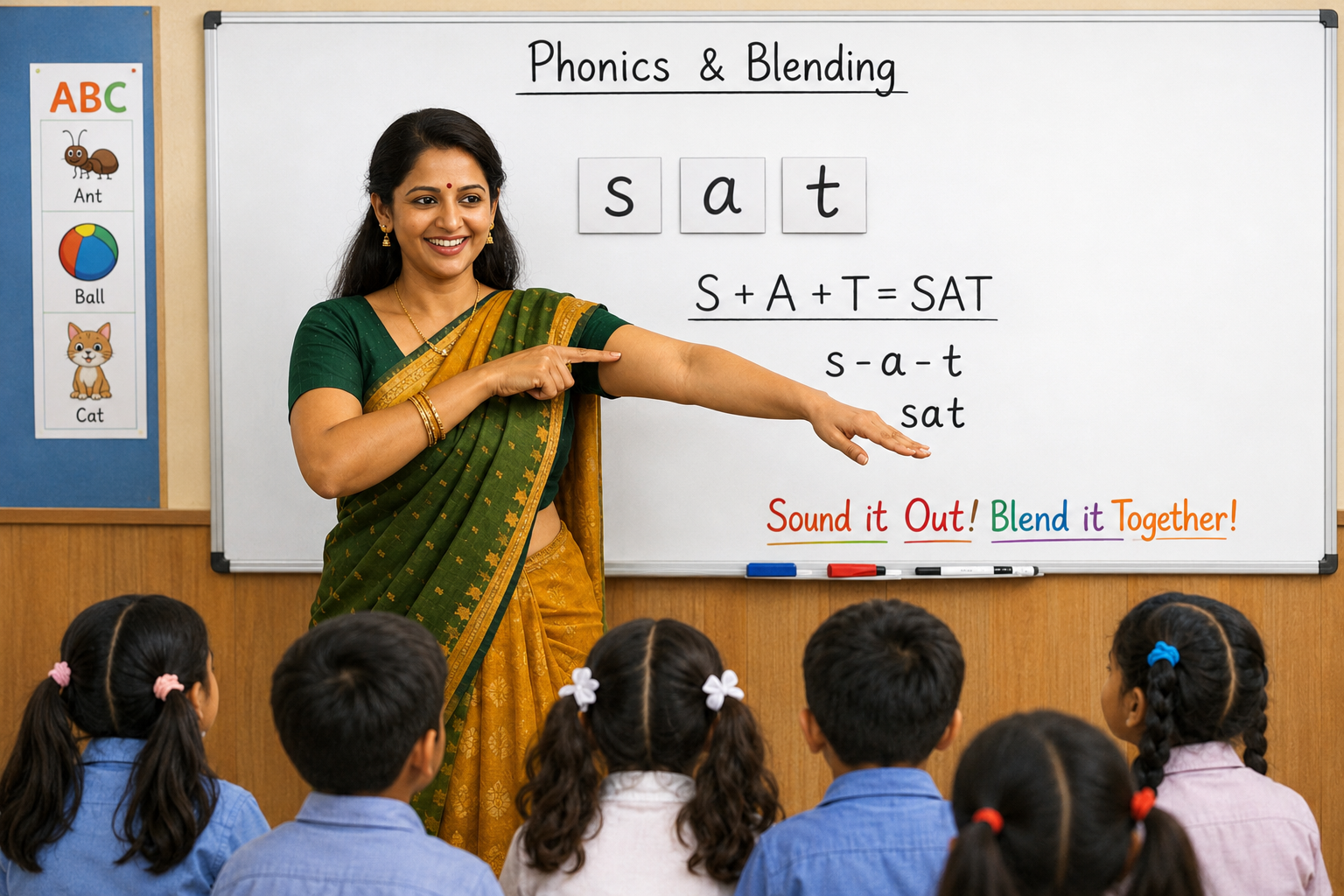
Moving Onto Blending First Words
Then we have blending words. There’s no more exciting time in phonics learning than when children can read simple words by blending the sounds together. This builds confidence and results in early reading fluency with support. A Phonics Teacher Training Course will help teachers help children through Moving Onto Blending First Words.
Moving Onto Blending First Words includes:
Start with simple CVC words
Use words such as cat, dog, pen, bin, hut, etc., to help children blend sounds together.
Encourage slow combination
Say each sound and get the kids to repeat after you. Combine the sounds to form a word. That makes it more accurate.
Use finger tracking or sound buttons
As children blend words, they use visual cues to track each sound.
Repeat known words
Kids learn words in repetition; they see patterns. This strengthens memory.
Practice short and regular
Regular practice makes you confident and builds up strong reading habits.
Phonics Teacher Training Course by Vidhyanidhi Education Society (Govt. Regd.) helps teachers to Learn to Read by Phonics with simple and easy reading methods in the classroom. A well thought-out Phonics Teacher Training Course ensures that children easily Learn to Read by Phonics and move from sounds to words, which helps them build a strong reading base for future learning.
Empower young minds! Join Vidhyanidhi Education Society’s Phonics Course today!
To Download Brochure of Phonics Course, Click Here!
For more details of Phonics Course Call / Whatsapp +918369377157/ +919869546913
FAQs
What is the Best Method to Teach Children to Read?
Phonics is successful because it connects sounds and letters so that children can read effortlessly and systematically.
How to Motivate Your Child to Read?
Make a daily reading routine so that the kids don’t get bored, use storybooks, fun games and give them credit for their efforts.
Is it Normal that My 5 Year Old Can't Read?
Yes, kids learn at different pace. Reading skills gradually improve with support and phonics practice.
Do All Gifted Kids Read Early?
Not always. Every child is different. Vidhyanidhi Education Society supports Learn to Read by Phonics for steady progress.