
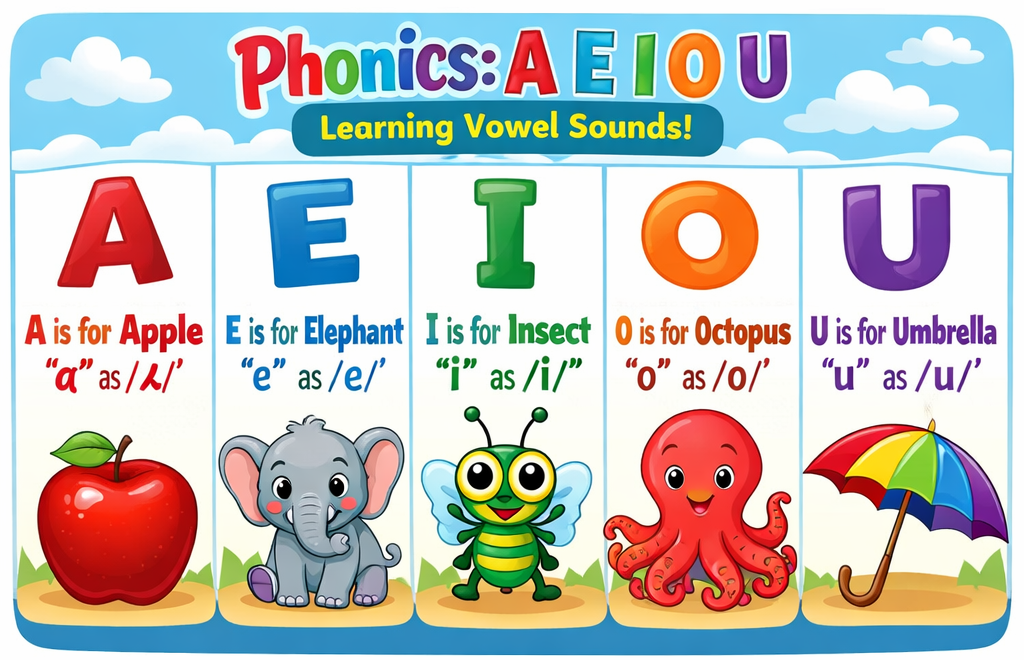
Are you looking for ways to help your kids read with confidence and say sounds correctly? What is the best way to teach words in a way that is easy to understand? It doesn’t have to be hard to Teach Phonics. Start with letter sounds and work your way up to mixing, segmenting, and reading simple words. This way, kids can start to understand how letters work together.
If you have been thinking about How to teach phonics effectively at home or in the classroom, this course will guide you through practical methods, structured lessons, and easy activities that build strong reading foundations.
Step 1 – Letter Sounds
The first step in teaching phonics is to assist kids learn how to sound out letters. Children need to be able to clearly hear the sound each letter makes before they can read words. This base helps with Spelling, Blending and Reading with confidence later on.
At this point, kids pay more attention to sounds than letter names. They learn the sound /m/ instead of pronouncing “em.” Recognizing sounds clearly helps you become better at decoding.
Why Sounds of Letters Are Important
- Helps kids link printed letters to sounds they hear
- Gives kids confidence in reading early on
- Gets students ready to put sounds together to make words
- Helps in spelling and making words
How to Teach Sounds of Letters
Start with Sounds That Are Common
Start with letters that kids use a lot, including: s, a, t, p, i, n. these letters let kids easily make basic words like sat, pin, and tap.
Teach One Sound at a Time
- Clearly introduce the sound
- Show the letter
- Say the sound slowly.
- Tell the kids to say it again
Use methods that involve more than one sense
- Writing in the air
- Tracing in sand
- Flash cards
- Games that make noise
Work on simple examples
Letter Sound Word Example m /m/ mat s /s/ sun a /a/ apple t /t/ tap
Before going on, kids should practice figuring out what sound comes at the beginning of words.
This stage works better when teachers are well trained in how to teach. Structured aid, like the Phonics Teacher Training Course from Vidhyanidhi Education Society (Govt. Regd.), helps teachers learn how to pronounce words correctly and in the right sequence. The workshop from Vidhyanidhi Education Society (Govt. Regd.) also gives teachers useful tips on how to make letter sound lessons simple and fun.
When kids learn how to make letter sounds, they’re ready for the next step: putting sounds together to make simple words.
Call / Whatsapp on +919869866277 / +919869546913, for more details of Phonics Teacher Course.
To download Phonics Teacher Course brochure, Click Here!
Step 2 – Blending
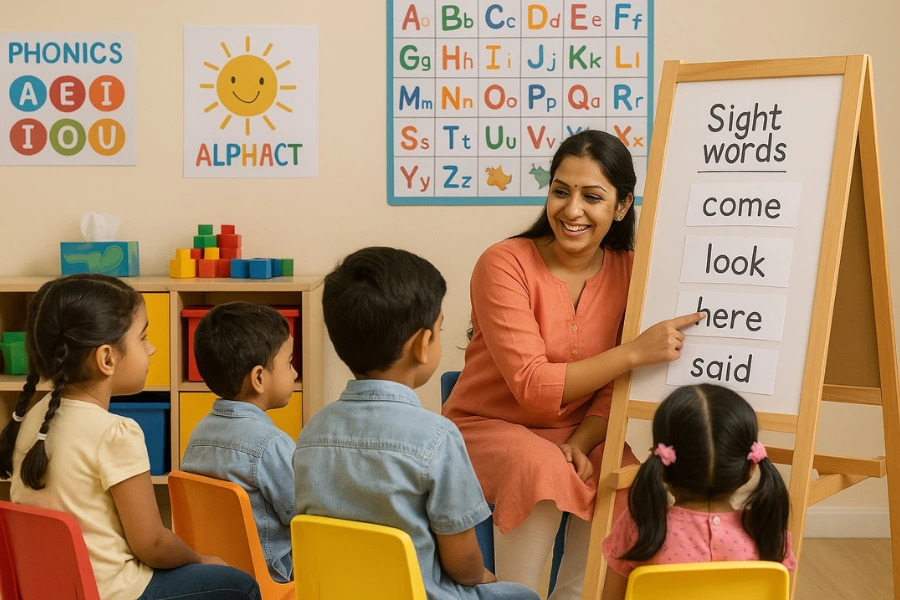
The next stage after kids learn the sounds of each letter is to combine them. To read a word, you have to blend several sounds together. Children learn to read cat by smoothly pushing the sounds together instead of speaking them one at a time, like /c/, /a/, and /t/. This talent is very important for being able to read quickly.
How to Teach Blending
Begin with three-letter CVC words (consonant-vowel-consonant), like “cat.”
- Map
- Pin
- Sit
Make the procedure transparent
Say each sound slowly
Make the noises longer: /c/…/a/…/t/
Mix well: cat
Use the finger sliding method
As you mix the sounds together, slide a finger beneath the letters.
Use short word lists every day to practice
| Sounds | Blended Word |
| /m/ /a/ /t/ | mat |
| /s/ /i/ /t/ | sit |
| /p/ /e/ /n/ | pen |
Regular practice helps you feel more confident in reading. The Phonics Teacher Training Course from Vidhyanidhi Education Society (Govt. Regd.) teaches teachers how to teach blending in the classroom by giving them structured instructions on how to do so.
Call / Whatsapp on +919869866277 / +919869546913, for more details of Phonics Teacher Course.
To download Phonics Teacher Course brochure, Click Here!
Step 3 – Segmenting for Spelling
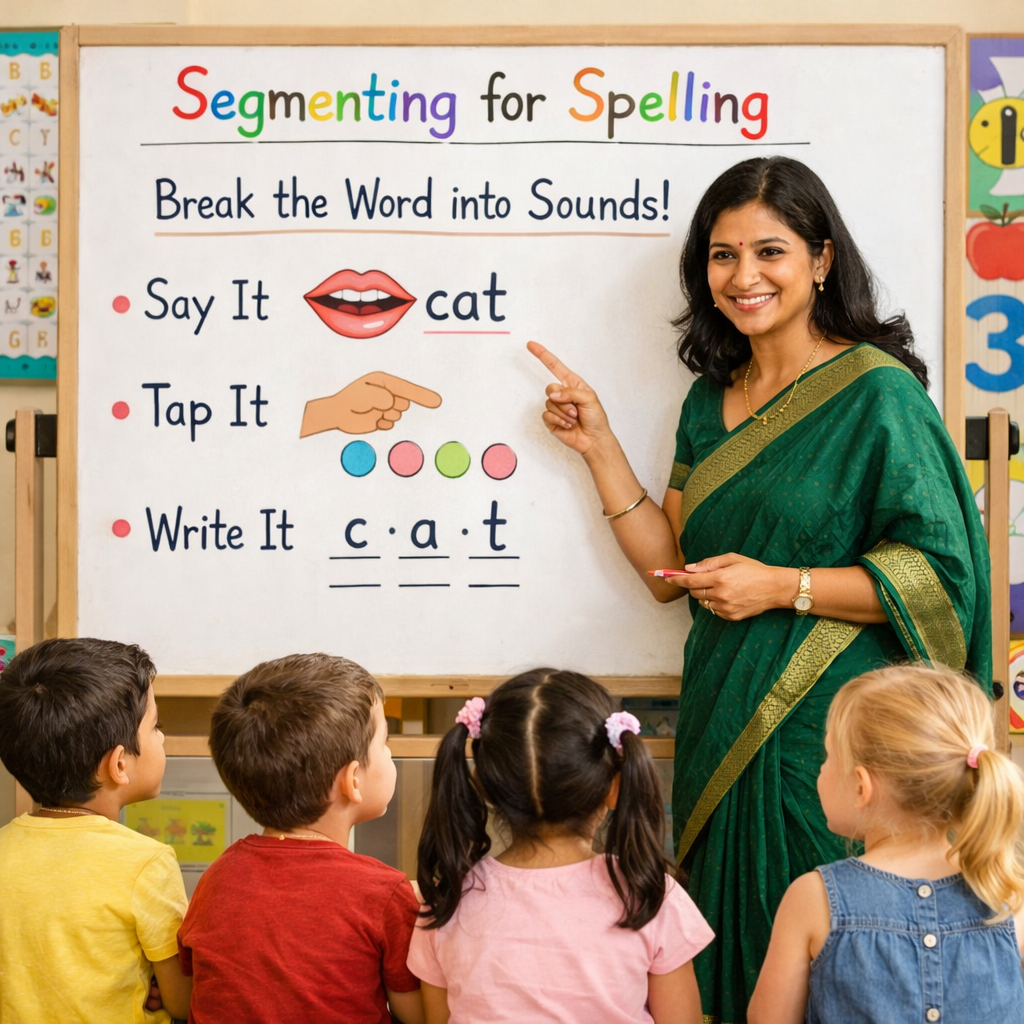
The next step after kids can read words by Blending Sounds is to break them apart for spelling. To write a word properly, you need to break it down into its sounds. To spell “dog,” a youngster must hear and say the sounds /d/, /o/, and /g/. This approach makes both listening and writing abilities better.
How to Teach Segmenting
Speak the word plainly
- Tell the youngster to say it again slowly
Say the word in sounds
- For each sound, clap or tap:
dog → /d/ /o/ /g/
sun → /s/ /u/ /n/
Use Elkonin boxes for sound.
|
Word |
Sounds |
Letters Written |
| cat | /c/ /a/ /t/ | c a t |
| pen | /p/ /e/ /n/ | p e n |
Encourage people to expand the term
Say the word slowly to hear all the sounds before you write it down.
Regular practice makes you better at spelling and Phonemic Awareness. The Phonics Teacher Training Course from Vidhyanidhi Education Society (Govt. Regd.) teaches teachers how to teach segmenting in a way that works. The course also teaches teachers organized ways to help students improve their early spelling abilities.
Call / Whatsapp on +919869866277 / +919869546913, for more details of Phonics Teacher Course.
To download Phonics Teacher Course brochure, Click Here!
Step 4 – Alternative Graphemes
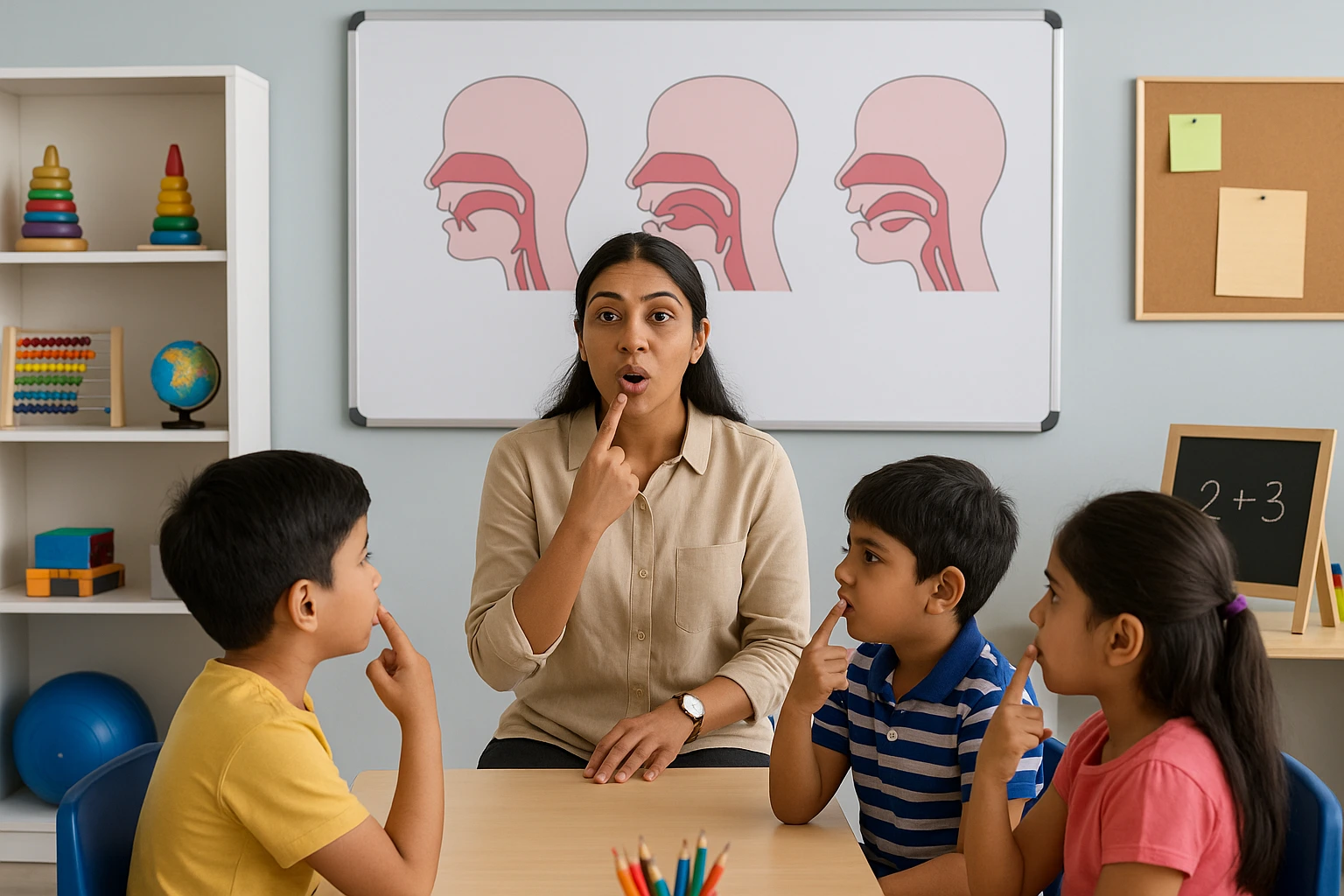
Once kids know how to spell and say fundamental sounds, they may learn more graphemes. This indicates that there are various methods to write the same sound. The long /ai/ sound may be written ai, ay, or a-e, for example. This level helps kids learn how to read and spell harder words correctly.
Examples that are often seen:
| Sound | Alternative Graphemes | Example Words |
| /ai/ | ai, ay, a-e | rain, play, cake |
| /ee/ | ee, ea, y | tree, sea, baby |
| /oa/ | oa, ow, o-e | boat, snow, home |
Tips for Teaching
- Add one sound family at a time
- Use word lists to compare spellings
- Point out trends in reading texts
At this point, it’s important to have a clear explanation and systematic practice. The Phonics Teacher Training Course from Vidhyanidhi Education Society (Govt. Regd.) includes useful tips on how to teach alternative graphemes, which helps teachers feel more confident while teaching more complex phonics principles.
Call / Whatsapp on +919869866277 / +919869546913, for more details of Phonics Teacher Course.
To download Phonics Teacher Course brochure, Click Here!
Step 5 – Fluency And Accuracy
After Learning Sounds, blending, segmenting, and several ways to spell words, kids need to become better at reading and writing. Fluency involves reading easily and with confidence, whereas accuracy means reading words accurately without guessing. Both abilities help kids grasp what they read.
How to Get Better at Speaking
- Use simple storybooks to get kids to read every day.
- Read little paragraphs over and over again.
- Pay attention to how well you speak and how fast you do it.
- Gently and quickly correct problems
- Read aloud together to show how to express yourself.
Example of Practice:-
| Skill | Activity |
| Accuracy | Sound out tricky words before reading |
| Fluency | Timed reading of short sentences |
| Expression | Reading with voice changes |
Regular practice builds confidence and understanding. The Phonics Teacher Training Course from Vidhyanidhi Education Society (Govt. Regd.) teaches teachers structured ways to help students become more fluent. The course also teaches teachers how to effectively increase reading performance in the classroom.
Call / Whatsapp on +919869866277 / +919869546913, for more details of Phonics Teacher Course.
To download Phonics Teacher Course brochure, Click Here!
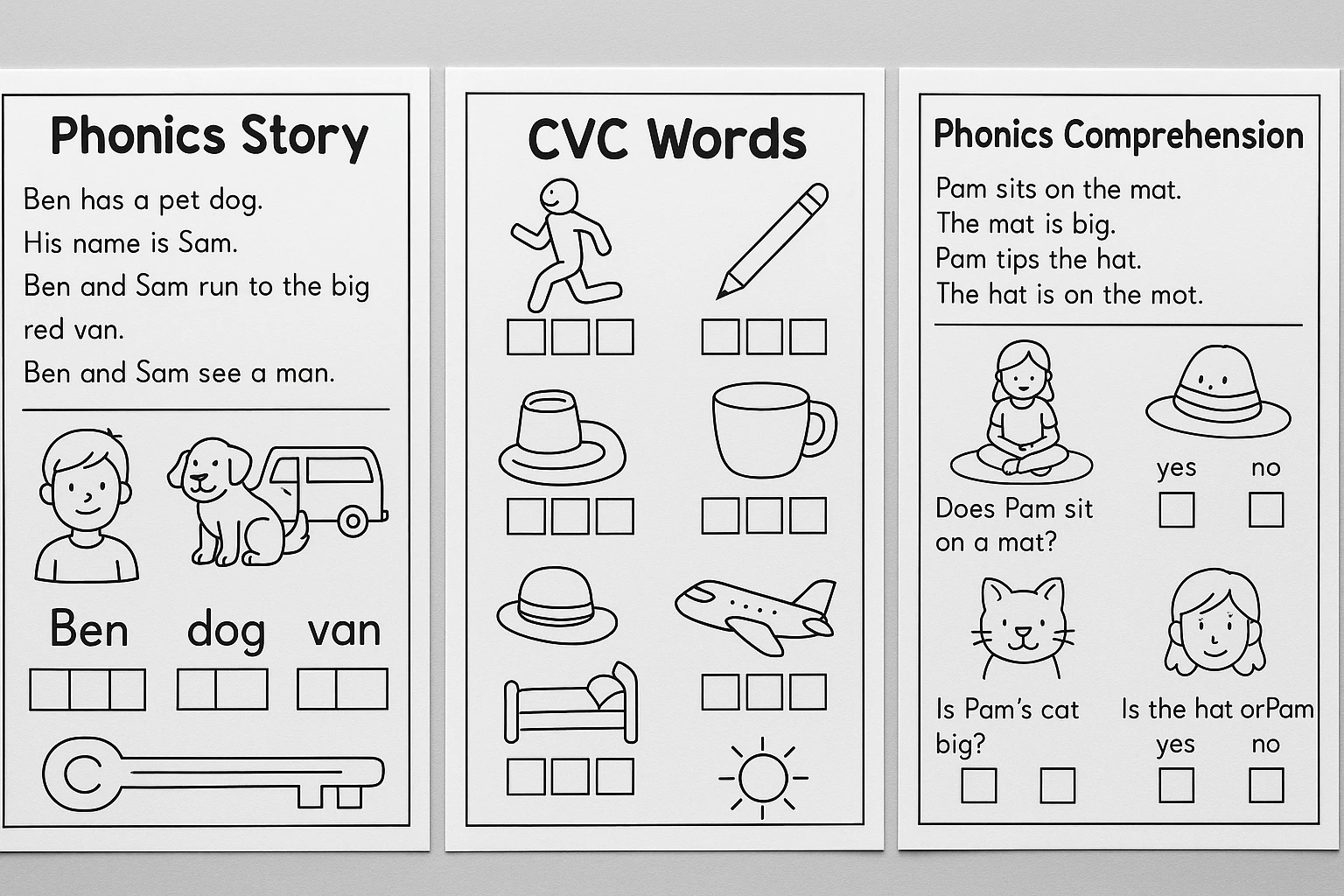
Step 6 – Help Your Child’s Reading Using Phonics
Supporting your child’s reading at home using phonics makes a strong difference. When parents follow the same sound-based approach used in class, children feel more confident and consistent in their learning.
Simple Ways to Help
Practice daily sound revision for 5–10 minutes
- Ask your child to blend unfamiliar words instead of guessing
- Encourage segmenting while spelling simple words
- Read short phonics-based storybooks together
- Praise effort and correct gently
| Activity | Purpose |
| Sound flashcards | Quick revision |
| Word building games | Improve blending |
| Reading aloud | Build fluency |
Clear guidance on supporting reading through Phonics is covered in the Phonics Teacher Training Course from Vidhyanidhi Education Society (Govt. Regd.), helping parents and educators use structured strategies effectively at home and in classrooms.
Master phonics skills—Join How to teach phonics at Vidhyanidhi Education Society today!
Call / Whatsapp on +919869866277 / +919869546913, for more details of Phonics Teacher Course.
To download Phonics Teacher Course brochure, Click Here!
How to teach phonics step by step?
FAQs
What Is Stage 1 Of Phonics?
Stage 1 is all on listening skills, rhyme, rhythm, and sound awareness. After that, it connects sounds to letters to help with disciplined reading development.
What Is A Common Phonics Mistake?
A typical error is teaching the names of letters before the sounds they make or telling kids to guess instead of mixing the sounds correctly.
Which Sounds To Teach First?
Teach the consonants and short vowels that are used most often initially. For example, s, a, t, p, i, n, and n. These letters make up many basic words.
How Many Phonics Patterns Are There?
here are several ways to spell words in English, such as digraphs and blends. Structured learning, like the classes at Vidhyanidhi Education Society, makes things obvious.