
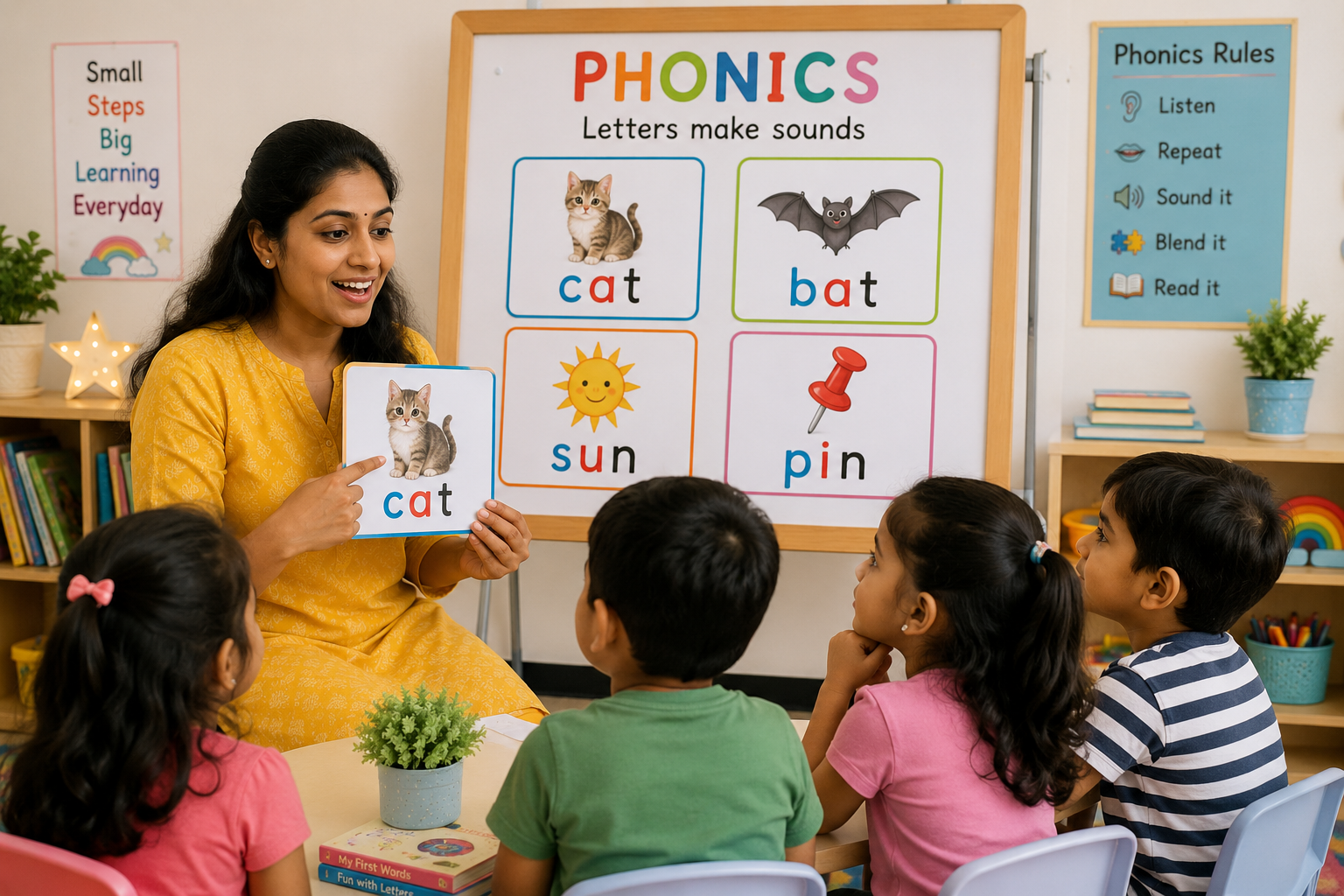
Phonetic Words are good for youngsters and beginners to grasp how letters and sounds interact when they read and speak English. An Example of Phonetic Words in English Grammar helps in improving pronunciation and spelling, reading and communication abilities.
Words like cat, bat, sun and pin assist learners to discern sounds properly and read with confidence. The Example of Phonetic Words in English Grammar is helpful to create strong language foundations and improve fluency step by step via frequent practice and sound detection.
Common Phonetic Patterns in English
Common Phonetic Patterns in English help learners understand how Letters and Sounds are connected. Such patterns help children and beginners to read and pronounce words more easily. By practicing similar sound clusters, learners can easily recognize words and enhance their fluency.
The most frequent sound patterns are:
- CVC Words: Simple 3-letter words like sun, pen, dog, cat.
- Word families: Rhyming words, e.g., “bat,” “cat,” “hat,” and “mat”
- Digraphs: sh, ch, th, ph. They are called digraphs. Two letters, one sound.
- Blends: Two consonants together like br, st and cl.
- Long Vowel Patterns: Words in which the vowels sound like their names are cake, bike, and home.
Learning Common Phonetic Patterns in English will make you speak, read and spell English better.
Short Vowel Sounds
Vowel sounds are one of the first phonics concepts kids learn while reading English. These sounds are simple, clear and found in many basic words. Teaching the Short Vowel Sounds helps children with their articulation, spelling and confidence when reading.
Each vowel has a short sound:
- A sounds like the “a” in cat, bat and map.
- E sounds like the “e” in pen, bed and hen.
- I sounds like “i” in pin, sit and lip.
- sounds like “o” in pot, dog and top.
- U sounds like “u” in sun, cup and bus.
Teachers have children learn these sounds using pictures, rhymes and reading activities. Example of Phonetic Words with Short Vowel Sounds, practiced daily, helps in fluency and early language development skills.
Get hands-on with our Phonics Course brochure by Clicking Here.
For any queries related to the Phonics Course Call or WhatsApp at +919869866277 / +919869546913.

Consonant Clusters
Consonant Clusters are two or more consonants together in a word where each sound can still be heard clearly. The clusters provide students with pronunciation, reading fluency, and spelling. Learning Consonant Clusters also helps learners to read longer words with more confidence.
Common Example of Phonetic Words with Consonant Clusters include:
- Bl in black, blue and blanket
- St in star, stop and stick
- Tr in tree, train and truck
- Cl in clap, clock and class
- Br in brown, brush and bread
Teachers commonly practise Example of Phonetic Words with Consonant Clusters using phonics games, flashcards and reading exercises. Children learn to blend sounds together without missing any of the letters. Consonant Clusters are very useful in developing speaking and reading skills. Regular practice also helps in better comprehending patterns of English words at an early level.
Get hands-on with our Phonics Course brochure by Clicking Here.
For any queries related to the Phonics Course Call or WhatsApp at +919869866277 / +919869546913.
Silent Letters
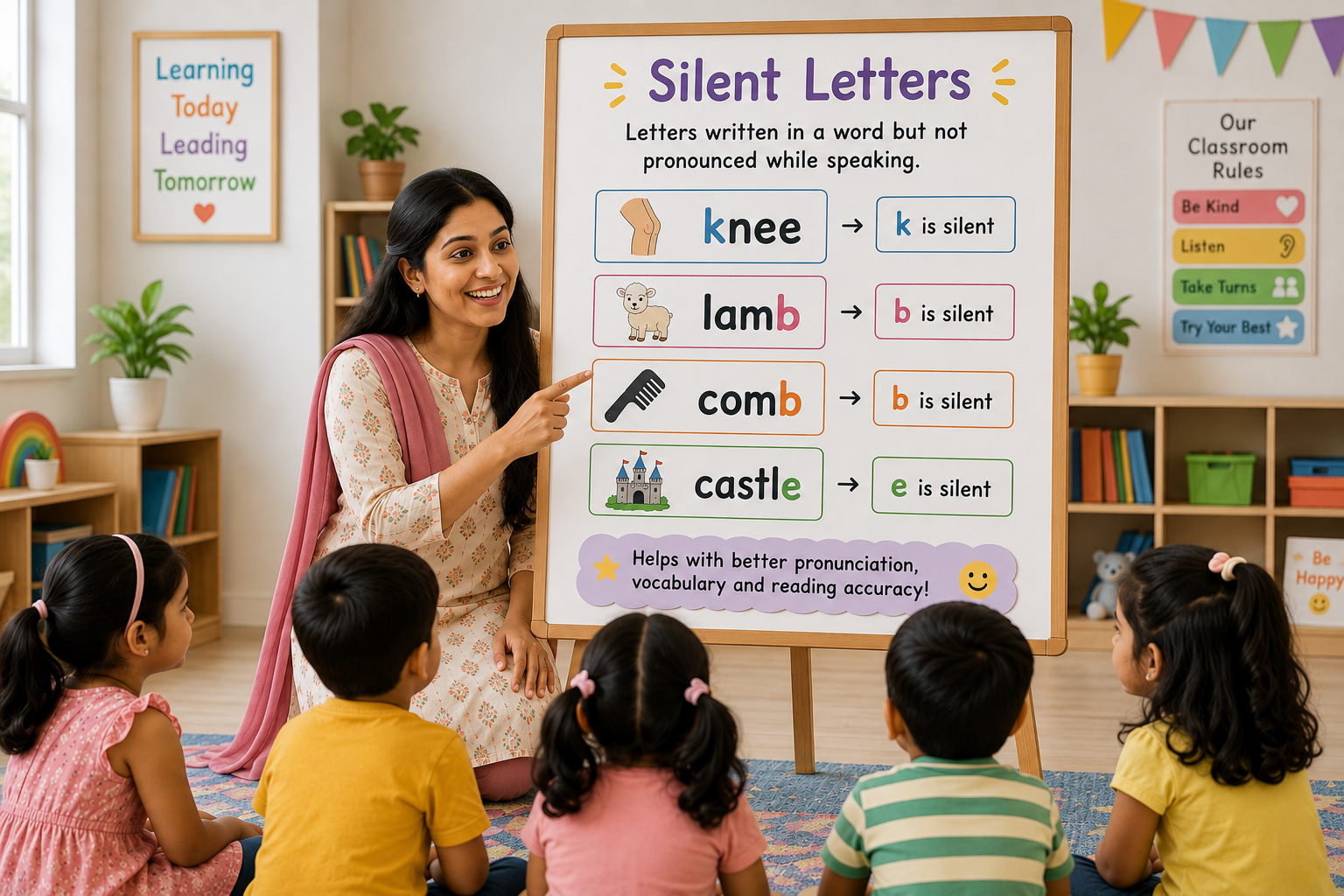
Silent Letters are letters written in a word but not pronounced while speaking. They occur often in English and can be somewhat confusing to beginners when reading or spelling words. Learning Silent Letters helps children to improve their pronunciation, vocabulary and reading accuracy.
Some common Example of Phonetic Words with Silent Letters are:
- K as in knife, knee, know
- B in thumb, lamb & comb
- W as in write, wrist, wrong
- H in honest, hour and heir
- L in walk, could and half
Teachers do reading practice, phonics activities and repeating the Example of Phonetic Words with Silent Letters to help children remember Silent Letters. Through listening to the correct pronunciation, learners can understand the letters that are not pronounced. Regular practice of Example of Phonetic Words with Silent Letters in a simple and effective way improves fluency, confidence in spelling and overall English communication skills.
Consonant Vowel Consonant Words
Consonant Vowel Consonant Words or CVC words as they are often known, are easy three-letter words that follow the pattern of a consonant, a vowel and another consonant. Because they are easy to read and say, these words are often taught early in phonics instruction. Children who use Example of Phonetic Words with CVC words are better at blending sounds and creating reading confidence.
Some common examples include:
- Cat
- Dog
- Pen
- Sun
- Pig
Teachers like to use word games such as flashcards, reading games and spot the difference in CVC words. Kids learn to sound out each letter, and then blend them together to make words. Consonant Vowel Consonant Words are a great resource for daily spelling, pronunciation and reading practice. These word patterns are a good base for future language learning and for the development of communication skills.
Get hands-on with our Phonics Course brochure by Clicking Here.
For any queries related to the Phonics Course Call or WhatsApp at +919869866277 / +919869546913.
List of Phonetic Words in English with Examples
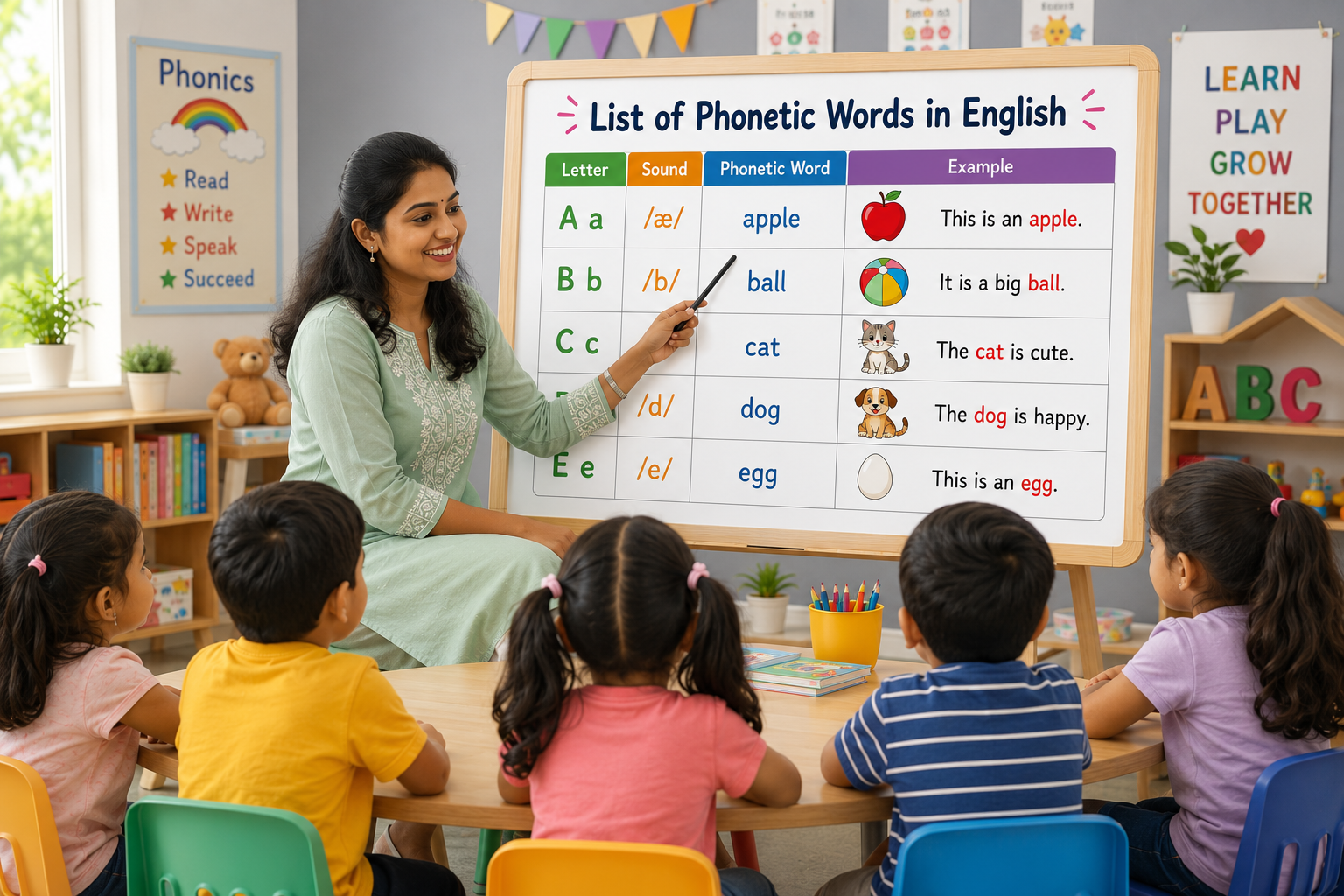
Phonetic Word Instruction helps children learn the sounds of letters and improve their reading skills. Simple Example of Phonetic Words helps with spelling, fluency and pronunciation.
The help of these Example of Phonetic Words, children can read English words fluently and identify sound patterns. Vidhyanidhi Education Society (Govt. Regd.) offers a Phonics Teacher Training Course designed for aspiring teachers and parents who want to teach phonics effectively.
List of Phonetic Words in English with Examples:
- Words that have the sound “at” in them: cat, bat, hat.
- Words that have the short “i” sound are Pin, Tin, and Win.
- Words with the “og” sound include dog, log, and fog.
- Short “u” words are Sun, Run and Fun.
- The words ship, shop, and fish have digraph sounds.
The Phonics Teacher Training Course provides practical training, reading activities and pronunciation methods. In the Phonics Teacher Training Course, learners gain skills to teach Example of Phonetic Words in an easy and engaging manner for young children.
Join Vidhyanidhi Education Society for Phonics Course that unlocks your true language potential!
Get hands-on with our Phonics Course brochure by Clicking Here.
For any queries related to the Phonics Course Call or WhatsApp at +919869866277 / +919869546913.
Phonics Teacher Training Course
FAQs
Can Learning The Phonetic Alphabet Improve English Pronunciation?
Yes, the learning of the phonetic alphabet helps pupils to speak effectively, pronounce words correctly and also understand the English sound patterns.
What’s The Difference between Regular Spelling and Phonetic Spelling?
Regular spelling is the way words are written whereas phonetic spelling refers to the sounds of words when spoken in English.
How Can Students Memorise A To Z Phonetic Words Easily?
Vidhyanidhi Education Society teaches Example of Phonetic Words through repetition, flashcards, rhymes and games for the students to learn.
What Are Phonetic Words In English Grammar?
Phonetic words are words used in English grammar to teach letter sounds and pronunciation. They are used to help the learner read and speak English correctly.