
Example of Learning Disability in Children
An example of Learning Disability helps explain how some children learn differently, even when their intelligence is average or above average. An Example of Learning Disability includes difficulty in reading, writing, spelling, understanding numbers or following instructions, which may appear as dyslexia, dysgraphia or dyscalculia.
These problems may make it harder for a child to do well in school, feel good about themselves, and keep up with their work in class. Kids may become better at their skills and deal with Learning Disabilities well if they are recognized early and get the correct help.
Examples of Learning Disabilities
Learning disabilities affect the way kids understand, process or express information. These challenges are not linked to intelligence but can influence educational performance, behavior and emotional well-being if not addressed early.
Common Examples of Learning Disabilities
Dyslexia (Reading Difficulty)
Children may struggle with reading, spelling, and recognizing words. This can lead to slow reading speed and difficulty understanding written text.
Dysgraphia (Writing Difficulty)
This affects handwriting, spelling and organizing thoughts on paper. Children may find it hard to complete written assignments neatly or clearly.
Dyscalculia (Math Difficulty)
Children may have trouble understanding numbers, math symbols, calculations, and concepts like time or money.
Auditory Processing Disorder
As the name suggests, this disorder affects the child’s ability to decode spoken instructions in classrooms that are noisy. However, the child possesses normal hearing ability.
Visual Processing Disorder
This disorder occurs when the child struggles to make sense of visual instructions or visual information that affects their learning skills, especially reading and writing skills.
How Learning Disabilities Impact Children?
- Inability to maintain a proper pace of learning.
- Due to constant struggle to be on par with the others, children suffer from low self-esteem.
- Hesitation to go to school and anxiety to complete assignments.
- Struggle to follow instructions or hand over assignments on time.
- Additional academic aid and personalised attention needed.
When Children with Special Needs or learning disorders are provided with personalised learning strategies, precise therapy treatments followed by valuable guidance, their ability to process information is enhanced, enabling them to attain their learning goals successfully.
For more details on the LD Course, Call/WhatsApp at +919321024137 / +919869866277
To download the brochure of the LD Course, Click Here!

Source: conversation
The Symptoms of a Learning Disorder in a Child with Examples
A Learning Difficulty makes it hard for a child understand, practice, or utilise knowledge. These signs commonly show up in the initial years of school, and they might be different for each kid. Recognising the signs early on helps you provide the correct kind of learning support.
Common Symptoms of a Learning Disorder
- Difficulty in Reading and Spelling
- A kid may read slowly, skip words or confuse parallel letters.
- Example: A child reads “was” as “saw” and struggles to spell simple words.
Struggles in writing
- Due to poor finger grip and poor decoding of visual information, the child struggles with writing, especially with the spacing of the letters.
- Eg. The child knows what to write, but his handwriting is illegible and difficult to understand.
Issues with decoding numbers
- The child has issues understanding abstract concepts such as numbers, time, formulas, and money.
- Performing basic math operations, such as multiplication and word problems, is a difficult task for the child.
- Eg: After continuous practise the child still struggles to perform basic addition.
Attention span limited
- The child has a very limited attention span, due to which he might lose his focus during tasks.
- Eg: If a certain problem has 3-step instructions, the child follows one instruction and forgets the other instructions, resulting in incomplete tasks.
Struggle to follow simple instructions
- As the child cannot concentrate for a long period, following directions is an issue, due to which the child is confused when too many steps or instructions are given.
- Eg: Completing classroom jobs is a struggle for the child.
Low Self-esteem
- Low performance in the classroom can lead to poor self-esteem
- Eg: The child prefers not participating in any classroom activities that need individual performances.
Recognizing these signs ensures that the teachers and parents can take the next step of action by consulting the right professionals who can arrive at a precise diagnosis and accordingly start the desired interventional support that helps the child acquire the right learning skills and attain their learning objectives effectively.
For more details on the LD Course, Call/WhatsApp at +919321024137 / +919869866277
To download the brochure of the LD Course, Click Here!
Examples of Learning Disabilities: Getting Help
Learning Disability Course options play an important role in understanding how children with learning challenges can be supported effectively. A Learning Disability Course helps parents, teachers, and caregivers identify difficulties early and respond with suitable strategies. Through a Learning Disability Course, individuals learn how learning disabilities affect academic skills, behaviour, and confidence. Enrolling in a Learning Disability Course also builds awareness about practical intervention methods.
Common Examples of Learning Disabilities
- Dyslexia: Affects reading, spelling, and word recognition. Children may read slowly or avoid reading tasks.
- Dysgraphia: Impacts writing skills, handwriting, and sentence formation. Children may struggle to express ideas in written form.
- Dyscalculia: Involves difficulty with numbers, calculations, and understanding math concepts like time or money.
- Auditory Processing Disorder: Causes trouble in understanding spoken instructions, especially in group settings.
- Visual Processing Disorder: Makes it hard to interpret visual information such as letters, shapes, and patterns.
Help offered for children with Learning disorders
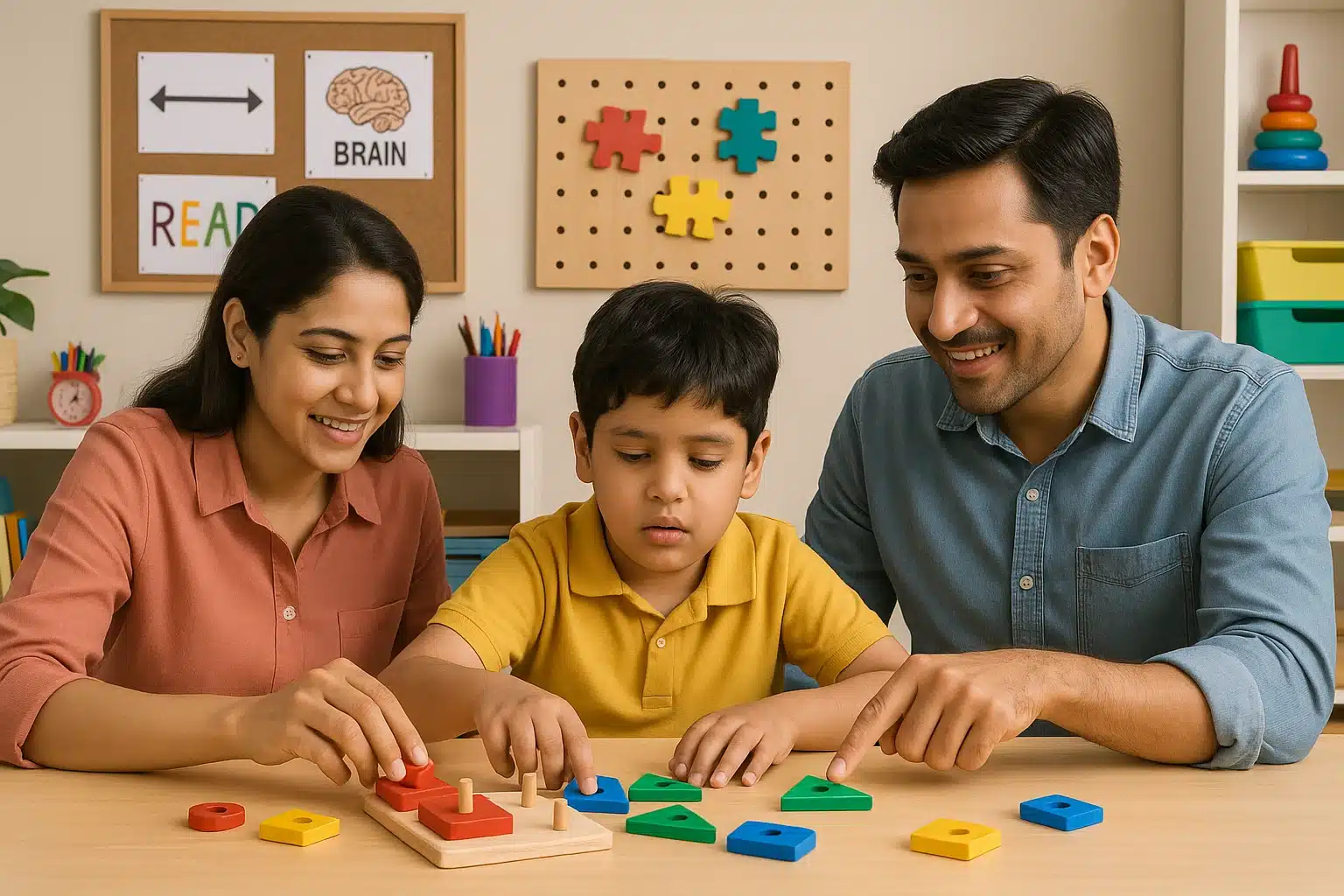
- Personalised teaching strategies and need-based teaching tactics are used for addressing the areas of concern.
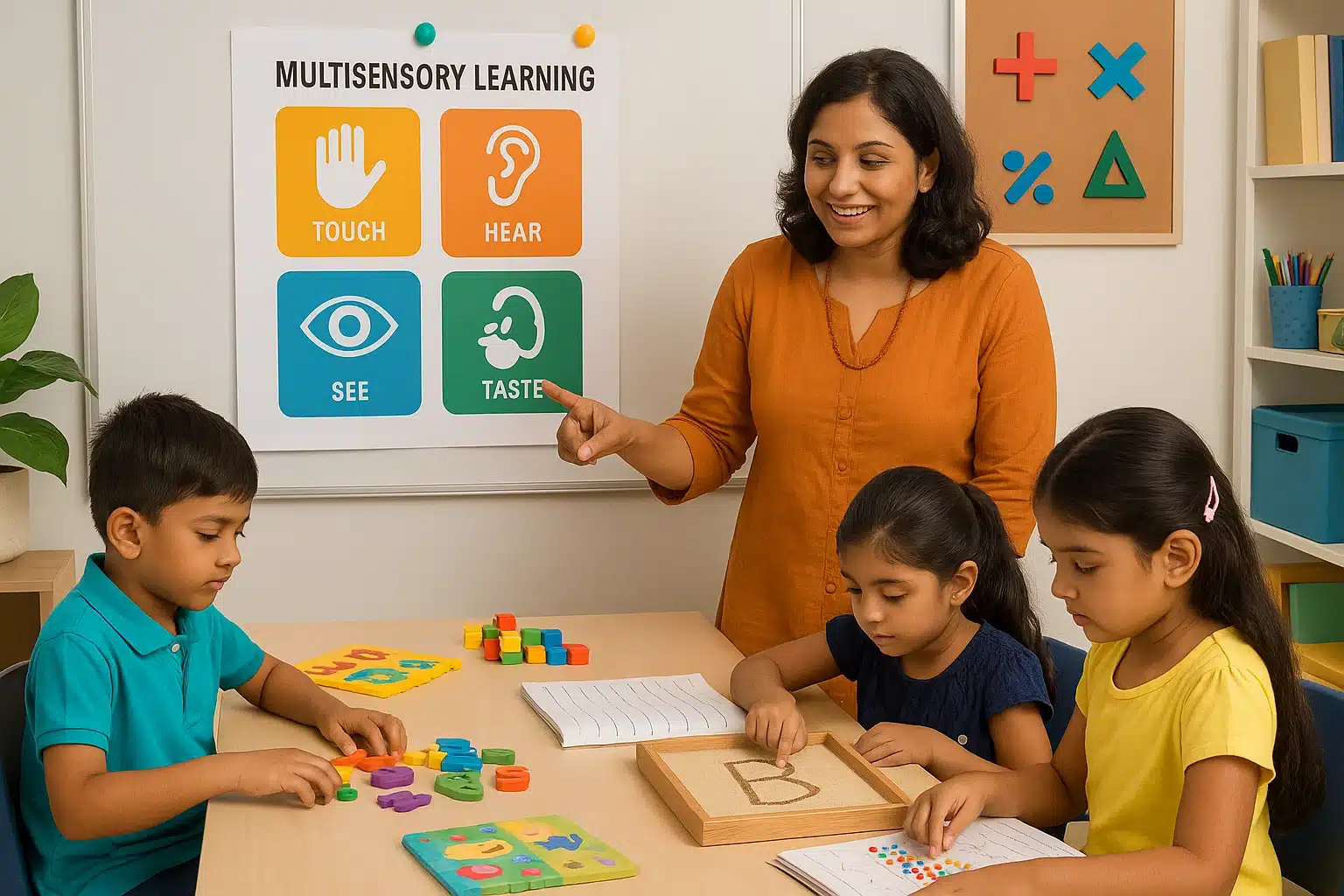
- Using a multitude of teaching methods, especially multi-sensory methods that improve the child’s learning outcomes.
- Early recognition of developmental delays helps provide the child with early support.
- Providing the child with emotional support and guiding them throughout to help boost their self-esteem.
- Timely updating of the child’s progress to all the stakeholders in the child’s academic journey.
- Maintain a continuous link of communication with parents and other professionals for steady progress.
Vidhyanidhi Education Society (Govt. Regd.), a pioneer Teacher training Institute, has launched a Learning Disability course for individuals who wish to make a positive difference in the lives of children with special needs. This course has been curated by a team of adept professionals who have valuable expertise of over 20 years, enabling trainees acquire skills and knowledge needed for a flourishing career in the field of Special Education.
Achieve expertise with Vidhyanidhi Education Society’s (Govt. Regd.) LD course: Enrol today!
For more details on the LD Course, Call/WhatsApp at +919321024137 / +919869866277
To download the brochure of the LD Course, Click Here!
Example of Learning Disability in Children
FAQs
How Many Children Are Affected By A Learning Disability?
Around 5–10% of school-aged children are affected by learning disabilities, making it one of the most common learning challenges worldwide.
What Is an Example Of Specific Learning Disability?
Dyscalculia, a mathematical learning disorder, is a specific learning disability where the child’s math skills, including the ability to understand numbers is hampered, resulting in poor academic results.
What Is The Most Common Learning Disability In Schools?
As far as numbers imply Dyslexia is a learning disability that is highly prevalent in schools, affecting the reading skills.
What Is A General Learning Disability?
A general learning disability affects overall learning ability across subjects; Vidhyanidhi Education Society’s Learning Disability Course helps educators support such children.