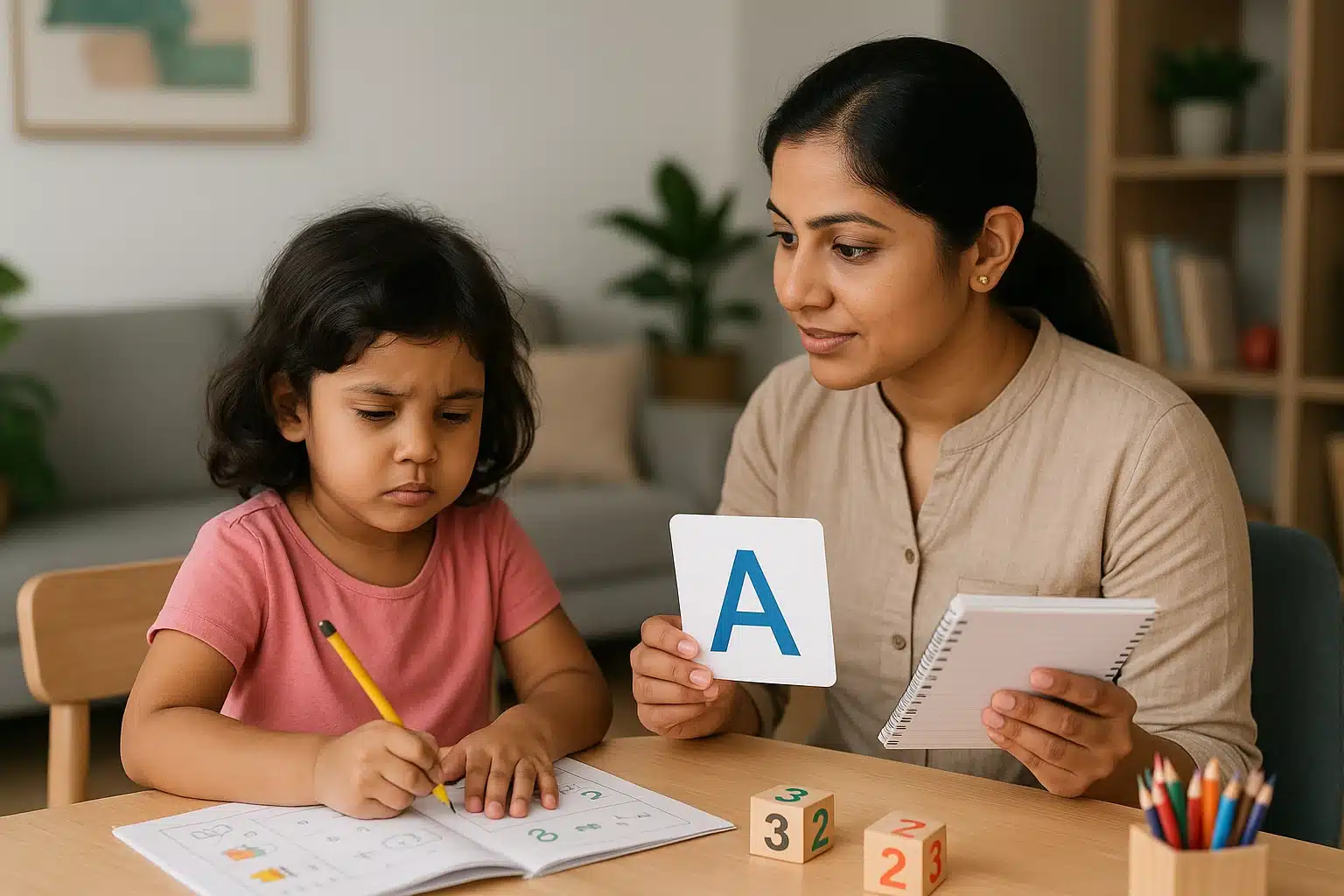
Understanding a kid’s struggles in school begins with identifying the signs that something might not be quite right. The procedure of the Diagnosis of Learning Difficulties helps to identify the specific difficulties faced by kids, whether in reading, writing, maths, or other skills.
When there is immediate identification of Learning Disabilities, it helps to chalk out suitable intervention approaches based on effective strategies that address the real areas of concern. This makes learning easily accessible for students and helps to avoid any major issues that may arise in the future. Students get the desired targeted support that helps them attain their learning goals, making learning a tranquil process for them.
Knowing what the challenging areas are, parents and educators are well prepared to help the child and foster their learning, making them independent learners, helping them build positive self-esteem and confidence in their capabilities.
How are Learning Difficulties Diagnosed?
The diagnosis of Learning difficulties is a structured procedure that has several steps involved. Identifying learning difficulties comprises scrutiny of the child, understanding their challenges and then professionally assessing them. The primary goal of this process is to learn about the child’s strengths and weaknesses and, accordingly, provide them with the precise support.
To download the brochure of the LD Course, Click Here!
For more details on the LD Course, Call/WhatsApp at +919321024137 / +919869866277
Here’s how the diagnosis usually takes place:
Surveying the child’s learning atmosphere.
When the child starts early school, the teachers may notice that despite reaching the desired age, the child has failed to attain certain developmental milestones, leading to severe struggles while reading, writing or even basic calculations. These signs can be a hint that the child needs additional assessment.
Collecting essential details
A thorough portfolio is made by collecting the child’s background information, comprising the details of developmental delays, any medical issue details, their academic performance and their behavioral patterns in different settings.
Screening Assessments
Preliminary tests are conducted to identify potential problem areas. These may include basic reading, spelling, maths, and comprehension tasks.
Academic reviewing and psychological diagnosis
A professional psychoanalyst or a special educator professional conducts some regular tests that help to accurately measure the child’s competencies of cognition, processing capabilities and specific learning skills.
Coordinate with Specialists
Speech therapists, occupational therapists or neurologists may be involved if extra conditions, like speech delays or sensory processing issues, are suspected.
Investigation and conclusion
The gathered information is scrutinised and studied thoroughly to determine if the child’s condition meets the criteria for a specific learning difficulty.
Designing an intervention plan
Depending on the Diagnosis, an IEP is created based on the child’s current capabilities and setting of realistic goals and devising a way to achieve them.
Being sure about the child’s challenges is essential as it helps to provide the child with targeted support that helps to eradicate the learning gaps, enabling the child to enjoy his learning journey.
To download the brochure of the LD Course, Click Here!
For more details on the LD Course, Call/WhatsApp at +919321024137 / +919869866277

Source: theconversation
Common Types of Learning Difficulties in Children
Learning difficulties are conditions where the brain’s signal processing capabilities are impacted due to several reasons, which directly impact their specific learning skills.
There are varied learning disorders that impact the child’s learning skills, but the most prevalent disorder is listed below:
Dyslexia
A reading disorder that affects the ability to recognise words, decode text, and understand written material. Children may read slowly, confuse similar-looking letters, or struggle with spelling.
Dysgraphia
A writing-related difficulty that impacts handwriting, spelling and the skill to organise feelings on paper. Children with dysgraphia may have messy writing, inconsistent spacing, or trouble forming letters.
Dyscalculia
A difficulty with maths skills, including understanding numbers, performing calculations, and grasping concepts like time or measurement. Children may struggle with mental maths or remembering mathematical steps.
Auditory Processing Disorder (APD)
A condition where the brain has trouble interpreting sounds, even though hearing is normal. Children with APD may find it hard to follow verbal instructions, especially in noisy environments.
Visual Processing Disorder
Affects how the brain interprets visual information. This can lead to challenges in reading, copying from the board, or recognising patterns and shapes.
Attention Deficit Hyperactivity Disorder (ADHD)
ADHD is a neurological disorder that affects the brain’s processing power, making it extremely difficult for them to focus, impacting their behaviour patterns and inability to stay organised, which leads to poor academic progress.
Recognizing these difficulties early allows parents and teachers to provide targeted interventions, helping children build essential skills and gain confidence in their learning journey.
Some Preschool Behaviours that Could Signal Learning Difficulties
Preschool years are a time of rapid growth, but certain behaviors may indicate that a child is finding it harder to process or retain information. While some children may struggle with certain skills but when these challenges hamper the overall development of the child, it is a warning sign that there might be a possibility of an underlying learning difficulty.
- Restricted vocabulary: Limited vocabulary, inability to read fluently, and inability to form sentences.
- Inability to understand instructions: Not being able to focus while instructions are mentioned, and not being able to process simple two-step directions. E.g. “Close the book and put it in your bag”
- Menial memory retention: Despite repeated instructions, the child forgets daily routines or even keeps personal belongings safe.
- Struggle to understand fundamental concepts: After repeating the topic several times, the child cannot process basic concepts such as basic shapes, numbers or even letters.
- Fine Motor Skills issues: Poor finger grip results in the inability to hold pencils or crayons needed for writing or coloring.
- Aggressive behaviour: Frustration easily sets in due to constant struggles, leading children to avoid participating in regular classroom activities.
Recognising these signs at an early stage helps teachers and educators to be well-prepared and equipped with impactful strategies that help children thrive academically and socially.
To download the brochure of the LD Course, Click Here!
For more details on the LD Course, Call/WhatsApp at +919321024137 / +919869866277
How to Overcome Learning Difficulties in Children?
Making a positive impact on the overall development of the child demands a caring and patient mindset on the part of the teachers to guide the child, making them independent and leading wholesome lives.
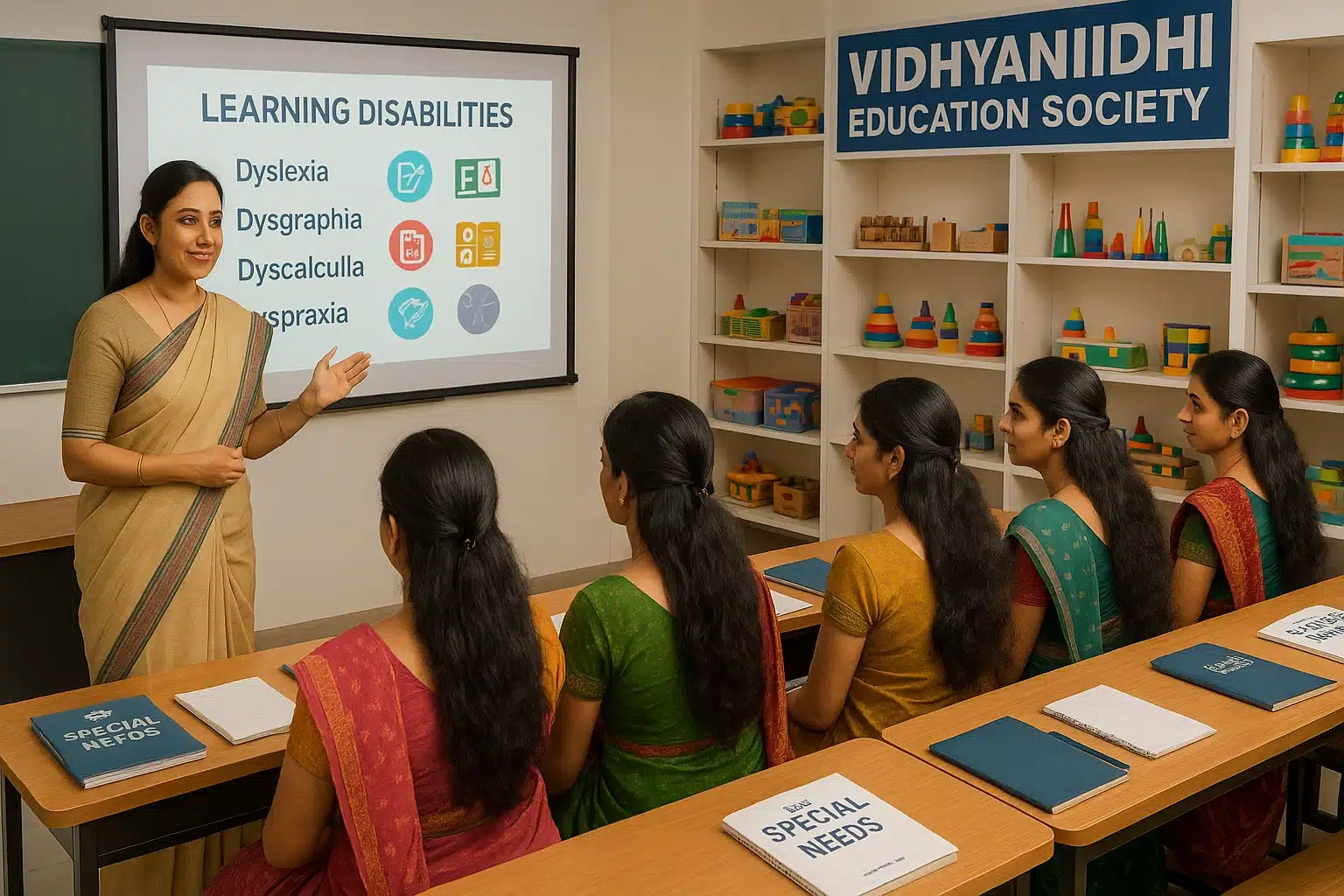
Helping children overcome learning problems needs patience, consistent support and the right teaching approaches. With timely intervention and a structured approach, these difficulties can be effectively managed, enabling children to reach their full potential this can be done by Vidhyanidhi Education Society (Govt. Regd.) offer a Learning Disability Course.
Here are some practical ways to address learning difficulties:
Early Identification and Assessment
Detecting signs early allows for timely support. Conducting a formal diagnosis helps to devise an accurate educational plan that focuses directly on the diverse learning needs of the child.
Customised educational plans
Child-based tailored plans are devised that concentrate on the child’s strengths and ensure that the teaching methods are aligned with the child’s learning preferences.
Multi-Sensorial teaching techniques
A comprehensive blend of different teaching techniques based on varied sensorial modes, such as visual aids, touch-based activities, and hands-on learning, makes topics more relatable to children.
Parental Involvement
Consistent encouragement and strengthening at home strengthen what is taught in the classroom. Parents can be well-trained in strategies and therapies that can be followed at home that help to reinforce the topics that are covered at school, fostering learning at a better pace.
Professional Support
Teachers, special educators and therapists play an important role in providing targeted interventions. Institutes like Vidhyanidhi Education Society (Govt. Regd.) offer a Learning Disability Course that prepares teachers with the skills to help kids Diagnosis of Learning Difficulties.
Positive Reinforcement
Partying in small achievements to boost confidence and motivate kids to keep trying.
Continuous professional development for teachers
Teachers have to undergo rigorous training through various workshops that help them update themselves about the recent developments in the field of special education that can make a huge impact on improving the learning outcomes.
By undergoing systematic training under a special ed program from a bankable platform under the guidance of trained mentor teachers, children with special needs to navigate through their daily challenges successfully, enabling them to embark on a flourishing academic journey.
Support Success! Join Vidhyanidhi’s LD Course and Make Learning Easier Today!
To download the brochure of the LD Course, Click Here!
For more details on the LD Course, Call/WhatsApp at +919321024137 / +919869866277
Diagnosis of Learning Difficulties
FAQs
How can Learning Disabilities be detected?
By noticing consistent struggles in reading, writing, maths, or following instructions, followed by a professional assessment.
How do You Evaluate Learning Disabilities?
Professionals, like those at Vidhyanidhi Education Society, employ exams, interviews, and performance assessments to figure out what a child needs to study.