What are the Phonic Sounds? It is the sound each letter or group of letters makes as we read or say words. It helps the children to understand the link between the written symbols and the language spoken. What is the Phonic Sounds?
A look at the Letter Sound is an essential first step in reading. It forms the basis for word recognition, pronunciation practice and good language skills. These sounds can be taught to children in a simple and systematic way so that they can begin to read with confidence and clarity.
What are Phonics Sounds?
Phonics Sounds are the sounds that letters and collections of letters form in spoken language. Kids know how words are formed and spelled, once they learn phonics sound which makes reading and writing easier.
They are divided into four parts:
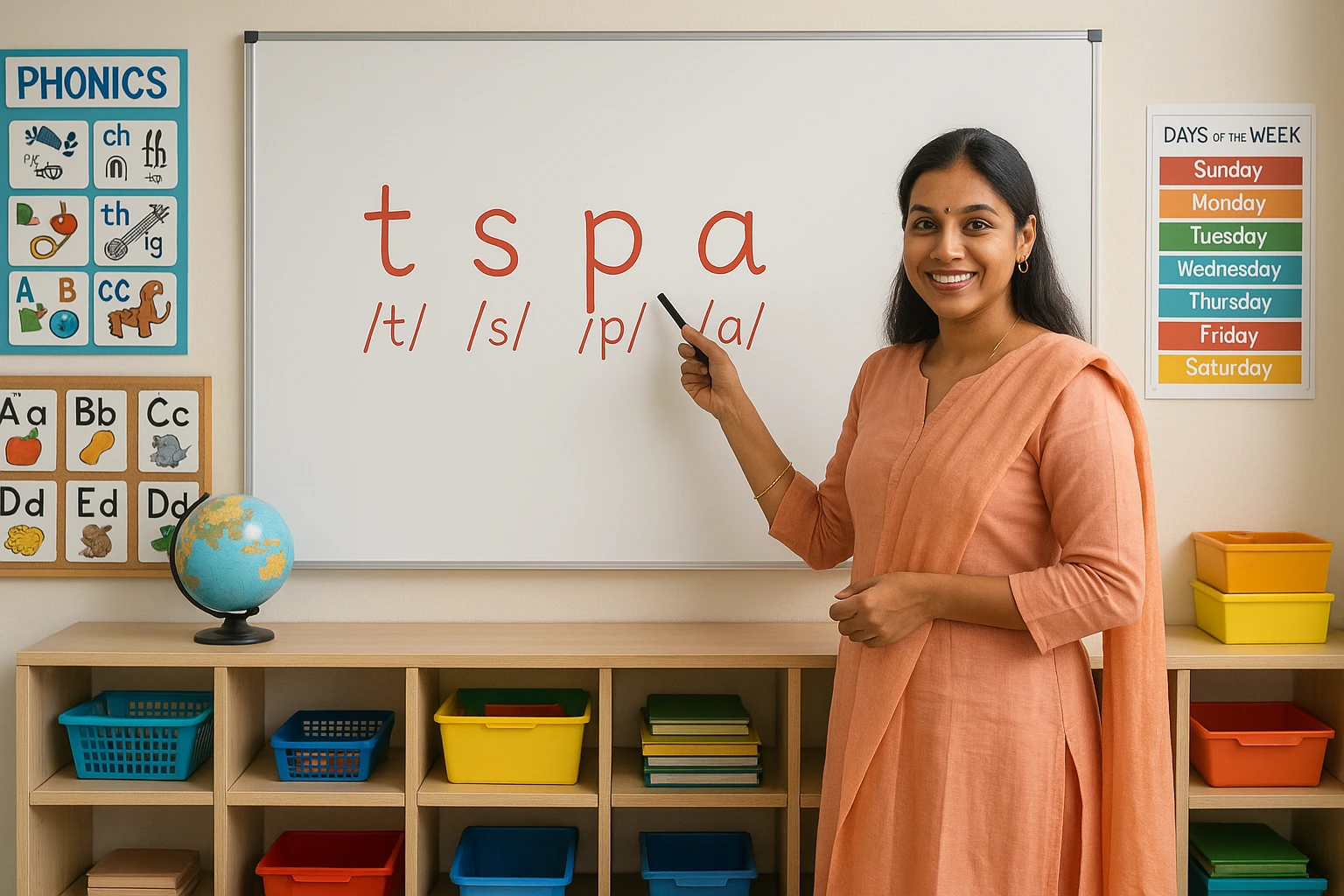
- Letter sounds: Each alphabet letter has a sound, like “a” in apple or “b” in bat.
- Digraphs: Two letters combine to make one sound, such as “sh,” “ch,” or “th.”
- Blends: Two or more consonants are blended together, like “bl” in blue or “str” in street.
- Vowel sounds: These include short sounds (like “a” in cat) and long sounds (like “a” in cake).
Kids learn the phonics sounds to help them understand words, improve pronunciation and create great reading confidence over time.
How to master the Phonics Sounds A to Z?
Learning Phonics makes it simple and effective, mastering phonics sound from A to Z builds a strong reading and pronunciation skills.
Joining for Phonics Teacher Training Course can provide strong understanding and teaching methods.
- Practice regularly with clear pronunciation and begin using single letter sounds.
- Connect sound with familiar words and use of flashcards and pictures.
- To form simple words like “cat” or “dog” practice with sound blending.
- Focus on repetition and listening activities to strengthen memory.
- Read simple phonics-based books to apply learning in context.
- Engage in fun activities like rhymes and games to maintain interest.
Vidhyanidhi Education Society (Govt. Regd.) provides systematic learning Phonics Teacher Training Course. A Phonics Teacher Training Course also gives teachers the confidence and clarity to teach children.
For more details of Phonics Teacher Course Call / Whatsapp +919869866277/+919869546913
What Comes after Letter Sounds?
Once learned the letter sounds, the next stage is to work on building better reading and word recognition abilities. At this stage children get help to link sounds to make meaningful words and phrases.
Blending sounds
Kids combine different sounds to read simple words like “cat” or “sun.”
Segmenting words
Breaking words into sounds helps with spelling and writing.
Learning digraphs
Understanding sets like “sh,” “ch,” and “th” that create single sounds.
Exploring blends
Practicing groups like “bl,” “tr,” or “st” to improve fluency.
Sight words recognition
Recognizing regular words which does not follow phonics rules.
Reading simple sentences
Applying all skills to understand short and easy texts.
These steps help kids boost their confidence while reading, once they learn to recognize sounds, read sentence smoothly.
To Download Brochure of Phonics Teacher Course, Click Here!
For more details of Phonics Teacher Course Call / Whatsapp +919869866277/+919869546913
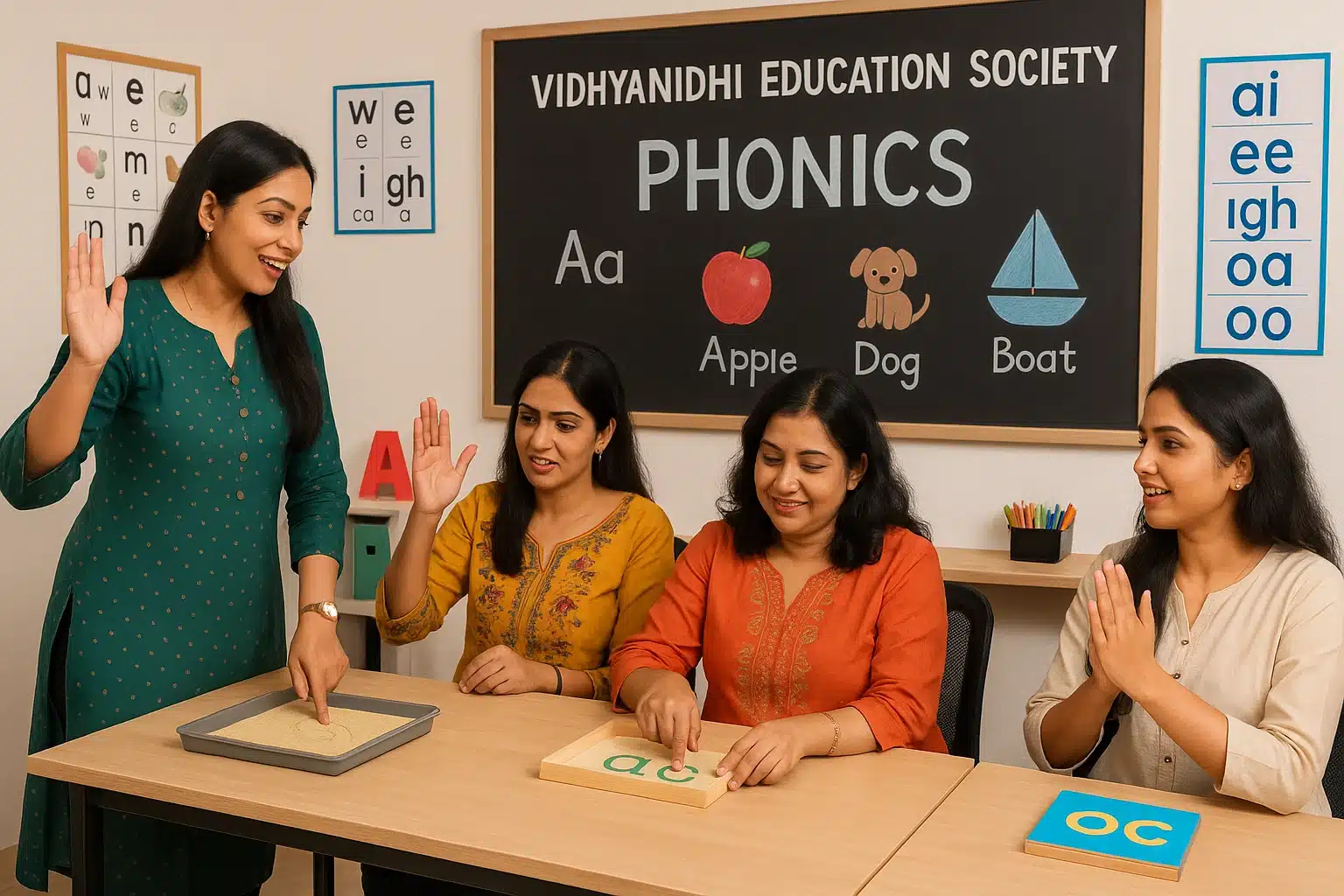
Why Sound-Based Learning Wins?
Reading become easier for kids when they learn sound-based phonics, it helps them connect letters with their sounds. Children who understand how sounds are put together to produce words have less confusion and find reading simpler.
Improves decoding skills
Children learn to read tricky words by sounding them out.
Strengthens pronunciation
Clear sound recognition helps in speaking words correctly.
Builds reading confidence
Learning step by step reduces confusion and uncertainty.
Enhances spelling ability
Learning sounds helps spell words correctly.
Encourages independent reading
Children don’t depend much on memorizing but reasoning.
Supports long-term learning
Strong fundamentals make advanced reading easier.
Learning through sound provides a great platform to learn the language helping kids develop into confident readers and speakers over a period.
To Download Brochure of Phonics Teacher Course, Click Here!
For more details of Phonics Teacher Course Call / Whatsapp +919869866277/+919869546913
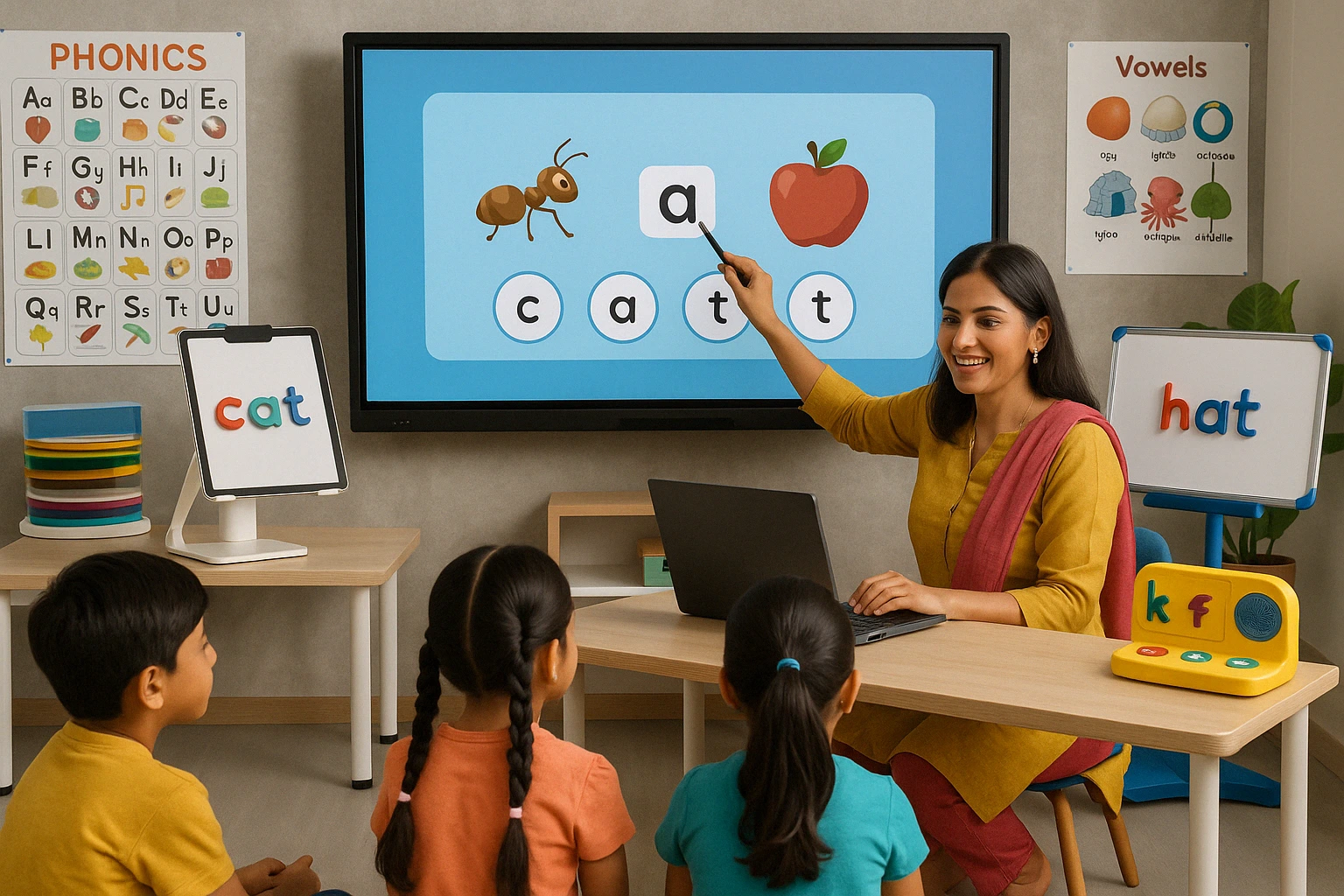
Engaging Exercises to Practice Phonics Sound
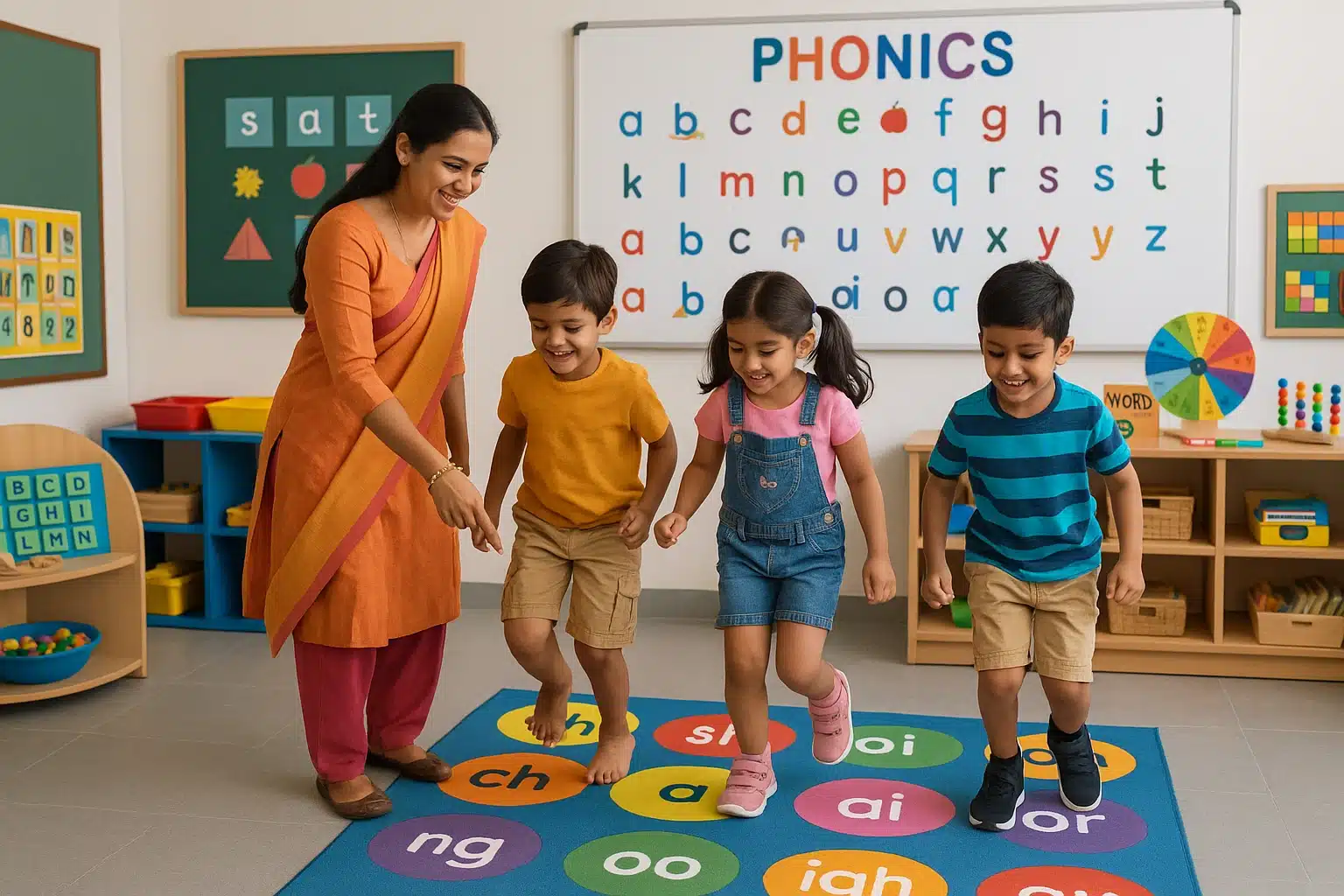
Kids find phonics sound practice interactive and interesting. With regular practice improve with recognition, pronunciations and reading fluency.
Sound matching games
Match letters with pictures that begin using the same sound.
Flashcard drills
For daily revision use flashcards and word cards.
Phonics rhymes and songs
Kids remember sounds easily when they practice regularly with music.
Word building activities
Arrange letter tiles to form simple words like “bat” or “pen.”
Sound hunt
Keep the objects hidden and let the kids find the objects which starts with a particular sound.
Reading aloud
Kids build confidence when they read aloud phonics-based stories.
These practice make learning phonics sounds active and effective, helping kids to build up their reading and speaking skills step by step.
To Download Brochure of Phonics Teacher Course, Click Here!
For more details of Phonics Teacher Course Call / Whatsapp +919869866277/+919869546913
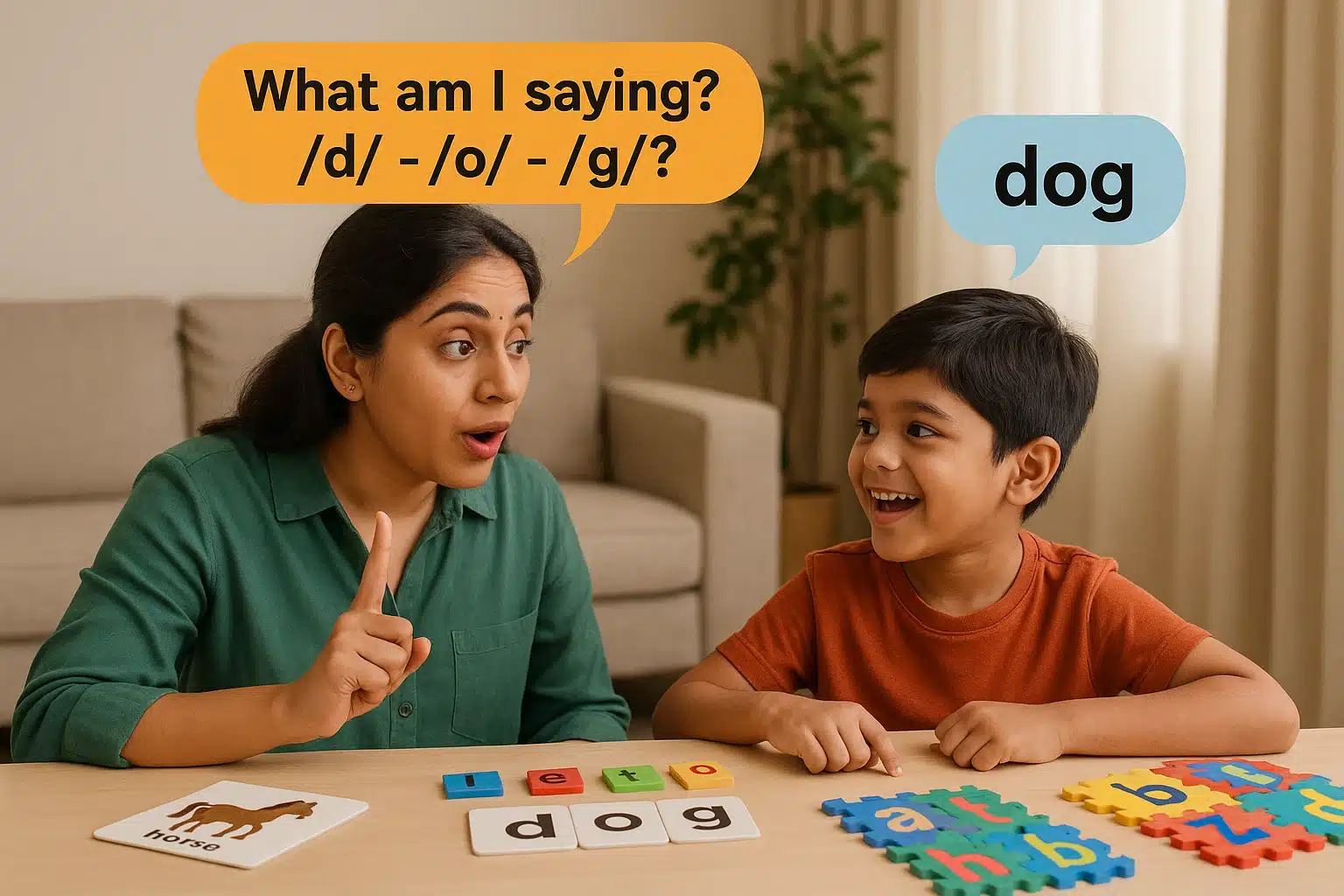
Common Phonics Challenges
Kids face challenges when learning sounds and word patterns, identifying these issue early helps improve their reading skills.
Confusing similar sounds
Tricky words such as “b” and “d” or “p” and “q” sounds confusing.
Example: A child may read “bat” as “dat.”
Difficulty in blending sounds
Some children struggle to join sounds smoothly.
Example: Reading “c-a-t” separately instead of “cat.”
Trouble with digraphs
It takes time to understand the pair such as “sh” or “th”.
Example: Pronouncing “ship” as “sip.”
Inconsistent vowel sounds
Vowel sounds can change from one word to another.
Example: “a” in “cat” and “cake.”
Limited practice
Progress will be slow without repetition.
Children can overcome these hurdles with practice, and by following simple directions, build confidence and develop phonics skills over time.
To Download Brochure of Phonics Teacher Course, Click Here!
For more details of Phonics Teacher Course Call / Whatsapp +919869866277/+919869546913
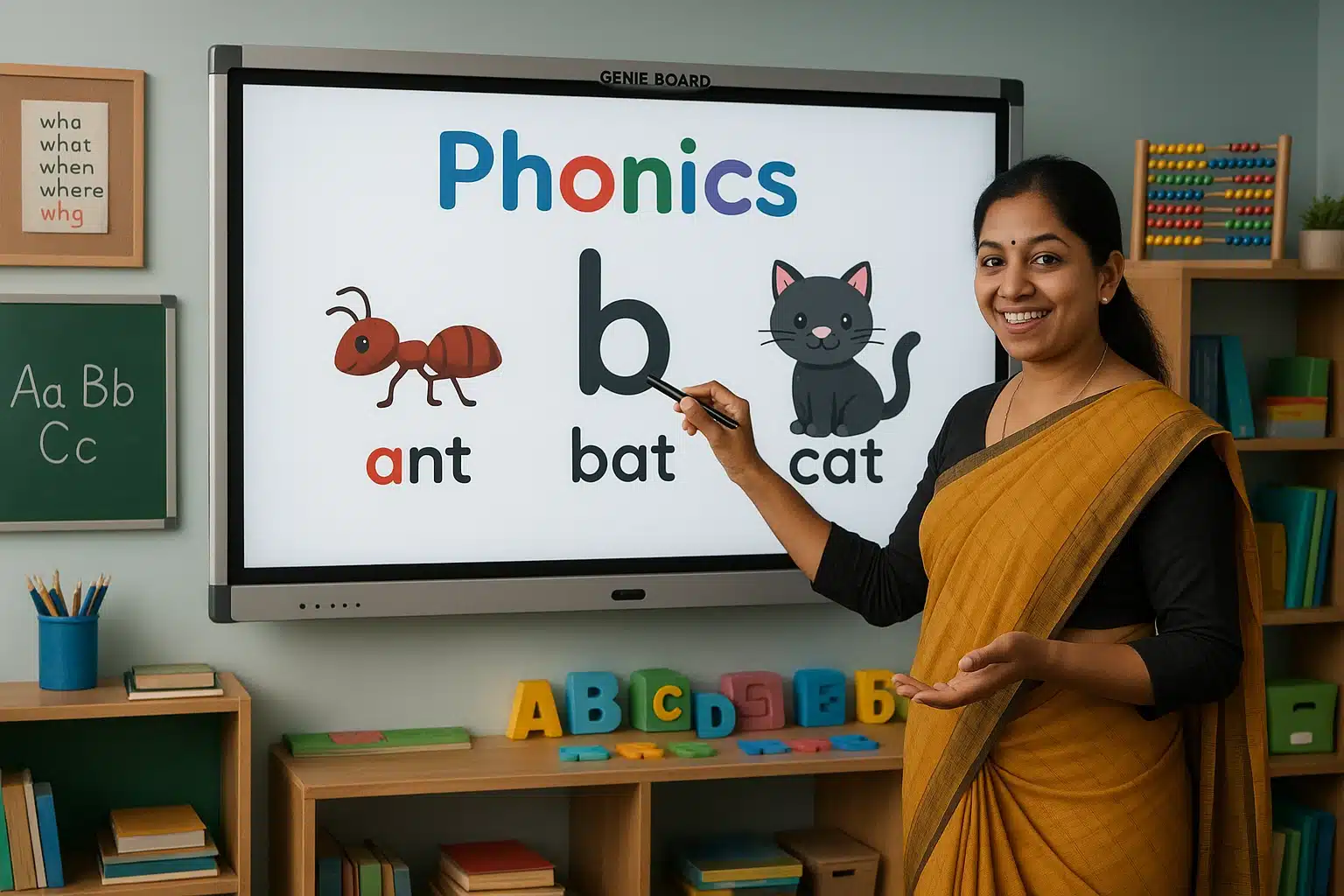
Why Start Phonics Early?
Start with Early Phonics to lay a good base for reading and good communications skills. It helps in better understanding of how alphabets and sound work together.
Builds early reading skills
Kids learn the skill of reading words gradually.
Example: Reading “c-a-t” as “cat.”
Improves pronunciation
Getting the sound right will improve speaking skills.
Example: Correctly saying “ship” instead of “sip.”
Boosts confidence
Early reading skills encourage kids to become more confident learners, it motivates them and feel more confident.
Example: A child confidently reads simple storybooks.
Supports spelling development
Learning about how sound helps in writing words correctly.
Example: Spell “dog” by recognising its sounds.
Encourages independent learning
Children rely less on memorization and more on sound patterns.
Learning Phonics early builds a smooth path for strong literacy skills and effective communication knowledge.
Join Vidhyanidhi Education Society’s Phonics Teacher Course and make learning fun for kids!
To Download Brochure of Phonics Teacher Course, Click Here!
For more details of Phonics Teacher Course Call / Whatsapp +919869866277/+919869546913
What is the Phonic Sound?
FAQs
What is the first step in teaching phonics?
Begin with letter sounds Teach What is the Phonic Sound using easy examples and repetition.
How long phonics should be taught?
Phonics is taught over early years with daily short practice until reading becomes smooth.
What is the most effective phonics method?
Strong reading skills can be developed most effectively through systematic phonics with blending, repetition and exercises.
Is it too late to learn phonics?
It’s never late; institutes like Vidhyanidhi Education Society support phonics learning at any age.