
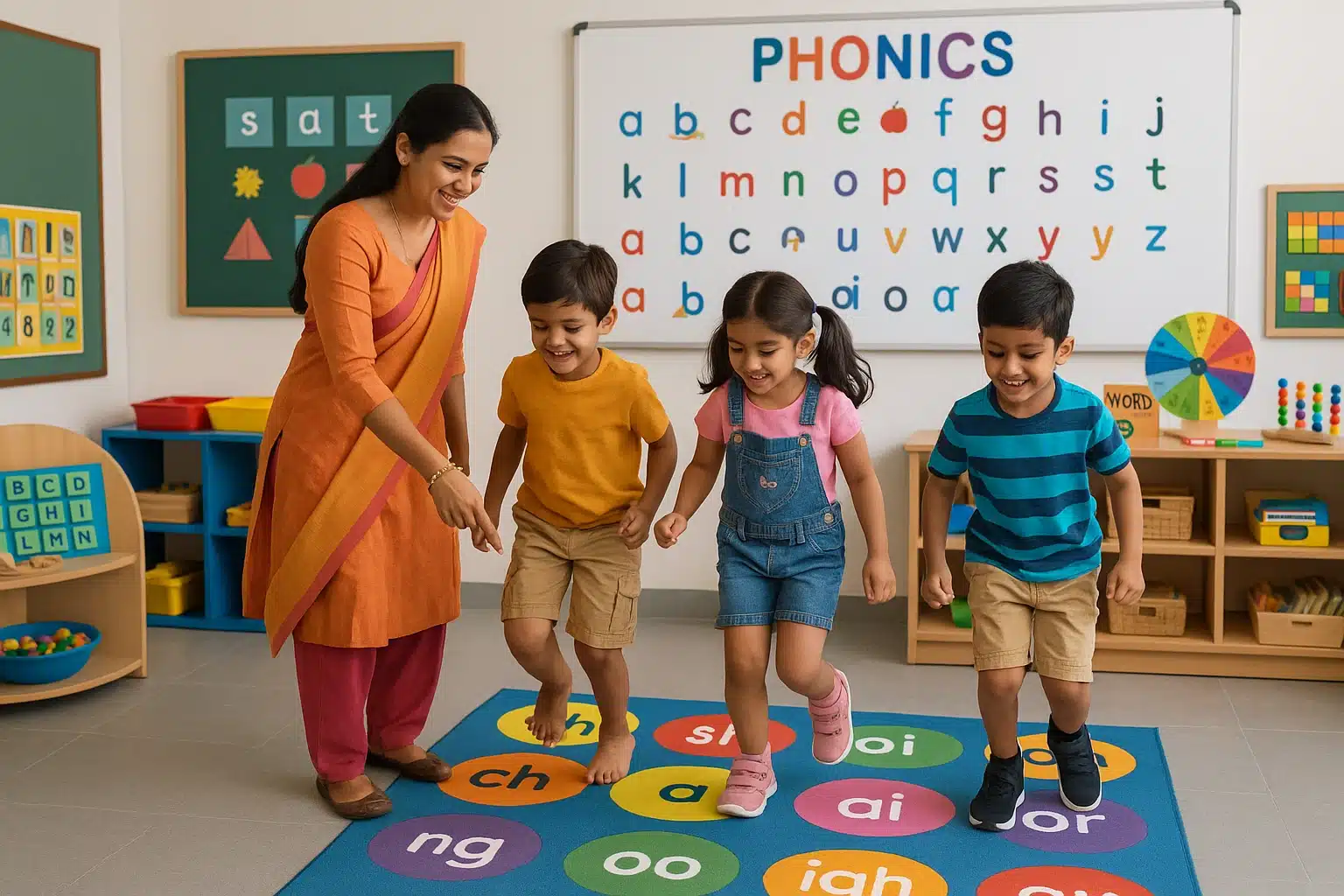
All about Long Vowel Sounds Phonics teaches children that sometimes vowels say their own names. Learning these sounds makes Reading and Spelling much easier for young kids. Fun activities like songs and simple practice words like cake, bike, home and cute. Kids begin to know common word patterns. Long vowel Sounds Phonics play an important role in helping children understand words, improve pronunciation and develop reading fluency from an early age.
Learning Phonics Sounds, kids gain confidence in reading tricky words and strengthen their language skills. It builds strong literacy foundations from a young age.
What are Long Vowel Sounds?
Long Vowel Sounds Phonics occur when a vowel says its own name. These sounds are often taught in phonics as they help youngsters read and spell words well. Vowel-consonant-E (CVCe) word patterns, vowel teams, or open syllables are all examples of how Long Vowel Sounds Phonics arise in diverse word patterns.
The Long Vowel Sound helps students to read, spell and pronounce words correctly. Learning these sounds makes it easier to identify word patterns, form new words, and improve confidence in reading and writing.
What are Long Vowel Sounds Examples:
- Long A: cake, rain, day
- Long E: tree, seat, me
- Long I: bike, pie, fly
- Long O: home, boat, go
- Long U: cube, blue, music
Learning Long Vowel Sounds Phonics helps children recognize word patterns and improve pronunciation. It helps children read fluently, spell and build vocabulary as well. Kids who learn phonics tend to be more confident readers and better at working out new words. One of the first important reading skills is learning to recognize long vowel sounds.
Click Here, for downloading the brochure of Phonics Teacher Course!
For the details of Phonics Teacher Course, Call / Whatsapp on +919869546913 / +919869866277.
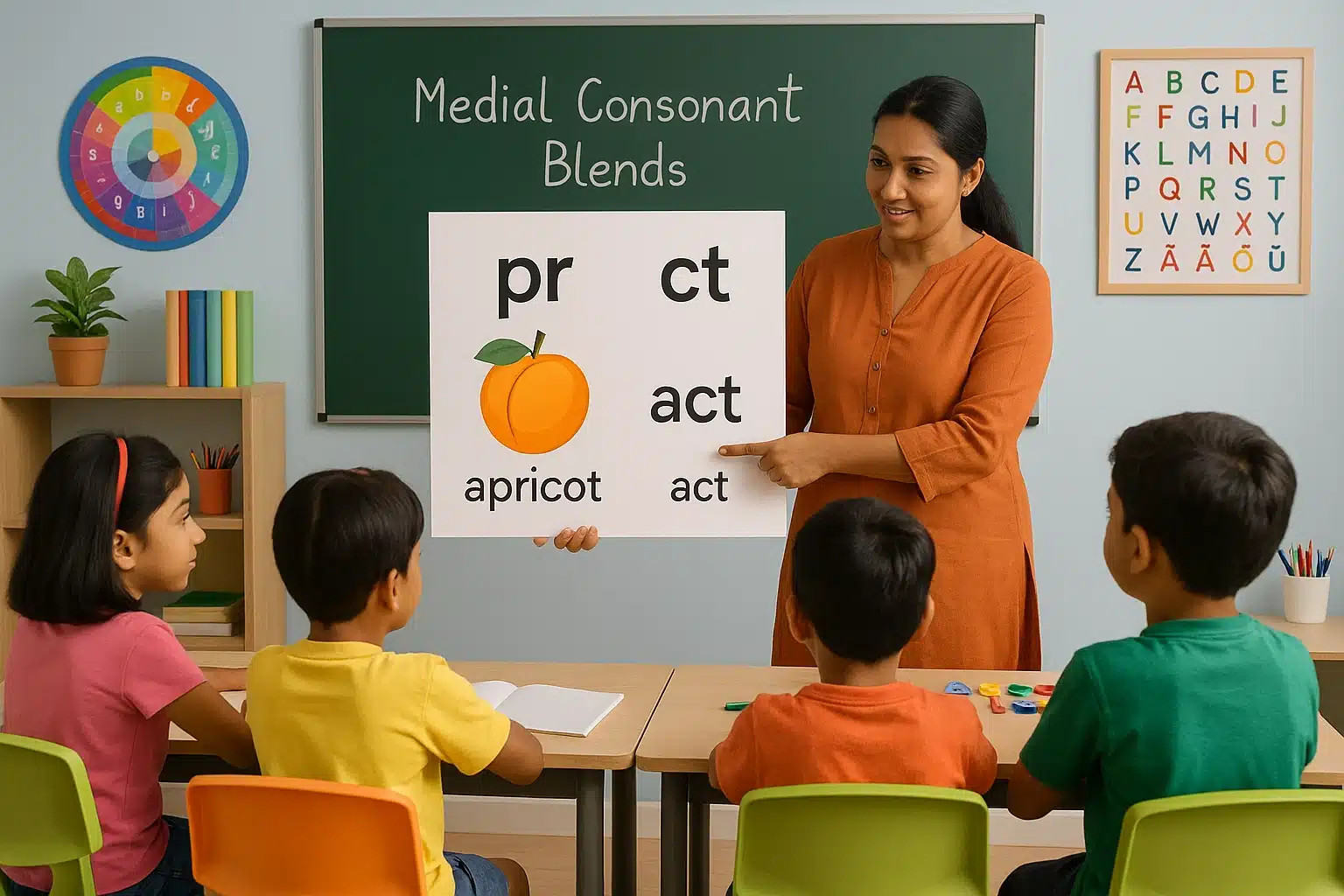
Ways to Form Long Vowel Sounds
English has several ways of making long vowel sounds. When youngsters recognize these patterns, they can read and spell more effectively.
Ways to Form Long Vowel Sounds Phonics:
Silent E Pattern (CVC)
A silent “e” at the end of a word makes the vowel say its name. Examples: cake, bike, home, cube.
Vowel Teams
Two vowels work together to create a long vowel sound. Examples: rain, boat, team, seat.
Open Syllables
The last vowel of a syllable has, in general, a long sound. Examples: baby, he, go, etc.
Y as a consonant
The letter “y” can act as a long vowel, particularly toward the end of a word. Example: fly, my, happy, etc.
Vowel Digraphs
Some groupings of vowels create long vowel sounds. For example, ” ea ” in ” beach ” and ” oa ” in ” road.
When children pick up these Long Vowel Sounds Phonics patterns, they can quickly recognize words. It improves pronunciation, and they become expert readers.
Click Here, for downloading the brochure of Phonics Teacher Course!
For the details of Phonics Teacher Course, Call / Whatsapp on +919869546913 / +919869866277.

Activities to Teach Long Vowel Sounds
Fun and Interactive Activities to Teach Long Vowel Sounds Phonics help children learn long vowel sounds better. These activities help learners to identify the vowel patterns and to use them when reading and writing.
Activities to Teach Long Vowel Sounds:
Word Arrangement
Give students a list of words and have students sort the words by long vowel sounds (long A, long E, long O).
Image Matching
Use pictorial cards and word cards. Children then match the image to the correct long vowel word, e.g., cake, bike or boat.
Phonetic Bingo
Create bingo cards using words that contain long vowels. As the word is spoken, children identify and label the correct word.
Read and mark up
Students will read a short passage and will underline any words that have long vowel sounds.
Cognitive Tasks
Remember with long vowel sound picture and word cards matching.
Word Construction Exercises
Children can use letter tiles or flashcards to construct words with silent e and vowel teams.
Narration in literature
Look at simple phonics stories that include lots of long vowel words and ask the children to spot them.
Regularly practicing these Activities to Teach phonics sounds will help your child become a better reader, speller, and more confident with long vowel sounds.
Click Here, for downloading the brochure of Phonics Teacher Course!
For the details of Phonics Teacher Course, Call / Whatsapp on +919869546913 / +919869866277.
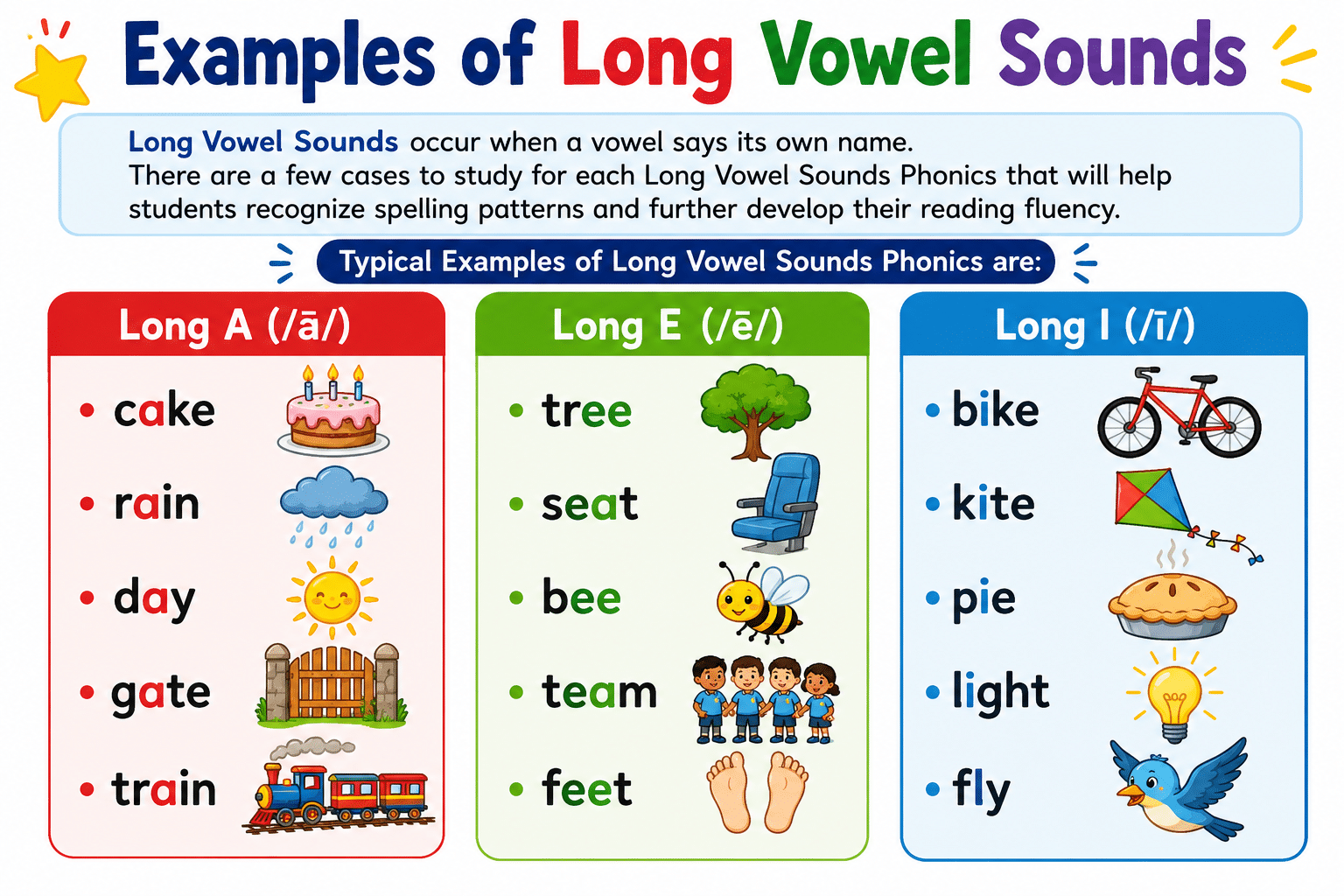
Examples of Long Vowel Sounds
Long Vowel Sounds occur when a vowel says its own name. There are a few cases to study for each phonics that will help students recognize spelling patterns and further develop their reading fluency.
Typical Examples are:
Long A (/ā/):
- cake
- rain
- day
- gate
- train
Long E (/ē/):
- tree
- seat
- bee
- team
- feet
Long I (/ī/):
- bike
- kite
- pie
- light
- fly
Long O (/ō/):
- home
- boat
- road
- snow
- go
Long U (/ū/):
- cube
- music
- blue
- tune
- use
These Examples of Vowel Sounds Phonics show different spelling patterns that make long vowel sounds, such as silent e, vowel teams and open syllables. These words can be used by teachers and caregivers in their reading, spelling and phonics instruction.
Soon, children who repeatedly hear long vowels start to recognize patterns and improve their ability to sound out difficult sentences. This skill will help improve pronunciation, reading accuracy and learning of language overall.
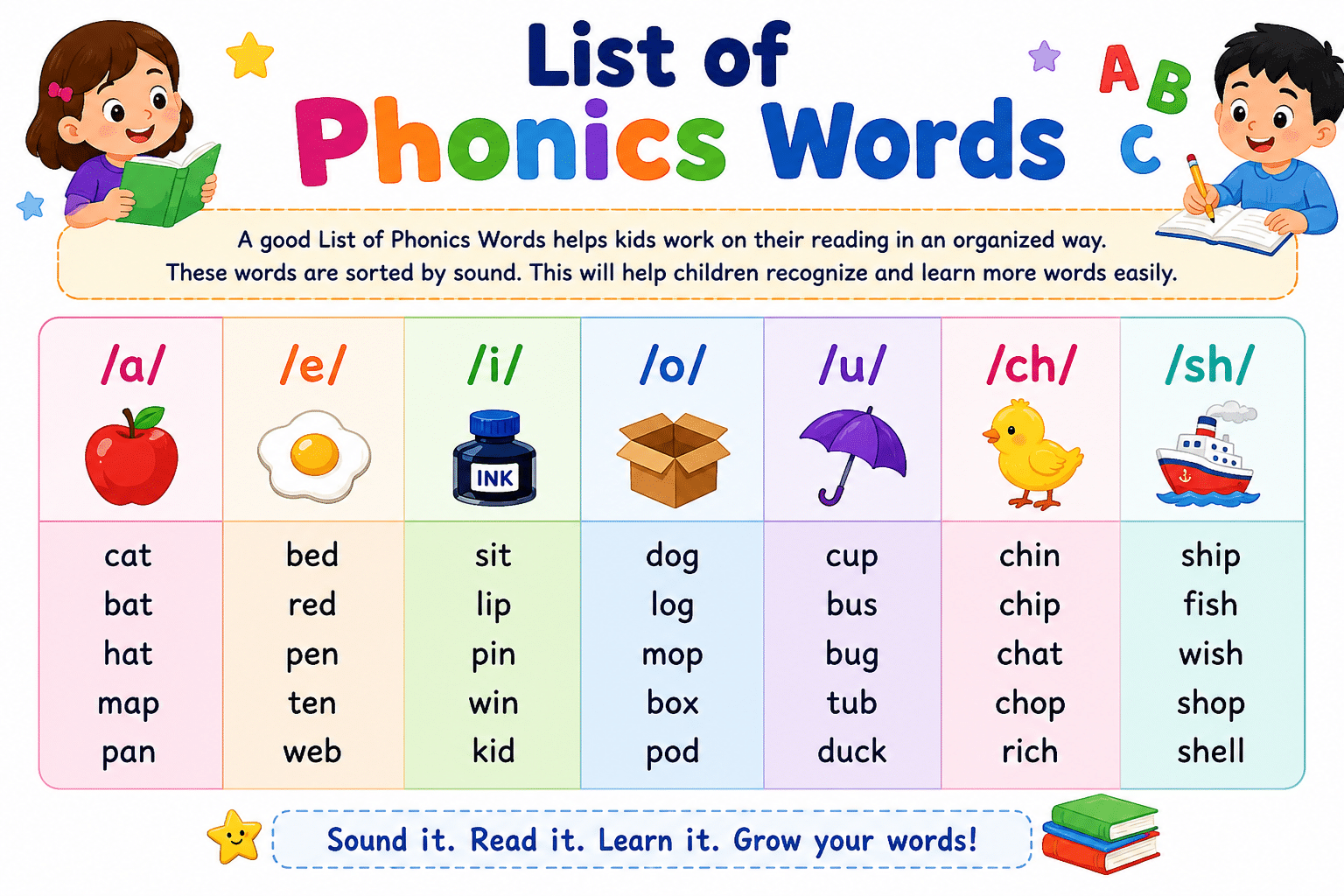
Common Phonics Rules for Long Vowels
A Phonics Teacher Training Course helps teachers understand the important rules that manageVowel Sounds Phonics. These rules make it easier for children to read and spell words and to recognize patterns.
Common Phonics Rules for Long Vowels are:
The Silent E Rule
A word that ends in “e” will often make the vowel before it say its name.
Examples: cake, bicycle, house.
Rule for Double Vowels
When two vowels are joined together, the first vowel is usually given its long sound, and the second vowel is not pronounced.
Examples: rain, boat, team.
Open Syllable Rule
A vowel at the end of a syllable often makes a long sound.
Examples: he, go, me.
Y as a Vowel Rule
The letter “y” can produce a long E or long I sound.
Examples: happy, fly.
Long Vowel Digraphs
Certain vowel combinations create long vowel sounds.
Examples: ea in beach and oa in road.
Once kids decode the Common Phonics Rules for Long Vowels, it helps them to build confidence. The Phonics Teacher Training Course offered by Vidhyanidhi Education Society (Govt. Regd.) provides teachers with practical Long Vowel Sounds Phonics teaching methods. The Phonics course helps teachers plan fun and engaging activities that build early literacy skills.
Sign up for the Phonics Teacher Course at Vidhyanidhi Education Society now and learn how to master Word Phonics!
Click Here, for downloading the brochure of Phonics Teacher Course!
For the details of Phonics Teacher Course, Call / Whatsapp on +919869546913 / +919869866277.
FAQs
What Is The Difference Between A Long Vowel Sound And A Vowel Team?
When a vowel sounds like its name, it is a long vowel sound. Vowel teams are a spelling pattern that can also make a long vowel sound. Examples are ea or oa.
What Are Long Vowels In Phonics?
The long vowels are the vowels where the sound is the same as their name. For example, A as in cake, E as in tree, I as in kite, O as in home, U as in cube.
Why Long Vowels Matter?
Long vowels help children to read tricky words. It also helps kids to read difficult words, improve spelling accuracy, expand vocabulary, and build confidence in reading fluently.
How To Teach Phonics Long Vowels?
Teach long vowels with word families, phonics games, stories and activities. Long Vowel Sounds Phonics is covered in phonics training programs by Vidhyanidhi Education Society.