Shadow Teacher Qualifications
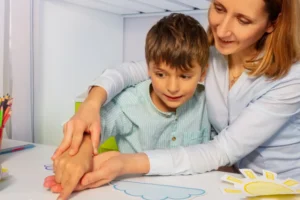
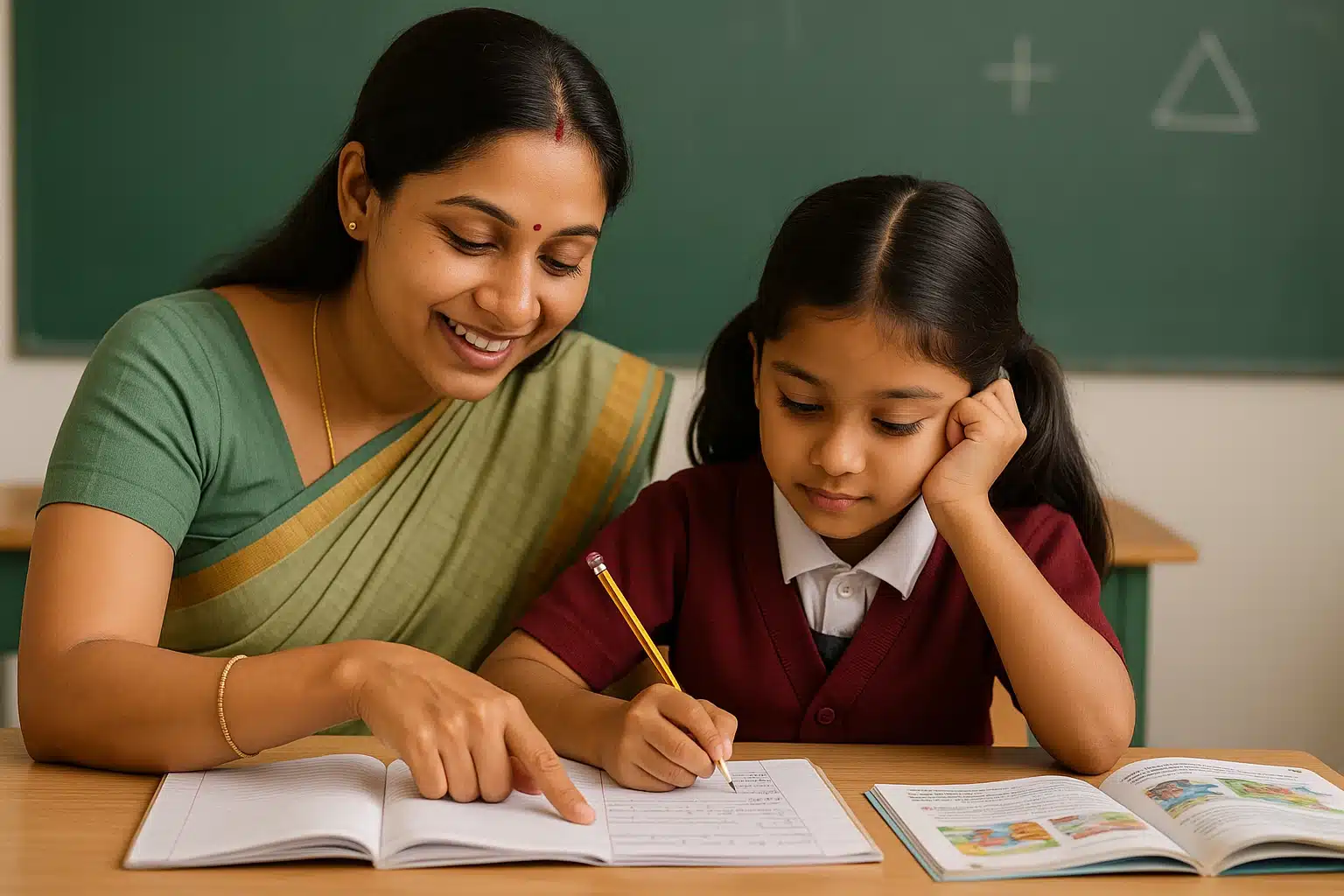
Shadow Teacher Qualifications play an important role in supporting children who need extra help in the classroom. These qualifications focus on building skills like understanding child development, managing learning challenges, and working closely with teachers and parents. A trained shadow teacher helps students stay focused, follow instructions, and take part in daily activities with confidence.
When aspiring Shadow Teachers undergo a Shadow Teacher Training Course, they are well-versed in their job roles, enabling them to deliver their duties with diligence and effectiveness, supporting each child’s journey, making them confident learners.
What are the Shadow Teacher Qualifications in India?
Shadow Teacher Qualifications in India refer to the basic education, training, and skills required to work as a support teacher for children who need individual attention in regular classrooms.
Most crucial attributes of Shadow Teacher Qualifications in India are listed below:
- Understanding the basics of how to provide the child with differentiated instructions based on their needs.
- Possessing a 12th certification or a bachelor’s degree from a recognized platform.
- Deep understanding of special needs disorders and other behavioral conditions such as ADHD, autism, learning disabilities, or developmental delays
- Classroom management essentials, behavior control and providing individualized attention.
- Skills required to become an adept collaborator with parents, class teachers, and therapists
- Developing empathy and an enduring attitude towards the needs of children with special needs.
Undergoing a Shadow Teacher Training Course enables candidates to enhance their skills and qualities, which are crucial for helping special children learn and progress in a manner that aligns with their pace and convenience.
How to Become a Shadow Teacher?
Becoming a shadow teacher involves gaining the right knowledge, training and practical skills to support kids who need individual attention in regular classrooms. The process is structured and focuses on understanding child behaviour, learning patterns and classroom support methods.
The procedure of being a shadow teacher is listed below:
- Depending on the course you choose, acquire the minimum qualifications.
- After thoroughly scrutinising courses, choose a bankable institute that offers the Shadow Teacher Training Course based on your career aspirations.
- Gain insights about autism, ADHD, learning disabilities, and developmental delays
- Acquire essential skills of practical classroom management needed for academic support and emotional development.
- Complete the course, and do an intensive internship in a school of your choice
- After the assessment, acquire a certificate of completion and then kickstart a flourishing career at eminent schools.
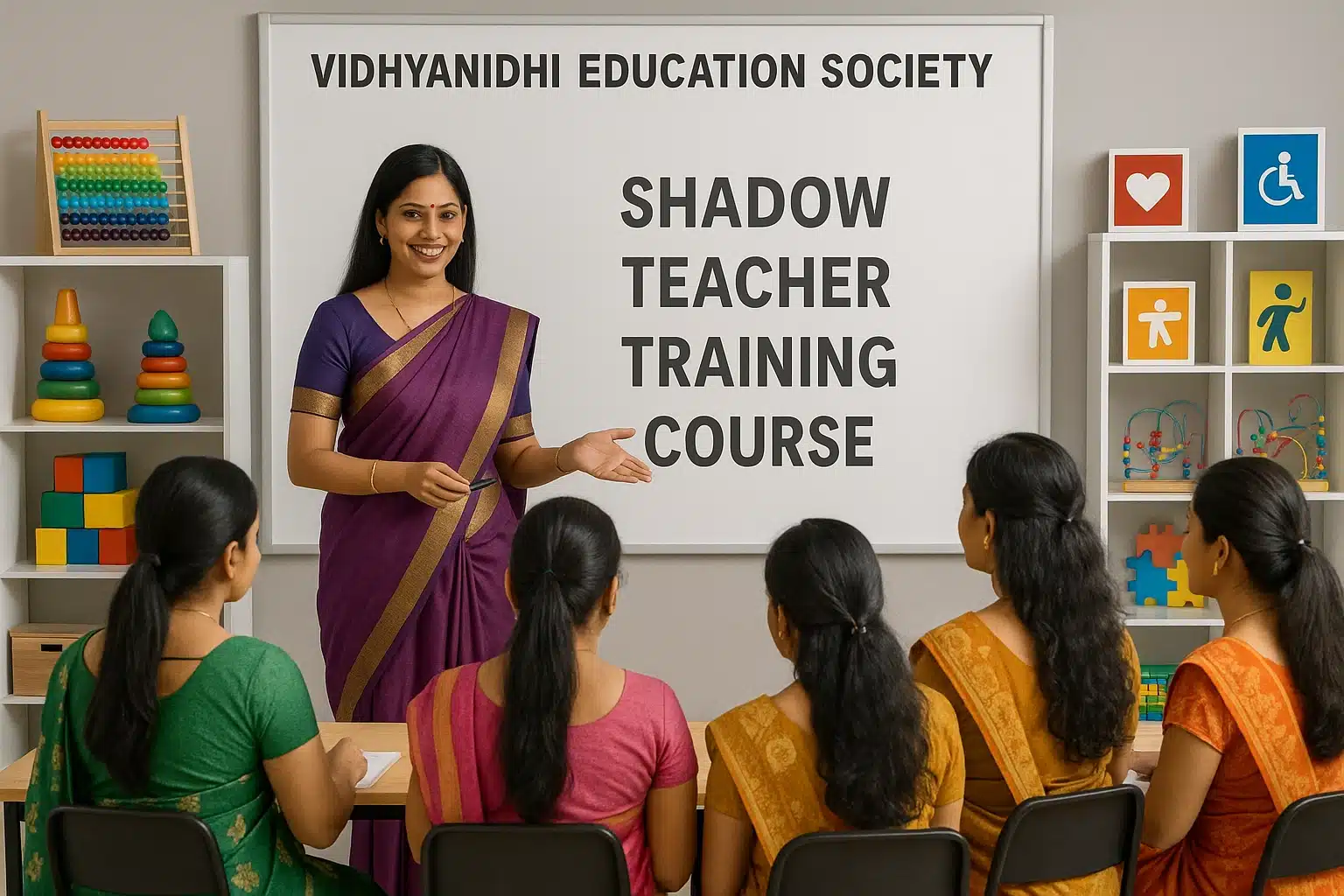
Vidhyanidhi Education Society (Govt. Regd.), a notable teacher training institute, has initiated a Shadow Teacher Training Course for aspiring teachers led by an adept team of skilled professionals who have curated a structured and well-defined program consisting of all the teaching methodologies and pedagogies that can make a huge result-oriented on the lives of children with special needs.
What Skills Does a Shadow Teacher Need?
A Shadow Teacher Needs a balanced mix of educational, behavioral and interpersonal skills to support a kid effectively in a regular classroom. These skills help the student stay engaged, follow instructions and build confidence in daily learning activities.
The most significant skills needed for a Shadow teacher are listed below:
- Proper, flawless scrutiny of the child’s behavior and his learning preferences.
- An empathetic attitude to offer the child the needed emotional support
- Lucid Communication skills for students to understand without any confusion.
- Collaborate and relate well with the stakeholders in the child’s journey.
- Individualized attention for students to clear their queries promptly.
- Adept classroom management skills to maintain a sense of decorum and discipline in class.
- Being flexible to incorporate any last-minute changes in the teaching methods to ensure that the learning outcomes are attained.
- Strong observation skills to understand a child’s learning style and behavior
- A calm mind to process the problem and solve it without any hurriedness or confusion.
Acquiring these significant skills helps teachers to perform their job roles properly and enables them to create a conducive learning space so that all kids can progress holistically under the same mainstream classroom.
Source: istock
Is a Shadow Teacher a Good Job?
A Shadow Teacher Role can be a meaningful and stable career choice for individuals who enjoy working closely with kids. This job focuses on providing personal educational and emotional support to students who need extra support in regular classrooms. Many teachers find this role rewarding because they can see clear progress in a kid’s confidence, learning, and social skills over time.
Reasons why being a shadow teacher can be a good job include:
- Opportunity to make a positive impact on a kid’s learning journey
- Individual interaction that builds strong professional relationships
- Growing demand in inclusive schools and learning centres
- Suitable for individuals with patience and empathy
- Flexible work options in schools, preschools and private settings
- Continuous learning through exposure to different learning needs
Although the role requires dedication and emotional understanding, it offers personal satisfaction and steady career growth. For those passionate about supporting children, becoming a shadow teacher can be a fulfilling professional path.
Which Child Needs a Shadow Teacher?
A shadow teacher is needed for kids who need extra support to cope with classroom routines, learning tasks or social interactions. These kids are usually enrolled in regular schools but benefit from one-to-one support to understand lessons and follow instructions effectively.
A shadow teacher can be required by the following children:
- Children with any specific learning disorder, such as Dyscalculia, Dysgraphia
- Children with a neurological condition such as Autism Spectrum Disorder
- Children with behavioural issues such as ADHD.
- Children with any communication problems or speech issues.
- Children with emotional challenges.
- Children who struggle with following instructions.
- Children with intellectual disability.
A shadow teacher helps these children stay focused, complete classroom tasks, and build social skills at their own pace. With consistent support, many children gradually become more independent and confident in school. This focused assistance helps them take part meaningfully in classroom activities and improve overall learning outcomes.
What is the Difference between a Shadow Teacher and a Special Educator?
A shadow teacher and a special educator both support kids with extra learning needs, but their roles, responsibilities and work settings are different. Understanding this difference helps parents and schools choose the right support for a kid.
Key differences include:
- A shadow teacher provides individual support to a specific kid within a regular classroom
- A special educator works with multiple kids, often in resource rooms or special education surroundings
- A shadow teacher follows the school curriculum and helps the kid manage daily classroom activities
- A special educator designs individualised learning plans and adapts teaching methods
- Shadow teachers focus on academic assistance, behaviour support, and classroom adjustment
- Special educators conduct assessments, set learning goals, and track long-term progress
Both professionals play important roles in inclusive education. The job roles of a shadow teacher and a Special Educator are complementary, wherein their efforts support the child’s overall progress, helping them become independent and confident learners.
“Advance your teaching journey with Vidhyanidhi Education Society’s STT Course today!”
For more details on the STT Course, call/WhatsApp at +919321024137 / +919869866277
To download the brochure of the STT Course, Click Here!
FAQs
How Do You Become a Successful Shadow Teacher?
Success comes from training, patience, observation skills, and teamwork with teachers, and meeting Shadow Teacher Qualifications through certified courses like those by Vidhyanidhi Education Society.
Are Shadow Teacher and Special Educator the Same?
No, they are not the same. A shadow teacher helps one kid in a normal class, while a special educator helps many kids with scheduled learning plans.
What Is the Salary of a Shadow Teacher in India?
The Shadow Teacher’s Salary depends on various factors such as their qualifications, level of training and the kind of institution they work for.
What Is Another Name for a Shadow Teacher?
A shadow teacher is also known as an inclusion help, learning support assistant, or classroom support teacher, depending on the school and role.
How Do You Become a Successful Shadow Teacher?
Success comes from training, patience, observation skills, and teamwork with teachers, and meeting Shadow Teacher Qualifications through certified courses like those by Vidhyanidhi Education Society.
Are Shadow Teacher and Special Educator the Same?
No, they are not the same. A shadow teacher helps one kid in a normal class, while a special educator helps many kids with scheduled learning plans.
What Is the Salary of a Shadow Teacher in India?
The Shadow Teacher’s Salary depends on various factors such as their qualifications, level of training and the kind of institution they work for.
What Is Another Name for a Shadow Teacher?
A shadow teacher is also known as an inclusion help, learning support assistant, or classroom support teacher, depending on the school and role.