Phonics is a method for teaching children how to combine sounds and letters to form words. This makes reading and writing easier. It concentrates on the connection between spoken sounds and their written symbols, which gives students a solid base in reading and writing. When parents and teachers ask, “What is the Phonics?” they are talking about a planned way to help kids learn how to read with confidence by recognizing letter sounds and blending them. It’s important to understand the “What is the Phonics” approach because it helps early readers learn the skills they need for life-long learning step by step.
Two Systematic Methods to Phonics Approach?
The best way to teach phonics is to use a clear and organised method. Teachers often use systematic methods that let kids move forward step by step, making sure that each step builds on the one before it.
To download the brochure of Phonics Teacher Course, Click Here!
Call or Whatsapp on +918104606573 / +919869546913, for more details of Phonics Teacher Course!
What is the Phonics Approach to Teaching:
Synthetic Phonics
- First, kids learn to tell the sounds of each letter (phonemes) apart.
- After that, they learn how to put these sounds together to make full words.
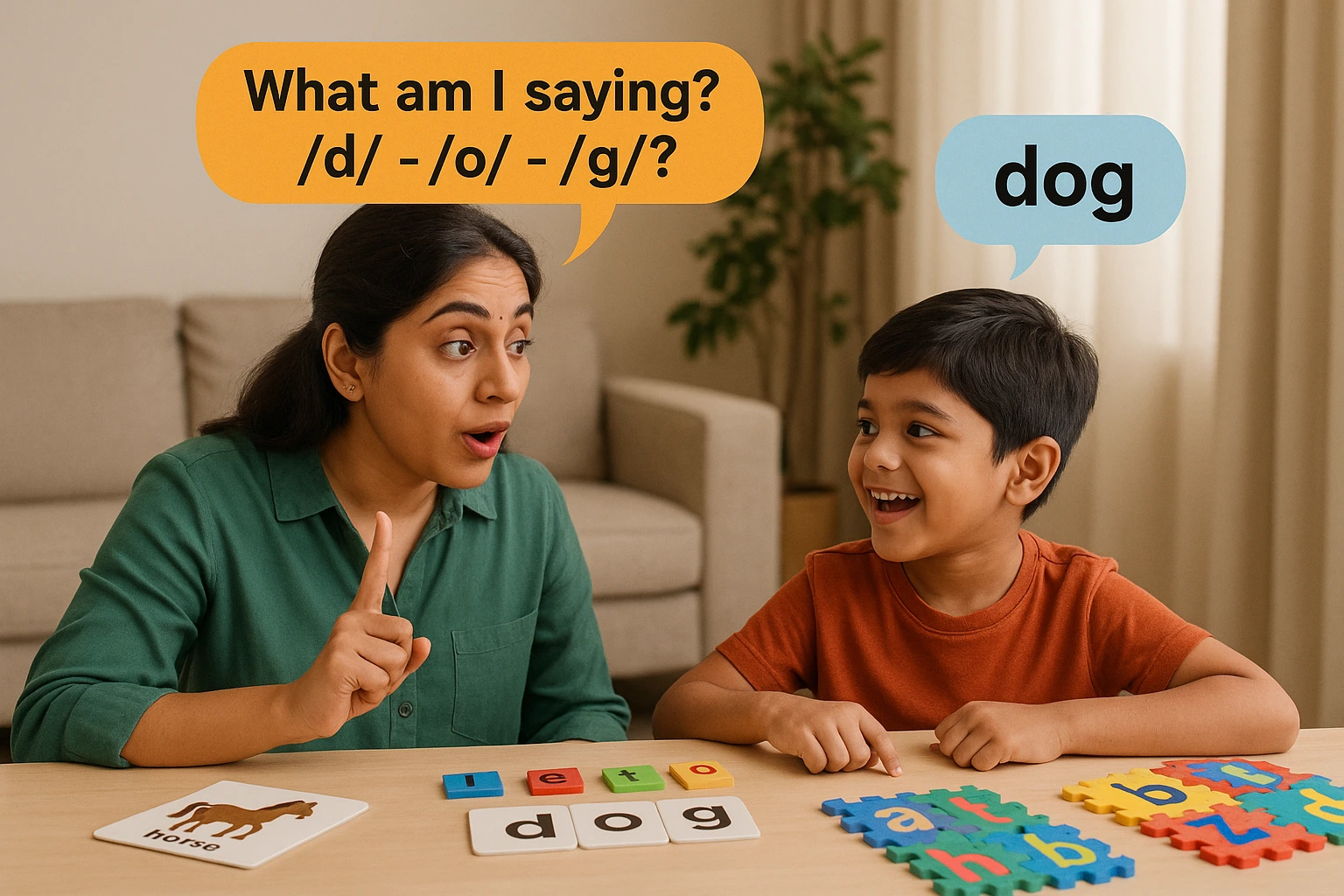
- For instance, the sounds /h/, /o/, and /p/ are mixed together to make the word- hop.
- The goal of this method is to help people read more smoothly by starting with easy words and moving on to harder ones.
Analytic Phonics
- Kids don’t break words down into sounds; instead, they study whole words and then look at their parts.
- They listen for sound patterns in words like- cot, pot, hot, lot- with a focus on the ending sound -ot.
- This method helps students quickly spot patterns, which makes it easier for them to spell and recognise words.
Both methods seek to improve literacy, but they begin from different points of view. What is the Phonics Approach to Teaching Synthetic phonics starts with sounds and builds up, while analytic phonics begins with whole words and breaks them down.
The Analytical Phonics Approach
The Analytical Phonics Approach doesn’t begin by teaching kids the sounds that each letter produces. What is the Phonics Approach to Teaching Analytical Phonics helps them look for patterns in whole words instead. It makes students want to compare and analyse, which helps them understand how words are the same. This Phonics Approach to Teaching kids is to help them understand the differences between word families and how to say them. This gives them more confidence in their reading skills.
Here are some important things to know about The Analytical Phonics Approach:
- Focus on the Whole Word: Kids look at the whole word first instead of breaking it up into separate sounds.
- Seeing Patterns: Students learn to spot groups of letters or sounds that repeat, like the -at sound in cat, bat, hat, and so on.
- Contextual Learning: People can understand words better when they are used in sentences or stories that make sense.
- Better Vocabulary Associations: This approach helps kids learn new words by showing them how different words are related.
- Spelling Development: Kids get better at spelling over time by learning how sounds work together.
The Analytical Phonics Approach works well for kids who learn better when they can see and hear things in context. What is the Phonics Approach to Teaching Analytical Phonics helps kids read better and learn new words by using patterns they already know.
Synthetic Phonics
Synthetic Phonics is a planned way to teach reading that focuses on word formation by putting together the basic sound units. What is the Phonics Approach to Teaching Synthetic Phonics trains kids to comprehend sounds by listening to them, acknowledging them, and blending them.
Significant Elements of Synthetic Phonics:
- Sound-to-Print Learning: Kids understand the sounds of letters- phonemes, and how they fit together with other letters or groups of letters- graphemes.
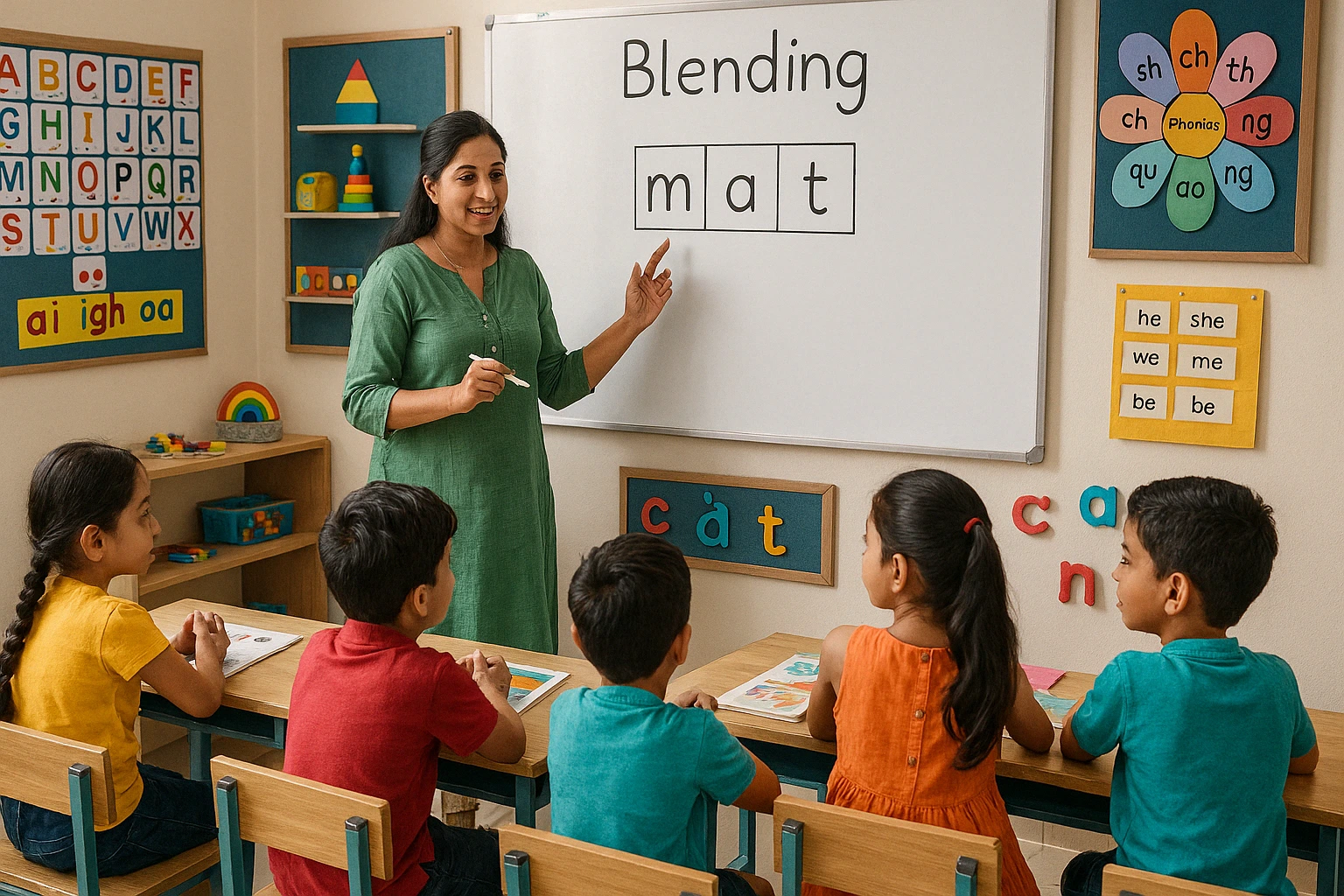
- Blending Skills: Students learn how to combine these sounds to make full words. For instance, /s/ + /a/ + /t/ turns into “sat.”
- Segmenting: Kids also learn to break words into specific sounds, which helps them spell better.
- Practice: You can learn how to connect sounds and letters by repeated practice.
- Reading Independence: Kids who know how to segment and blend words become independent and confident readers.
Synthetic Phonics teaches kids the basics of reading and writing. It is a great way to help kids learn a language over time, with a focus on decoding.
Other Phonics Teaching Methods
Teachers frequently use additional What is the Phonics Approach in combination with synthetic and analytic phonics to help students with different learning techniques. What is the Phonics Approach to Teaching gives teachers greater flexibility in how they teach and helps kids acquire the skills of reading and spelling.
Other Phonics Teaching Methods include:
Analogy Phonics
- Kids learn new words by comparing them to words they already know.
- For instance, using the word “light” to figure out what “night” or “bright” means.
- Helps kids learn groups of words and get better at using them.
Embedded Phonics
- Phonics skills are taught while students are actually reading.
- Learners grasp sound–letter associations while reading narratives or passages.
- Combining decoding with understanding helps people learn naturally.
Phonics for Onset and Rime
- The foremost sound of a word is called the onset, and the rest of the word is called the rime.
- For instance, the first sound -nut- /n/ and the last sound is ‘-ut.’
- Helps kids learn to read by quickly finding endings that are the same.
Analytic Word Study
- Focuses on comparing a few words to see how they are spelled and how they sound.
- Kids learn to spell and decode better when they do word sorting activities.
Other Phonics Teaching Methods work well with the main What is the Phonics Approach and give teachers a lot of options for how to change the way they teach. What is the Phonics Approach to Teaching uses a mix of strategies that work best for them, which can help kids get better at reading and writing.

Source: shutterstock
Which is the Best Phonics Approach?
There is no one ” Best Phonics Approach ” that works for everyone. How well it works often depends on the student’s style, the classroom setting, and the teacher’s ability to change how they teach. But studies show that organised and systematic What is the Phonics Approach is very effective at helping people read and spell better.
People who want to learn What is the Phonics Approach to Teaching is can take a Phonics Teacher Training Course at the Vidhyanidhi Education Society (Govt. Regd.). The Phonics Teacher Training Course teaches teachers useful ways to run their classrooms.
Key Considerations for Choosing the Best Phonics Approach:
- Synthetic Phonics: Good for beginners because it teaches kids how to sound out words.
- Analytical Phonics: Good for students who learn better when they can see patterns and break down words into their parts.
- Other Ways: You can use embedded, analogy, or onset-rime phonics to help with learning.
Teachers who know how to use more than one What is the Phonics Approach to Teaching can mix them up so that all the kids get something out of them. The main things to remember about What is the Phonics Approach to Teaching are consistency, practice, and using what you’ve learnt in real reading situations.
Teachers who take the Phonics Teacher Training Course learn how to use both synthetic and analytic methods in the best way. The Vidhyanidhi Education Society’s Phonics Teacher Training Course helps teachers feel more confident about teaching lessons that help young students build strong literacy skills.
Shape young readers’ futures—join Vidhyanidhi’s Phonics Teacher Course today!
To download the brochure of Phonics Teacher Course, Click Here!
Call or Whatsapp on +918104606573 / +919869546913, for more details of Phonics Teacher Course!
FAQs
What are the Two Methods of Teaching Phonics?
There are two main ways to teach phonics: synthetic phonics (sound to word) and analytic phonics (whole word to parts).
How do you Learn Phonics?
You can learn phonics by taking methodical lessons, practice, and help from an expert. Vidhyanidhi Education Society has a course for teachers who want to learn phonics teaching.