
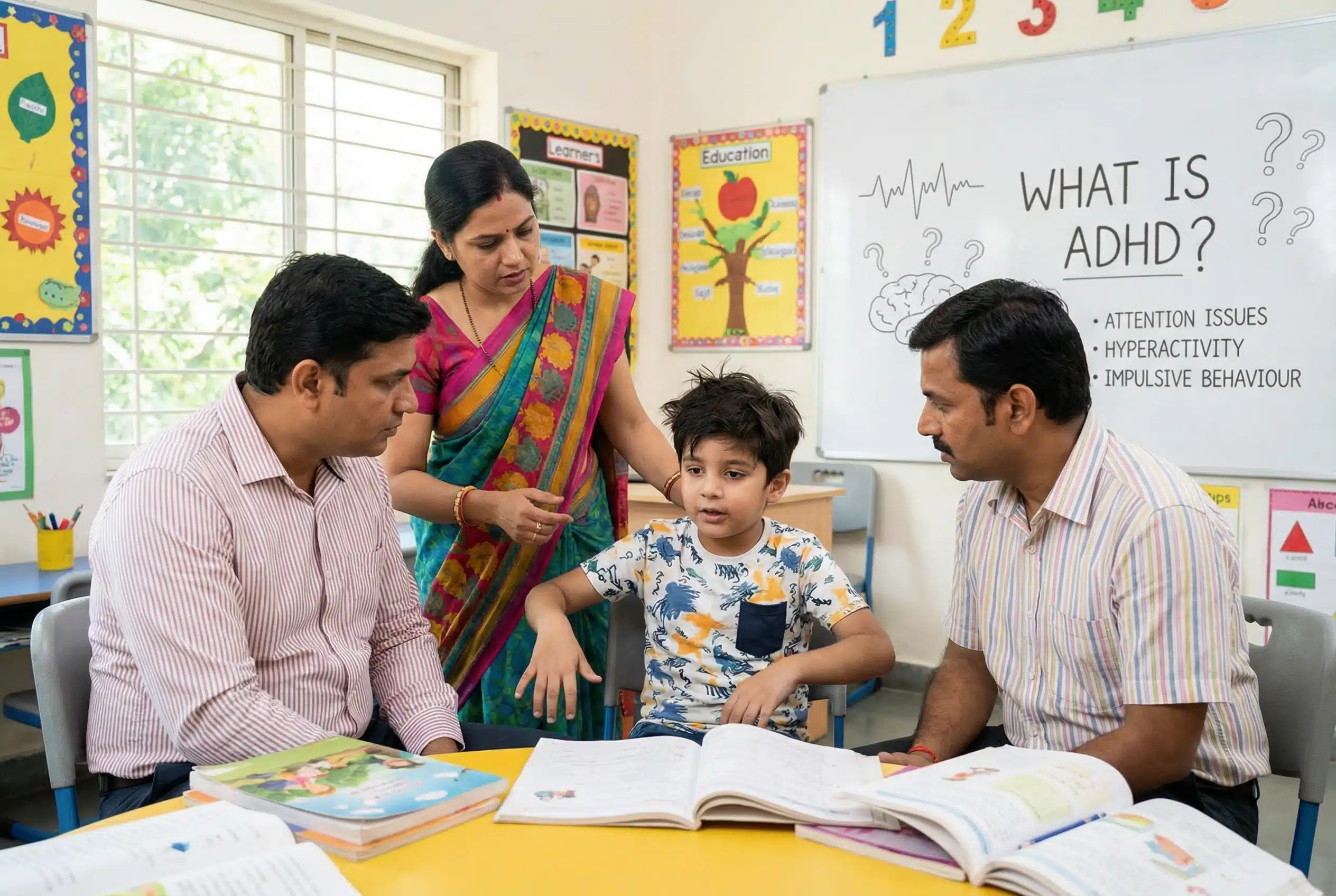
What is ADHD in Children?
Attention issues, hyperactivity and impulsive behaviour often raise questions among parents and teachers about a child’s growth and learning. “What is ADHD?” is one of the most common fears that arise when kids show rare patterns of focus or restlessness. ADHD, short for attention deficit hyperactivity disorder, is a disorder that affects how kids pay attention, control their actions, and manage their energy levels. Understanding “What is ADHD” in kids can help caregivers and teachers recognise the signs early and provide the right support for their overall development.
Symptoms of ADHD in Children
ADHD symptoms usually appear in early childhood and can affect learning, social skills, and daily routines. They are grouped into three categories: inattention, hyperactivity and impulsivity. For a diagnosis, the signs must be ongoing, occur in more than one setting and interfere with normal functioning.
Inattention Symptoms
- Struggle to stay focused or pay attention to details
- Careless mistakes in schoolwork or frequent forgetfulness
- Badly managed surroundings
- Incomplete assignments
- Inability to follow instructions
Hyperactivity Symptoms
- Moving around continuously
- Cannot remain seated
- Running around aimlessly
- Bumping into things while moving around
- Blurting answers out of turn
- Talking and disturbing others
Impulsivity Symptoms
- Inability to wait for their turn
- Talking while others are still explaining
- Acting without thinking of the consequences
- Causing chaos while playing games
- Being aggressive just to get attention
Important Considerations
These behaviours must form a determined pattern, appear in different settings like school and home and disrupt daily life. If such signs are noticed, seeking a professional assessment is the best step toward early support and management.
To download the brochure of the SEN Course, Click Here!
For more details on the SEN Course, Call/WhatsApp at +919321024137 / +919869866277

Source: istock
Childhood ADHD Types
Attention Deficit Hyperactivity Disorder (ADHD) presents in different ways among kids. Determining the exact type of ADHD helps educators, parents and caregivers to find the precise areas of attention with which the child needs assistance, and accordingly, aid can be provided.
The predominant types of Childhood ADHD are listed below:
-
Predominantly Inattentive Type
- Children often forget things, or their minds are mostly diverted
- They become unfocused easily due to which they do not follow any directions leading to unfinished assignments.
- Common signs include imagining, disorganisation and struggle remembering daily responsibilities.
These kids may not be highly active physically, but they have trouble with schoolwork because they can’t focus.
-
Hyperactive-Impulsive Type:
- Kids are always on the go, constantly moving around and extremely preoccupied with their own thoughts
- They react more than responding, act on instant impulse without thinking about the consequences.
- They are extremely impatient and fail to wait for their turn while playing in a social setting.
- They are often seen running around aimlessly and struggle to be calm in quiet activities.
This type is easier to identify because the behaviour is more visible and disturbing.
-
Combined Type:
- Children show symptoms of both inattentiveness and hyperactivity-impulsivity.
- This is the most common form of ADHD.
- These children often face difficulties in academics, social interactions, and behaviour management.
Identifying the type of ADHD is important for guiding interventions. A professional assessment helps determine the best approaches for support, whether through therapy, educational changes, or medical guidance.
Causes of ADHD in Children
The causes of ADHD are not clearly listed, but as per the latest findings, a blend of environmental factors and genetics can be a reason for ADHD. These factors can affect brain structure, impacting its functioning, especially the areas that oversee control of behaviour, regulation and attention.
Prime causes and perils:
- Hereditary reasons: ADHD has a higher probability of running in families where there are existing ADHD cases.
- Brain Development: When the brain areas in charge of controlling attention and behaviour regulation are poorly developed, it can lead to ADHD.
- Pre-birth reasons: When expecting mothers consume alcohol, smoke tobacco, or do drugs, there are higher chances of the child getting ADHD.
- Very low birth weight: When children are born premature with less weight, there can be a higher risk of ADHD.
- Environmental Factors: When expecting mothers are exposed to harmful toxins, it can have an impact the brain development.
- Stressful family environments: High stress levels and a traumatic family environment can have a major impact on the already existing symptoms.
An age-old myth that must be busted is that ADHD is not a result of spending too much time on the phone or bad parenting. It needs a thorough assessment and proper diagnosis to provide the child with the right support and assistance.
To download the brochure of the SEN Course, Click Here!
For more details on the SEN Course, Call/WhatsApp at +919321024137 / +919869866277
Source: verywellfamily
ADHD in Children: Diagnosis
Diagnosing ADHD in children is a methodical procedure that begins with scrutiny of the child by certified professionals. When the child undergoes requires careful observation and evaluation by healthcare professionals are required. Since symptoms such as inattention, hyperactivity, and impulsivity can overlap with normal childhood behaviour, diagnosis involves multiple steps to ensure accuracy.
Strategic steps in diagnosis:
- Medical evaluation: A thorough check-up of the child is conducted by a paediatrician, psychologist, or psychiatrist who takes inputs to create a portfolio of the child’s developmental history.
- Parental Inputs: Teachers, caregivers, and parents provide systematic input about how the child acts in different environments.
- Scrutiny in different settings: The child’s symptoms have to be seen in at least 2 environments, home and school.
- Eliminate other factors: Other disorders that may appear like ADHD have to be certified properly and excluded thoughtfully.
Precise diagnosis can be highly beneficial in ascertaining the exact areas of concern, accordingly providing them with timely support, including behavioural strategies, school accommodations, and, when necessary, medical treatment.
Childhood ADHD Treatment
Handling children with ADHD can be a challenging task as their primary daily functioning skills are hampered. Therefore, a methodical and systematic intervention approach is needed that helps children manage their struggles efficiently and develop enhanced social interaction skills needed for their emotional well-being. The aim is to help children improve focus, control impulses, and succeed both at school and home.
Key Treatment Approaches:
Cognitive Behaviour Therapy
- Helps children in developing positive behaviour patterns, enhancing their self-control skills.
- Incorporating methods like positive rewards and structured schedules helps parents and teachers to improve the learning outcomes.
Academic support
- Children are entitled to receive special accommodations such as differentiated instruction methods and exclusive assessment methods.
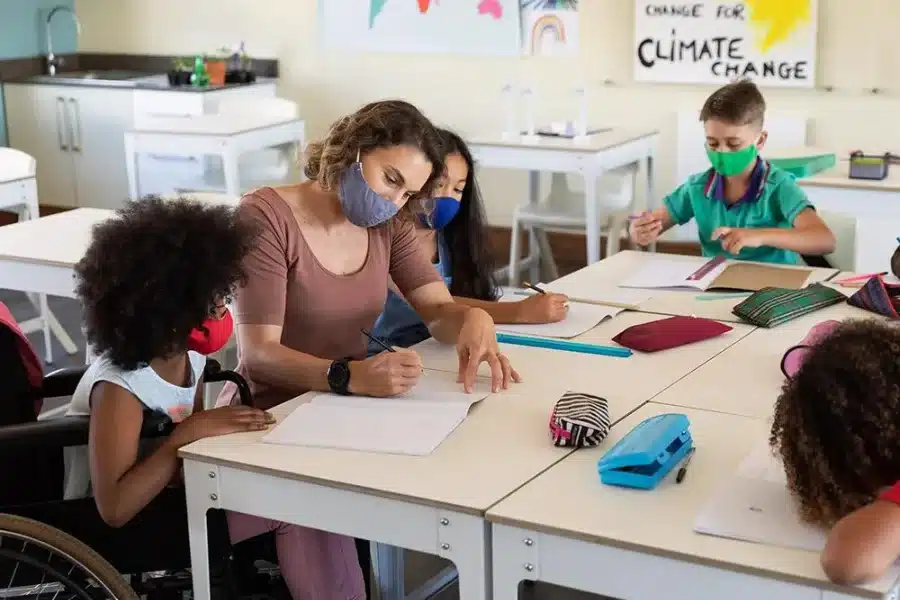
- When the educators are professionally qualified, Teachers trained through a Special Education Needs Course are better equipped to design strategies that support children with ADHD.
Medication (when recommended)
- Stimulant or non-stimulant medications may help balance brain activity and improve attention.
- These should always be prescribed and monitored by healthcare professionals.
Support and Parental Assistance
- Parents gain valuable insights about different learning methods to handle complicated behaviour patterns, helping reinforce positive behaviour.
- Pursuing a Special Education Needs course helps to understand. Enrolling in a Special Education Needs Course provides practical tools for understanding ADHD.
The Vidhyanidhi Education Society provides a Special Education Needs Course that provides teachers and caregivers how to help kids with ADHD. Choosing the right treatment and learning strategies through a Special Education Needs Course ensures better outcomes for children’s growth and development.
Help kids thrive—join the SEN Course at Vidhyanidhi Education Society today!
To download the brochure of the SEN Course, Click Here!
For more details on the SEN Course, Call/WhatsApp at +919321024137 / +919869866277
What is ADHD in Children?
FAQs
Can an ADHD Child go to a Normal School?
Yes, children with ADHD may attend ordinary schools with adaptations, support from teachers and the right study strategies.
What is the Best Treatment for ADHD?
A mix of behavioural therapy, educational support and remedial guidance works best. Vidhyanidhi Education Society’s Special Education Needs Course prepares teachers to help.