

Source: teachmiddleeastmag
Learning Disabilities means more than just having trouble with schoolwork; it refer to the way some kids and adults process information differently. These differences can affect reading, writing, math, memory or even focus, but they do not reflect a person’s intelligence or potential.
Understanding what Learning Disabilities means helps parents, teachers and caregivers provide the right support and approaches. With timely guidance, encouragement and effective teaching methods, individuals with learning disabilities can thrive and succeed in school as well as in everyday life.
Common Types
Learning Disabilities affect people in unique ways, and understanding the common types helps in providing the right support. These disorders affect specific areas of learning and development but do not reflect complete intelligence. Early identification and intervention play an important role in managing these difficulties effectively.
Here are some common types of learning disabilities:
Dyslexia
Affects reading skills, including word decoding and understanding.
Math disorder Dyscalculia
This disorder affects the child’s competencies of understanding abstract concepts of numbers, time and mathematical reasoning.
Writing Disorder Dysgraphia
The child’s fine motor skills, especially their skills of writing in the defined space, are hampered, making it difficult for them to put their thoughts on paper.
Nonverbal Learning Disabilities (NVLD)
Cause problems with visual-spatial skills, problem-solving and interpreting non-verbal signs.
LPD Language Processing Disorder
The child’s ability to understand what is being spoken is hampered, making it difficult for them to follow instructions.
Auditory Disorder (APD)
Listening to sounds and interpreting their meaning is an issue, although the hearing skills are in place.
Dyspraxia
Affects motor coordination, balance and tasks requiring fine motor skills like writing.
Identifying the signs of struggles and accordingly designing the appropriate support helps students to tackle their daily challenges effectively, helping them attain their true potential.
To Download the Brochure of the LD Course, Click Here!
For more Details of the LD Course, Call / WhatsApp on +919321024137 / +919869866277

Source : hopetutoring
What are Learning Disabilities?
To provide the child with the desired learning aid, it is important to ascertain what a learning problem is. Learning disabilities are often misunderstood as being lazy, naughty or even less intelligent. It is caused mainly due to certain neurological factors and genetic reasons that affect the brain’s processing capabilities, leading to faulty signal processing, especially the way information is processed by the brain.
People with learning impairments often have average or above-average intellect, but they have particular challenges in arithmetic, reading and writing.
What Learning Disabilities are not:
Intellectual Disability
They are not the same as intellectual disabilities; people with learning disabilities often have strong cognitive abilities.
Emotional issues
Emotional disorders cannot be called as learning disorders as they are separate, occurring at times alongside learning difficulties.
Sensory Disorders
Any kind of sensory disorders where the child’s sensing capabilities are hampered are not causes of learning disabilities.
Lack of Opportunity
Insufficient instruction or ineffective teaching is not the root cause.
Autism or Other Disorders
While they may live, autism and developmental disorders are distinct from learning disabilities.
They originate from neurological differences, influencing how information is processed, understood and expressed. With the right support, individuals with learning disabilities can achieve success in academics and beyond.
To Download the Brochure of the LD Course, Click Here!
For more Details of the LD Course, Call / WhatsApp on +919321024137 / +919869866277

Source :reviewofoptometry
Causes and Risk Factors
People often get learning difficulties wrong, so it’s crucial to explain what they are not. These problems are not caused by a lack of intelligence, bad training, or not enough chances. These factors are mostly neurological, where certain reasons are neurological changes that change how the brain processes information. People with learning disabilities usually have ordinary or above-average intelligence, but they have trouble with things like reading, writing, or math.
Vital attributes connected to Learning disabilities
Hereditary Reasons and brain-related factors
Structural Brain Variations
Differences in the structure of the brain can lead to faulty functioning and poor processing of signals, especially in the zones that control areas managing language and executive functions.
Hereditary Reasons
a family with a case of any learning disability will have a higher possibility of more cases of such a condition.
Labour-Related Issues
Toxin exposure
Consuming alcohol, smoking, or using drugs can elevate the chance of neurological disorders.
Obstacles during birth
Birth Complications such as premature birth, poor weight at birth or any injuries can severely impact brain development.
Deprived nutrition
Insufficient intake of healthy nutrients can increase the chances of a learning disability.
Environmental and Social Factors
Breathing Harmful chemicals
Intake of harmful toxins such as lead, mercury can have a detrimental effect on developing brain cells.
Undue pressure or Stress
Any kind of chronic stress or living in emotionally negative surroundings can impact learning.
Other Contributing Factors
Conditions like ADHD, epilepsy, poor vision, or nutritional deficiencies may co-occur.
These influences combine in complex ways, shaping the diverse ways learning disabilities appear in individuals.
To Download the Brochure of the LD Course, Click Here!
For more Details of the LD Course, Call / WhatsApp on +919321024137 / +919869866277

Source: cloudfront
How to Diagnose Learning Disability?
Diagnosing a learning disability includes a detailed process that looks beyond simple educational challenges. It needs careful observation, assessments and collaboration among teachers, psychologists and parents. The primary aim of this process is to eliminate any confusing factors, such as hearing loss, visual impairment, that can be misunderstood as learning disabilities. Early diagnosis helps in eradicating the child’s struggles and initiates early remedial intervention for their overall progress.
Steps in Diagnosing a Learning Disability:
Scrutiny in school
Teachers are the first observers who notice signs of struggle in school, especially during the early years when the foundational skills are being developed.
History of the child
A full background review of the child is done, where their Developmental, medical, and family histories are scrutinized to understand if there are possible risk factors, such as premature birth or genetic influences.
Standardized Tests
Intelligence tests and educational achievement assessments are used to compare a child’s potential with actual performance levels.
Professional diagnosis and evaluations
Certified professionals can conduct specific assessments based on the kind of developmental delay the child is facing. For e.g if the speech is delayed, there will be an assessment by the speech therapist.
Eliminating any other causes
Ensuring that the child does not suffer from any other unrelated issues that might appear as learning disabilities.
Concerted Diagnosis
The child is assessed carefully under the guidance of a team of adept professionals who work together to ascertain the presence of any learning disability.
This methodical step-by-step approach enables to design of customized teaching techniques that align with the child’s learning needs, helping them thrive academically and socially as well.
To Download the Brochure of the LD Course, Click Here!
For more Details of the LD Course, Call / WhatsApp on +919321024137 / +919869866277
Source: mayinstitute
What Support can be provided for Learning Disabilities?
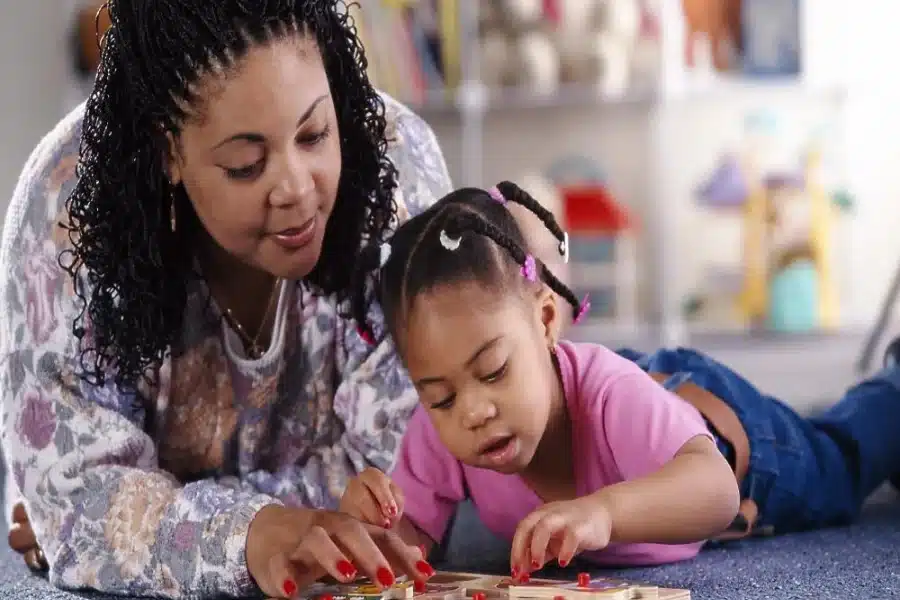
Support for learning disabilities focuses on providing the right tools, strategies, and guidance to help individuals reach their potential. Each child is a unique individual with specific strengths, so when there is an early detection of a Learning disability, it helps to devise systematic and precise methods that help the child learn in a joyous manner. Along with teachers, parents can play a huge supportive role in creating conducive learning environments that foster the child’s overall holistic progress.
Undergoing proper training is a must for those who want to make a flourishing career in the field of Special Education and make a positive impact on the lives of young children with special needs.
A varied type of Assistance for Learning disorders
Tailored Education Plans (IEPS), Individualised Education Plans (IEPs) are designed highlighting their strengths and weaknesses and based on which realistic goals are set and accordingly strategies are planned.
Exclusive Teaching tactics
Incorporating phonetics in the lesson plans, using visual aids and multi-sensorial techniques.
Therapy Assistance
Using different therapies such as occupational therapy, counselling, and speech treatment for developing the child’s language, motor, and emotional skills.
AI-backed technology
Latest AI-backed technologies are used in the child’s educational plans to help enhance the child’s attention span, supporting their learning.
Contribution of Parents
Continuous and timely feedback between home and school to take any corrective measures in case the child is not showing the desired results.
Teacher Training
Teachers are prepared to identify and support learning differences more effectively.
By enrolling in a Learning Disability Course, teachers and caregivers gain valuable knowledge to better support kids. Completing a Learning Disability Course ensures that experts are well-prepared to build inclusive classrooms and nurture meaningful progress.
Transform futures—join Vidhyanidhi Education Society’s LD Course today!
To Download the Brochure of the LD Course, Click Here!
For more Details of the LD Course, Call / WhatsApp on +919321024137 / +919869866277
What do Learning Disabilities means?
FAQs
At what age should a Child be tested for a Learning Disability?
A child can be tested as early as 5–7 years when consistent learning struggles appear in reading, writing, or math across different settings.
What is the Best Treatment for a Learning Disability?
The best treatment includes tailored teaching strategies, therapies, and trained educators. Vidhyanidhi Education Society offers courses to build such expertise.